

Remove tobacco stains from teeth: what smokers should do
- 10 minutes ago
- 7 min read
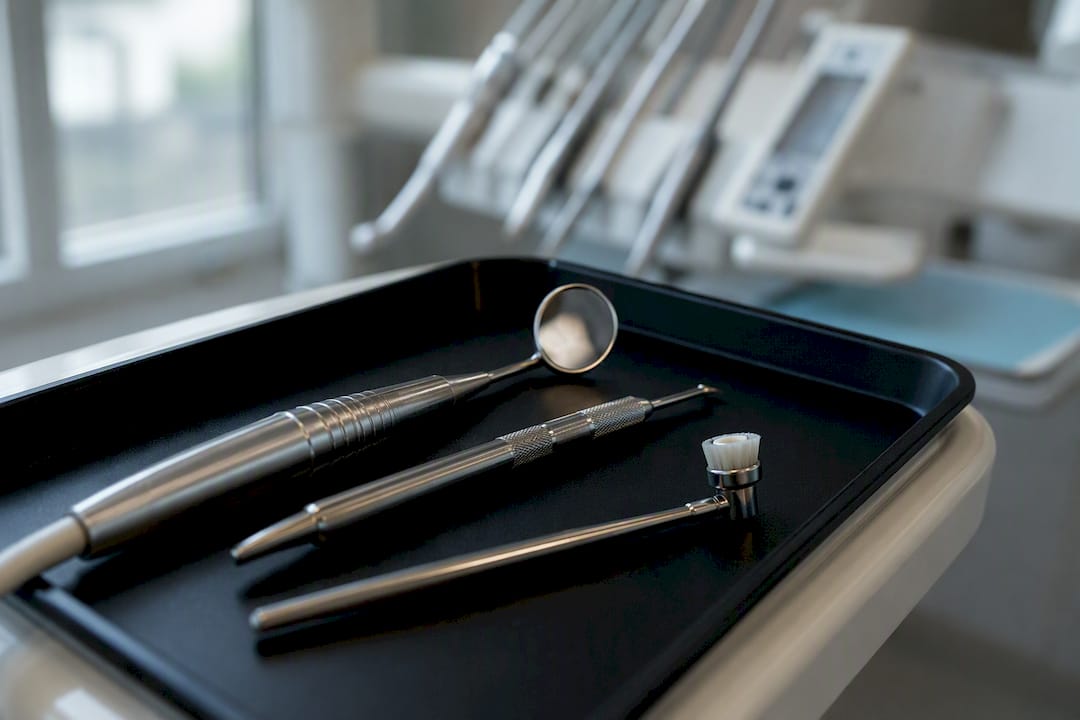
Start with a professional dental cleaning, then choose your whitening method based on how deep the staining actually is. A hygienist’s scale and polish strips away the surface tar and nicotine buildup that toothpaste can’t touch, and it gives any whitening treatment that follows a fair chance of working. Skip this step and you’re bleaching over a dirty surface.
Here’s the short version of what comes next:
Book a dental check and cleaning first — this removes tartar and surface stain and flags any gum issues.
Try whitening toothpaste or strips for mild, recent staining once your teeth are clean.
Ask about in-office or take-home bleaching for moderate to heavy discolouration.
See a dentist before any bleaching if you have sensitivity, fillings, or gum disease.
Key Takeaways
Removing tobacco stains works best as a two-stage process: professional cleaning first, then whitening matched to how deep the staining runs, followed by consistent maintenance.
Point | Details |
Clean before you whiten | Book a scale and polish first, since tartar and surface stain limit how well bleaching agents work. |
Match treatment to stain depth | Mild recent staining suits strips or powder; heavy long-standing stains need professional bleaching. |
Expect faster colour rebound | Smokers see whitening results reverse quicker than non-smokers, so build in maintenance from the start. |
Watch for red flags | Gum disease, cavities, or exposed roots mean a dental exam before any bleaching begins. |
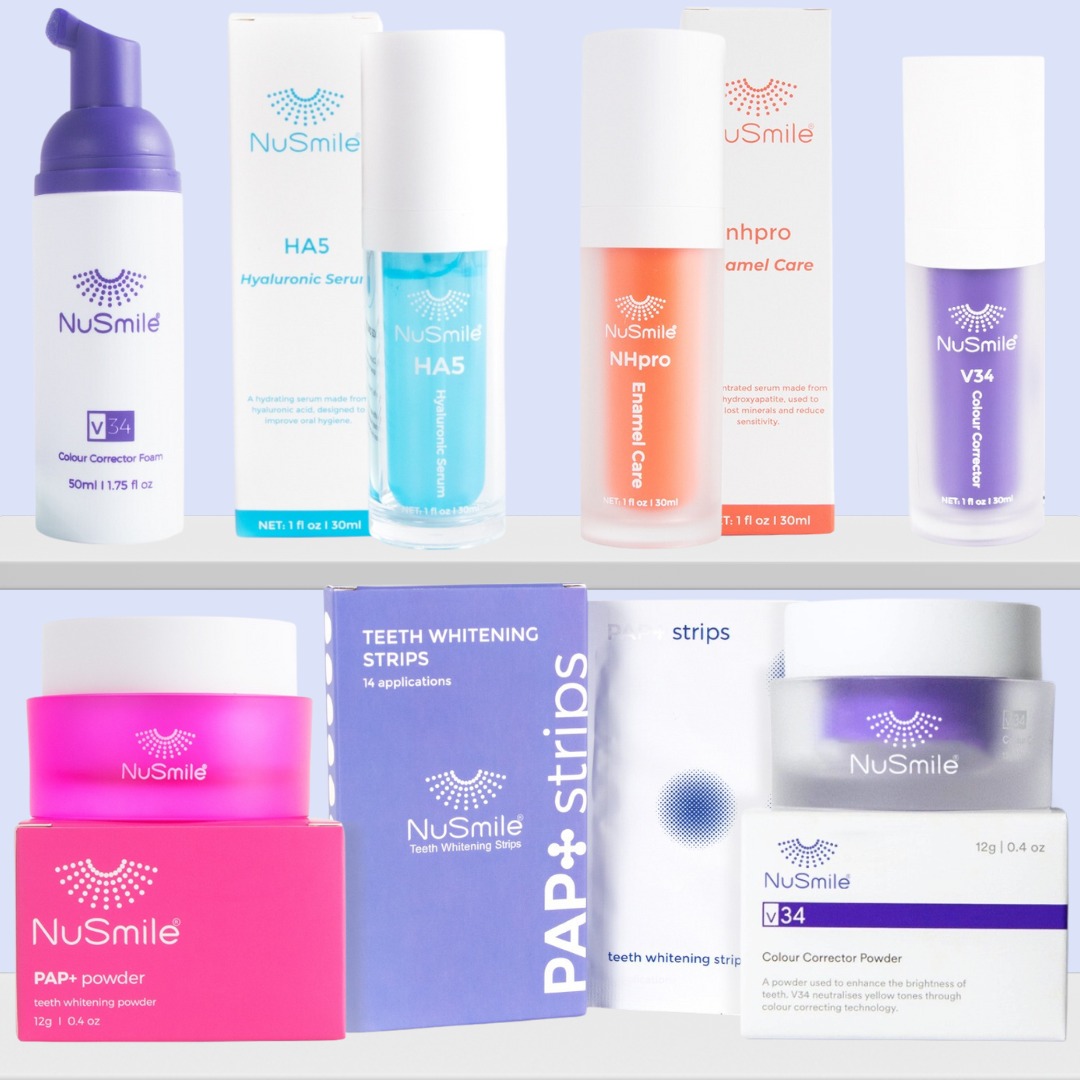
Maintain with the right products | NuTan®'s PAP+ powder and NuSmile strips support upkeep once a dentist confirms your teeth are ready. |
This article is general information, not a substitute for advice from a qualified doctor. Consult a qualified healthcare professional about your own circumstances before acting on anything here.
Table of Contents
Why tobacco stains teeth in the first place
Nicotine is colourless when it first touches your teeth, but it oxidises on contact with air and turns a yellowish brown that clings to enamel. Tar behaves similarly, leaving a sticky brown residue that traps further staining. Most of this sits on the enamel surface as extrinsic staining, which cleaning and whitening can shift fairly reliably.
The trouble starts when nicotine and tar work their way into enamel pores over years of use, creating intrinsic staining deeper in the tooth structure. According to NHSBSA guidance, this deeper discolouration often doesn’t respond to surface cleaning alone and may need bleaching or a cosmetic restoration to correct fully.
Step one: professional cleaning comes before whitening
This is the step most smokers skip, and it’s the one that determines whether whitening actually works afterwards. Tobacco residue accelerates tartar buildup, and that hardened layer traps stain-causing pigment right against your enamel. Whiten over it and you’re wasting product on a barrier that isn’t going anywhere.
A typical hygiene visit for a smoker includes:
Ultrasonic scaling to break up hardened tartar above and below the gumline.
Prophylaxis polishing with a pumice paste to buff away surface stain.
Air-polishing using erythritol or sodium bicarbonate powder, sprayed under pressure to lift stubborn tobacco discolouration.
Clinical evidence on professional cleaning confirms that this mechanical step removes the extrinsic stain and tartar that would otherwise limit how well any bleaching agent performs afterwards. Air-polishing with erythritol in particular has been shown to lift tobacco discolouration effectively without roughening the enamel surface, according to a 2024 study in the International Dental Journal.
Pro Tip: Book your cleaning two to four weeks before you start any whitening treatment. This gives your gums time to settle if the hygienist finds inflammation, and it means your baseline shade is accurate before you judge whitening results.
Comparing your whitening options
Once your teeth are clean, the choice comes down to how much time, money and patience you have, and how deep the staining runs; consider professional options like Signature teeth whitening for effective in-office treatment. Three broad categories cover most smokers’ needs.
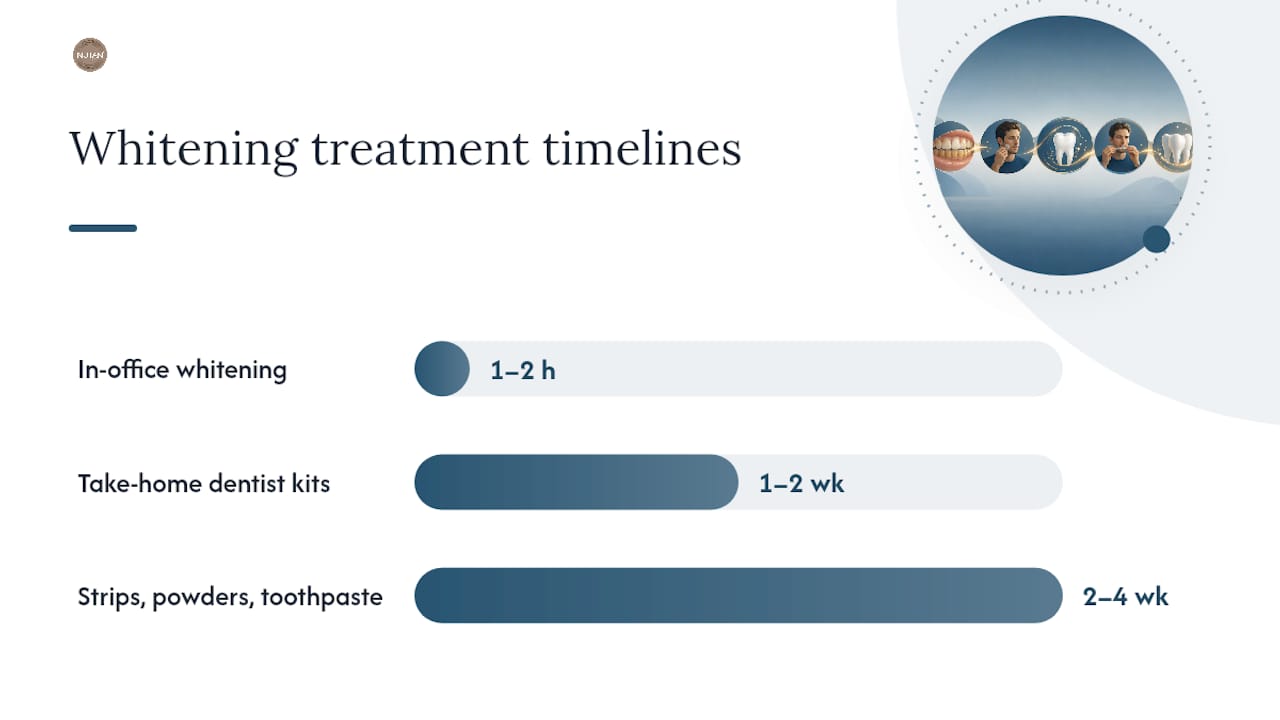
In-office professional whitening uses a high-concentration bleaching agent applied by a dentist, often activated with light, and delivers the fastest visible change, typically several shades in a single appointment. Dentist-prescribed take-home trays use a lower-concentration gel worn nightly over one to two weeks, giving more gradual but still dentist-supervised results. Over-the-counter options, including whitening strips, powders and toothpaste, work more slowly and suit mild surface staining rather than years of built-up discolouration.
Option | Timeline | Best for | Trade-off |
In-office whitening | Single visit, 1 to 2 hours | Heavy, long-standing tobacco stains | Highest cost, needs a dental check first |
Take-home dentist kits | 1 to 2 weeks nightly | Moderate staining, controlled fade | Slower than in-office, still needs supervision |
Strips, powders, toothpaste | 2 to 4 weeks daily use | Mild, recent surface stains | Limited effect on intrinsic staining |
A 2023 clinical study using 22% carbamide peroxide found the treatment effective in both smokers and non-smokers, but smokers showed noticeably greater colour instability and faster reversion afterwards. That pattern holds across most whitening methods: smokers see results, but the clock on colour rebound runs faster than it does for non-smokers.
A few practical notes worth knowing before you commit:
Home remedies like baking soda or diluted hydrogen peroxide can help lift very fresh surface stains, but neither touches intrinsic discolouration and overuse risks enamel wear.
Sensitivity is common in the first few days of any bleaching treatment, smoker or not.
Results from over-the-counter products are genuinely limited on years-old tobacco staining, according to general dental guidance on smokers’ teeth.
How to choose the right treatment for your stains
Match the treatment to your situation rather than picking whatever’s cheapest or fastest. Run through this before booking anything:
Check your oral health first. Active gum disease, cavities, or exposed root surfaces need treating before any bleaching agent touches your teeth.
Estimate how long you’ve smoked or used tobacco. A few years of light staining responds well to strips or a take-home kit; decades of heavy use usually needs professional bleaching.
Be honest about sensitivity history. If cold drinks already bother you, tell your dentist before choosing a high-concentration option.
Weigh cost against time. In-office whitening costs more upfront but takes one visit; take-home kits and shop-bought products cost less but demand weeks of consistent use.
Ask your dentist three questions: what shade change is realistic, how long will it last given that you smoke, and what maintenance schedule keeps it that way.
Red flags that mean a dental exam comes before anything else: bleeding gums, visible decay, existing crowns or veneers that won’t whiten evenly with natural teeth, and any tooth pain.
Keeping stains from creeping back
Whitening removes existing stain. It does nothing to stop the next cigarette or roll-up from starting the process again, and NHS guidance on dental care makes the same point about upkeep after treatment.
Brush twice daily with a whitening toothpaste and use proper technique, angling bristles at the gumline rather than scrubbing hard.
Floss daily to stop plaque building between teeth where stain collects.
Rinse with water straight after smoking to reduce how long tar sits on enamel.
Book a hygienist visit every six months and use touch-up strips or gel every few months to hold your shade.
Cutting back on tobacco, or quitting, remains the single most effective way to keep results lasting.
Risks, side effects and when to hold off
Speak to a dentist before starting any bleaching treatment, particularly if you have fillings, crowns, or a history of sensitive teeth. NHS guidance confirms that whitening is provided privately in the UK and that a dental professional must check your teeth and gums are healthy first, since professional products use much higher concentrations of active bleaching agent than anything sold over the counter.
Common side effects include:
Temporary tooth sensitivity to hot and cold, usually settling within a few days.
Mild gum irritation if the whitening gel contacts soft tissue.
Uneven results where old fillings or crowns don’t lighten alongside natural enamel.
Long-term follow-up data show that bleaching remains effective at reducing staining in smokers, but a 30-month study recorded measurable colour rebound over that period, reinforcing why maintenance isn’t optional if you continue smoking.
What the evidence says in brief
Professional cleaning removes surface stain and creates the right baseline before any bleaching begins.
Air-polishing with erythritol lifts tobacco discolouration without roughening enamel, though it doesn’t fully restore original tooth colour.
At-home bleaching works for smokers, but colour rebound arrives faster than in non-smokers, making a maintenance routine essential.
A practical note on where whitening fits
NuTan® sells whitening and oral care products designed to support your smile once your dentist confirms your teeth and gums are ready for treatment. A dental check first is not optional. It’s the difference between whitening that works and whitening that wastes money on teeth that weren’t cleaned properly.
Where NuTan® products fit into your routine
Once a dentist has checked your teeth and cleared you for whitening, NuTan®'s PAP+ teeth whitening powder and NuSmile whitening strips work well as maintenance tools for mild surface staining between professional visits. If your staining runs deeper, the NuSmile home whitening kit offers a stronger at-home option modelled on the dentist-supervised approach covered above, giving you gradual results without a clinic visit for every touch-up.

These products are built for maintenance and mild to moderate staining, not as a replacement for the professional cleaning step this article opened with. If you smoke and haven’t had a dental check in the last year, that comes first. After that, browse the PAP+ whitening powder or the home whitening kit to keep your results looking sharp between hygienist visits.
Sources
FAQ
How do you remove stubborn tobacco stains from teeth?
Book a professional scale and polish first, then follow with dentist-supervised or over-the-counter whitening depending on how deep the staining is. Cleaning alone often lifts a surprising amount of surface stain before whitening even starts.
Do tobacco stains on teeth go away on their own?
No, tobacco stains don’t fade without intervention, and they typically build up further with continued use. Professional cleaning and whitening are needed to reverse them.
Can tar stains be removed from teeth?
Yes, tar deposits respond well to professional cleaning methods like air-polishing and ultrasonic scaling, which lift surface residue without damaging enamel. Deeper, years-old tar staining may also need bleaching for a full result.
How do you whiten teeth affected by tobacco stains?
Start with a dental cleaning, then choose in-office bleaching for heavy staining or a take-home kit like NuSmile for moderate discolouration. Over-the-counter strips and powders suit milder, more recent staining once teeth are clean.
[
Will teeth whitening results last if I keep smoking?
Whitening results fade faster in smokers than non-smokers, with studies showing measurable colour rebound within months rather than years. Cutting back on tobacco and keeping up regular touch-ups are the two most effective ways to hold your shade.
Recommended
Comments