

Types of self tanning methods: choose a low-UV natural tan
- 9 hours ago
- 10 min read

The main types of self tanning methods are: sun/UV tanning, tanning beds, salon spray treatments, gradual tanners, carotenoid supplements, medical peptide injections, and transdermal tanning patches. For a natural-looking result with minimal UV exposure, transdermal patches such as NuTan® are the modern, health-focused choice. NuTan® patches work by activating your skin’s own pigment-producing cells, so your body builds a real tan rather than a surface stain.
At a glance:
Sun/UV and tanning beds: colour develops over several sessions; high UV exposure; significant skin cancer and ageing risk
Salon spray treatments: colour visible within hours; lasts 4–10 days; zero UV required but involves chemical application
Gradual tanners: build colour over days; low UV; mild skin-surface effect
Carotenoid supplements: slow build over weeks; zero UV; orange-toned result possible
Medical/peptide injections: rapid colour; zero UV; unregulated in the UK and carries serious health risks
Transdermal patches (NuTan®): natural pigment activation; minimal UV (over 70% less than standard tanning); tan does not rub or wash off
Table of Contents
What are the main self-tanning methods and how do they work?
Understanding how each method produces colour helps you choose wisely. Some stimulate your skin’s biology; others coat the surface temporarily.
Sun and UV tanning
UV radiation triggers melanocytes to produce melanin, the pigment that darkens skin. Colour typically develops over several sessions across days or weeks, depending on skin tone and UV intensity. The tan is genuine but comes at a well-documented cost: cumulative UV exposure accelerates skin ageing and raises skin cancer risk.
Tanning beds
Tanning beds replicate UV radiation in a controlled booth. Results build over multiple sessions. Tanning beds remain linked to increased skin cancer risk and premature ageing, and their use has declined sharply as safer options have become mainstream.
Salon spray treatments
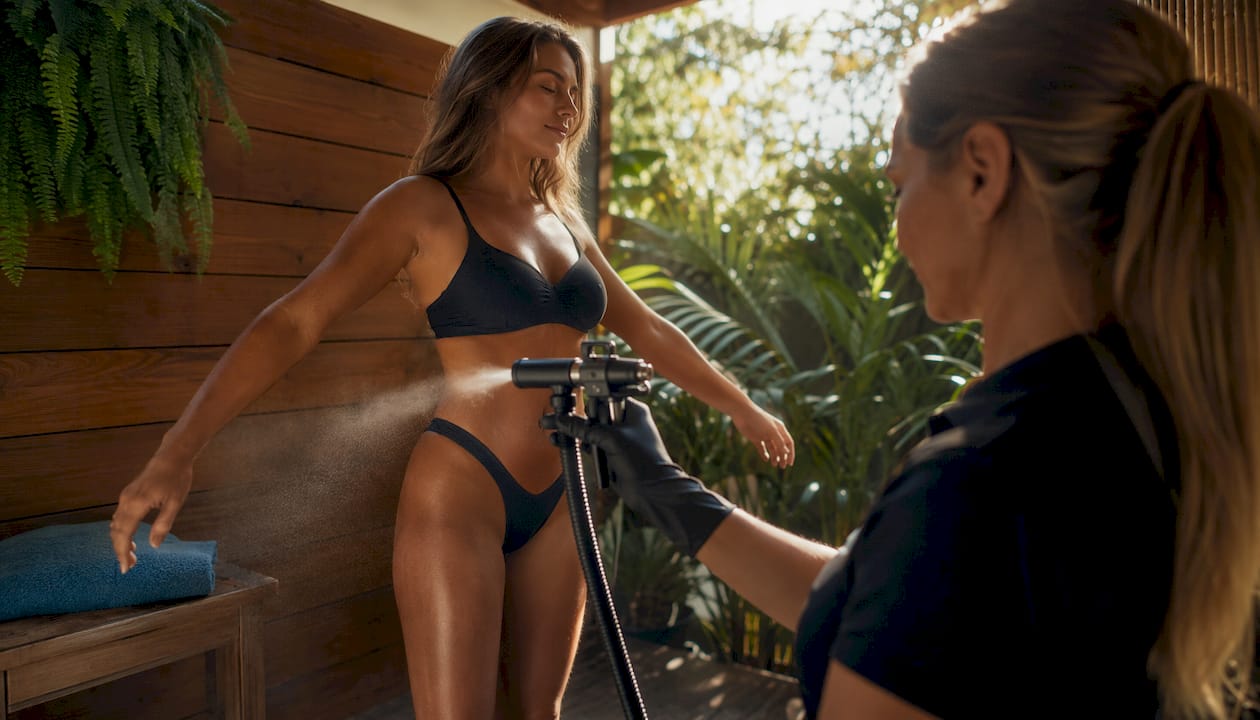
Professional spray booths apply a fine mist to the skin surface, producing a colour change without UV. Results typically last 4–10 days before fading with normal skin exfoliation. The treatment is quick and convenient, though inhalation precautions in the booth are important (see the safety section below).
Gradual tanners
Gradual tanners are leave-on products applied daily to build colour incrementally. They suit people who want a subtle, controllable result and are a practical maintenance tool between deeper treatments.
Carotenoid supplements
Carotenoid-based capsules, often containing beta-carotene, deposit pigment in the skin over weeks of consistent use. The effect is gradual and long-lasting compared with surface treatments, but the resulting tone can lean orange rather than a warm golden-brown. High-dose canthaxanthin supplements carry serious adverse effects and are banned by the FDA; beta-carotene at high synthetic doses is associated with increased lung cancer risk in smokers.
Medical and peptide injections
Peptide-based injections aim to stimulate melanin production directly. They produce rapid colour without UV but are unregulated in the UK, carry significant safety risks, and should never be used without clinician oversight. More on this in the safety section.
Transdermal tanning patches (NuTan®)
Transdermal patches deliver active ingredients through the skin to stimulate natural pigment production from within. NuTan® patches use the brand’s proprietary Nutan MSH-ComplexB formulation to activate the Melanocortin 1 Receptor (MC1R) on melanocytes, kickstarting melanin production. The result is a real, natural tan that does not rub or wash off, achieved with over 70% less UV exposure than conventional tanning methods. This is a fundamentally different approach from surface staining: the skin is doing the work itself.
How do the methods compare across safety, duration and realism?
Method | Development time | Duration | UV required | Safety/health risk | Realism | Cost & convenience | Maintenance |
Sun/UV tanning | Days to weeks | Weeks | High | High (cancer, ageing) | Natural | Low cost; time-intensive | Regular sun exposure |
Tanning beds | Multiple sessions | Weeks | High | High (carcinogenic) | Natural | Moderate cost | Repeat sessions |
Salon spray | Hours | 4–10 days | None | Low–moderate (inhalation risk) | Good | Moderate; salon visit needed | Repeat bookings |
Gradual tanners | Days (builds) | Days | None | Low | Moderate | Low cost; daily effort | Daily application |
Carotenoid supplements | Weeks | Weeks | None | Moderate (dose-dependent) | Orange-toned | Low cost; slow | Daily supplement |
Peptide injections | 24–72 hours | Weeks | Minimal | High (unregulated in UK) | Variable | High; clinician needed | Repeat injections |
Transdermal patches (NuTan®) | Days (gradual build) | Weeks | Minimal (70%+ less than UV tanning) | Low | Natural | Moderate; patch-based | Periodic patch use |
The clearest divide is between high-UV methods (sun, beds) and zero- or low-UV methods (spray, supplements, patches, injections). Among the low-UV options, transdermal patches stand apart because they produce a biologically real tan rather than a surface colour change, and they avoid the inhalation risks of spray booths and the regulatory dangers of unregulated injections.
What are the UK safety and regulatory considerations?
UV tanning carries clear, evidence-backed risks. Dermatological guidance consistently links repeated UV exposure to accelerated skin ageing and elevated skin cancer risk. The UK’s NHS advises against sunbed use, and commercial sunbed salons face strict age-restriction legislation.
For spray treatments, the primary concern is inhalation. No UK health authority has established a definitive safe exposure threshold for inhaled spray-booth mist, so proper booth ventilation and nose/mouth protection remain sensible precautions.
Peptide and hormone-analogue injections present the most serious concern. Products such as Melanotan II are not legally approved for use in the UK, are sold without regulatory oversight, and have been associated with serious adverse events. Anyone considering injection-based tanning should consult a UK-registered clinician before proceeding.
Key safety points:
Sunbeds are banned for under-18s in the UK; repeated adult use still carries significant risk
Spray booths: always use nose and mouth protection to avoid inhaling the mist
Unregulated injections: avoid any product not approved by the MHRA; seek NHS or registered clinician advice
Topical products: check ingredient lists for known allergens; patch-test new formulations on a small area first
Transdermal patches: test one patch and monitor for 48–72 hours before full use; avoid broken or irritated skin
Pro Tip: Before using any new tanning product, check the MHRA’s online register to confirm it is a legally marketed cosmetic or medicine in the UK. If a product makes dramatic claims about hormone stimulation and is sold without a prescription, treat that as a red flag.
Which method suits your goals, skin type and lifestyle?
Matching method to need saves time, money and potential skin damage.
Quick event boost (within 24–48 hours): salon spray treatment delivers visible colour fastest with no UV required
Year-round low maintenance: gradual tanners or periodic patch use suit people who want a consistent, manageable glow without salon appointments
Health-first, natural-looking result: transdermal patches (NuTan®) are the strongest option; the tan is biologically real, requires minimal UV, and suits those who want to avoid surface staining entirely. A skin tones tanning guide can help you match the depth of result to your natural complexion
Sensitive or acne-prone skin: gradual tanners with hydrating formulas or transdermal patches are preferable; avoid spray booths if you have respiratory sensitivity
Darker skin tones: methods that stimulate natural melanin production (patches, careful UV) tend to produce the most harmonious result; surface staining can look uneven on deeper complexions
Budget-conscious: gradual tanners are the most affordable ongoing option; patches represent a mid-range investment with longer-lasting results
Always patch-test any new topical product. For injection-style treatments, specialist oversight is non-negotiable.
Why NuTan® patches are a credible low-UV option
NuTan® patches activate your skin’s own pigment-producing cells using Nutan MSH-ComplexB, a proprietary Beta-MSH formulation derived from a natural source. By binding to and activating the MC1R receptor on melanocytes, the patches trigger a natural biochemical cascade that increases melanin production and provides cellular protection. The result is a genuine tan that does not rub or wash off, achieved with over 70% less UV exposure than conventional tanning methods.
This mechanism is meaningfully different from surface staining. Transdermal delivery works by passing active ingredients through the skin barrier rather than coating the surface, which means the colour produced is your skin’s own melanin. NuTan® positions this as a non-invasive tanning method that sits between passive UV tanning and the risks of unregulated injections.
NuTan® at a glance:
Active ingredient: Nutan MSH-ComplexB (Beta-MSH analogue from a natural source)
Mechanism: MC1R activation → increased melanin production
UV requirement: minimal (over 70% less than standard tanning)
Result: natural tan; does not rub or wash off
Available in the UK with worldwide delivery
Formats: standard patches (box of 10) and triple-strength sachets
How to use transdermal patches safely and what to expect
Apply your first NuTan® patch to clean, dry skin and monitor for 48–72 hours before committing to regular use. Skin preparation and hydration directly affect how evenly and durably the tan develops.
Preparation steps:
Exfoliate gently 24 hours before applying your first patch to remove dead skin cells
Moisturise twice daily in the days leading up to application; well-hydrated skin holds pigment more evenly
Apply the patch to a clean, unbroken area of skin, following the brand’s placement guidance
Avoid applying to areas with active skin conditions or irritation
What to expect:
Initial pigment change: typically begins to appear within a few days of patch use combined with brief, minimal UV exposure
Full result: develops gradually over the course of patch use; the tan deepens naturally
Duration: results last for weeks with periodic maintenance patches
Maintenance: reapply as directed; continue twice-daily moisturising to extend the tan’s lifespan
Integrating patches into a tanning skincare routine helps maintain results between applications. Brief, sensible sun exposure during the active patch period is all that is needed.
Questions to ask and red flags to watch for
Before committing to any tanning treatment, a short checklist protects your health and your money.
Questions worth asking:
Is there published clinical or safety evidence for this product or treatment?
Are the ingredients fully disclosed on the label?
Is the product registered with the MHRA or compliant with UK cosmetic regulations?
For injection-style treatments: is a qualified UK clinician supervising the procedure?
Does the brand offer a clear returns or complaints policy?
Red flags:
Claims of “instant permanent tan” or “no UV ever needed” without a credible mechanism
Injection products sold without prescription or clinician involvement
Spray booths with no ventilation or protective equipment provided
No ingredient list or safety data available
Pressure to buy in bulk before you have tested the product
Pro Tip: If a tanning product is sold via social media with no verifiable UK address, no MHRA registration, and promises that sound too dramatic, walk away. The safer alternatives are well-documented and widely available.
Key takeaways
Transdermal tanning patches represent the most health-conscious route to a natural, long-lasting tan, requiring over 70% less UV exposure than conventional methods and producing a real melanin-based result rather than a surface stain.
Point | Details |
Prioritise low or zero UV | Methods that avoid or minimise UV exposure protect against skin ageing and cancer risk. |
Patches produce a real tan | NuTan® patches stimulate melanin production via MC1R activation; the colour does not rub or wash off. |
Prep and hydration matter | Exfoliate 24 hours before and moisturise twice daily to extend and even out results. |
Injections carry serious risk | Unregulated peptide injections are not legally approved in the UK; always seek clinician advice first. |
NuTan® patches | Available in the UK with worldwide delivery; require over 70% less UV than standard tanning methods. |
Modern tanning as a wellness choice, not just aesthetics
The tanning conversation has shifted. Consumers are no longer choosing between a sunburn and an orange streak; they are asking which method respects their skin’s long-term health while still delivering a result they feel confident in. That shift matters because the skin is not just a canvas. It is a living organ, and the methods we use to change its appearance have real biological consequences.
The most significant development in recent years is the move toward methods that work with skin biology rather than against it. Wearable skincare technology and transdermal delivery systems represent that direction clearly: instead of coating the surface or blasting it with radiation, they engage the skin’s own mechanisms. NuTan® patches sit at that intersection of science and practicality. For anyone serious about long-term skin health, the question is no longer just “how do I get a tan?” but “how do I get a tan I can sustain safely for years?”
NuTan® patches: a low-UV option you can try today
For those who want a natural-looking tan without heavy UV exposure, NuTan® patches offer a straightforward, science-backed alternative. Each patch delivers Nutan MSH-ComplexB transdermally, activating your skin’s melanocytes to produce real melanin. The tan builds gradually, feels natural, and does not wash off. Over 70% less UV exposure is required compared with conventional tanning, making it a genuinely health-conscious choice.
NuTan® is available in the UK and ships worldwide. The standard box of 10 patches suits first-time users, while the triple-strength option is available for those who want a deeper result. Visit the NuTan® product page to check availability and place an order.
This article is for general information only and does not constitute medical advice. Consult a qualified healthcare professional before using any tanning treatment, particularly injection-based products.
Useful sources
A Review of Common Tanning Methods (PMC/NCBI) — peer-reviewed overview of UV, topical, and supplement tanning methods with safety data
Good Housekeeping Institute self-tanner consumer study — 106-tester study covering development time (average 2.6 hours) and duration (average five days) for topical products
Spray tan vs tanning bed: safety, cost and results (AnarchyLabel) — practical 2026 comparison of spray and UV-bed methods including duration and risk profiles
Tanning methods compared: sun, salon, topical and supplement (IEMLabs) — covers supplement timelines and how they compare with topical and salon options
Non-Invasive Tanning Methods: Safe Examples That Work (NuTan) — NuTan® educational content explaining the Nutan MSH-ComplexB mechanism and brand safety positioning
What is transdermal delivery beauty? (Glowera) — clear consumer-level explanation of how transdermal delivery differs from topical surface application
FAQ
What are the safest types of self tanning methods?
Zero-UV and low-UV methods carry the least risk. Transdermal patches such as NuTan® require over 70% less UV than conventional tanning and produce a natural melanin-based tan without surface staining or unregulated injections.
How long does a tan from patches typically last?
NuTan® patches produce a gradual tan that lasts for weeks with periodic maintenance use. Twice-daily moisturising and gentle exfoliation habits help extend the result.
Are peptide tanning injections legal in the UK?
Products such as Melanotan II are not approved by the MHRA and are not legally licensed for use in the UK. Anyone considering injection-based tanning should consult a UK-registered clinician before proceeding.
How quickly does colour develop with transdermal patches?
Colour begins to appear within a few days of patch use combined with brief, minimal UV exposure. The tan deepens gradually over the course of treatment rather than appearing overnight.
Which self-tanning method works best for sensitive skin?
Gradual tanners with hydrating formulas and transdermal patches are generally the most suitable for sensitive skin. Spray booths can irritate the respiratory system, and high-UV methods carry inherent skin-damage risk regardless of skin type.
Recommended