

What is a non surgical eye lift? Your Worldwide guide
- 6 hours ago
- 9 min read

A non-surgical eye lift is a set of non-invasive and minimally invasive treatments that refresh and lift the eye area without cutting skin. The term is a marketing umbrella rather than a single procedure, covering everything from instant topical creams to energy-based clinic treatments. Your goals and anatomy determine which option is right for you.
Main option categories at a glance:
Instant topicals and serums — creams and serums that create a visible tightening effect within minutes
Injectables — neuromodulators (such as botulinum toxin) for a chemical brow lift; hyaluronic acid fillers for volume and tear-trough support
Energy-based devices — monopolar radiofrequency (RF) and high-intensity focused ultrasound (HIFU) for collagen stimulation and skin tightening
Prescription eye drops — oxymetazoline hydrochloride for temporary upper-lid elevation (prescription-only in the UK; consult a clinician)
Minimally invasive threads — dissolvable sutures that provide more lift than injectables but stop short of surgery
Table of Contents
What types of non-surgical eye lift are available?
A personalised combination of treatments tends to produce the most natural outcome because different concerns need different tools.
Instant topicals and serums
These work by forming a temporary tightening film on the skin surface, producing a visible change within minutes. NuTan®'s NuRejuv Instant Lift Eye Cream and NuEyes Rejuvenating Eye Serum sit in this category. They are ideal for mild puffiness and a quick refresh before an event.
Pros: immediate effect, no downtime, easy to use at home
Cons: temporary (hours to a day), no structural correction
Injectables
Botulinum toxin relaxes the brow depressor muscles, allowing the elevator muscles to raise the lateral brow by a few millimetres. Hyaluronic acid fillers restore volume in the tear trough and temples.
Pros: visible lift within days, no surgery
Cons: bruising risk, requires an accredited practitioner, results are temporary
Energy-based devices: RF and HIFU
Monopolar RF and HIFU heat deeper skin layers to stimulate collagen remodelling. RF and HIFU show measurable eyelid tightening, with many patients noting improvement over time with continued gains in the following months.
Pros: progressive, natural-looking tightening; no incisions
Cons: multiple sessions needed, results build slowly
Fractional CO₂ laser
Widely used for periorbital skin texture and tightening, with results lasting around one to two years depending on skin type and lifestyle.
Pros: significant texture improvement, longer-lasting than RF alone
Cons: downtime of several days, higher cost
Prescription oxymetazoline drops
These drops stimulate the superior tarsal muscle, temporarily elevating the upper eyelid by about 1–2 mm within minutes. UK note: oxymetazoline is prescription-only — consult your GP or a registered clinician.
Pros: fast, needle-free, no recovery
Cons: temporary effect, prescription required
Thread lifts
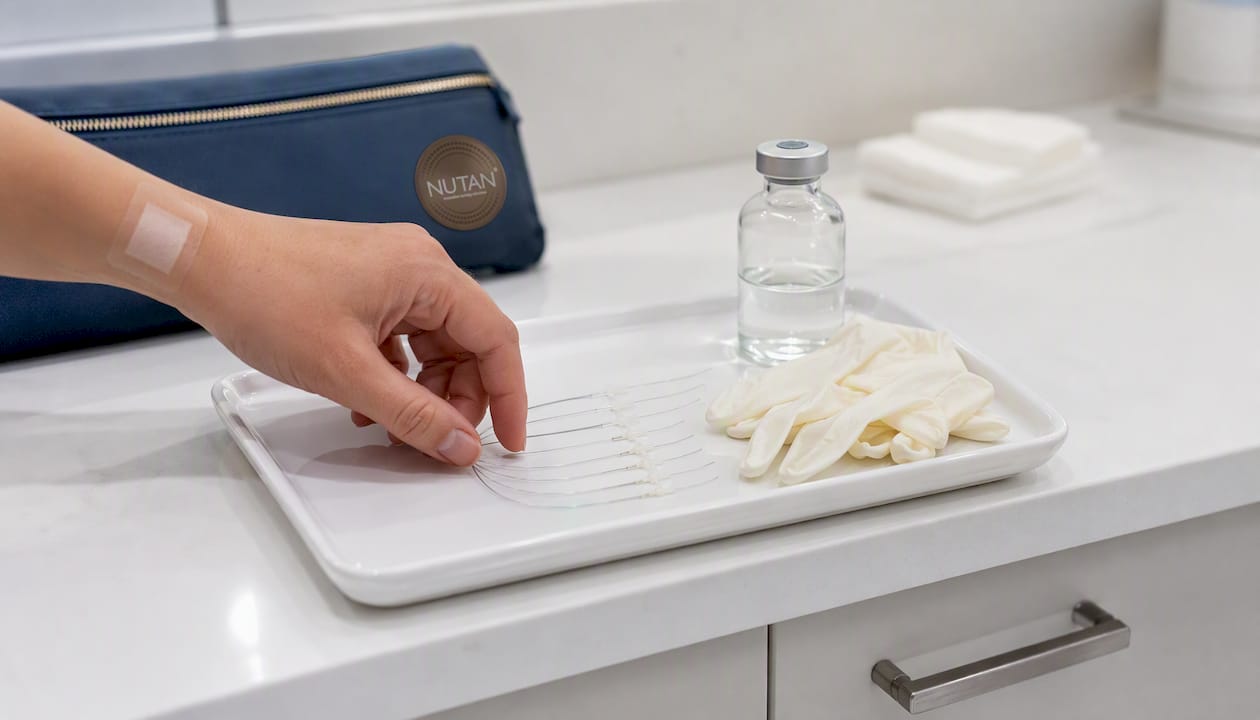
Dissolvable sutures with tiny anchors mechanically lift sagging brow tissue, offering more power than botulinum toxin but less than surgery, with results that may last one to two years.
How does a non-surgical eye lift work?
Different tools target different structures: skin surface, volume, muscle pull, or deeper collagen. Understanding which layer needs attention helps you choose the right approach.
The eyelid skin is approximately four times thinner than cheek skin, which makes the periorbital area particularly sensitive to over-treatment. A cautious “less is more” principle applies here, especially with fillers.
Topicals create a temporary film or surface contraction for an instant visual tightening effect
Neuromodulators reduce the pull of brow depressor muscles, allowing the brow to sit a few millimetres higher
Fillers restore lost volume beneath the skin, smoothing hollows and reducing shadows
RF and HIFU deliver controlled heat into the dermis, triggering collagen contraction immediately and new collagen formation over weeks to months
Pro Tip: Before booking any injectable treatment, try the simple brow-lift test at home: gently raise your brow with your fingers. If the hooding improves noticeably, a neuromodulator or brow-focused treatment is likely to help. If it does not, the issue may be excess skin rather than brow descent.
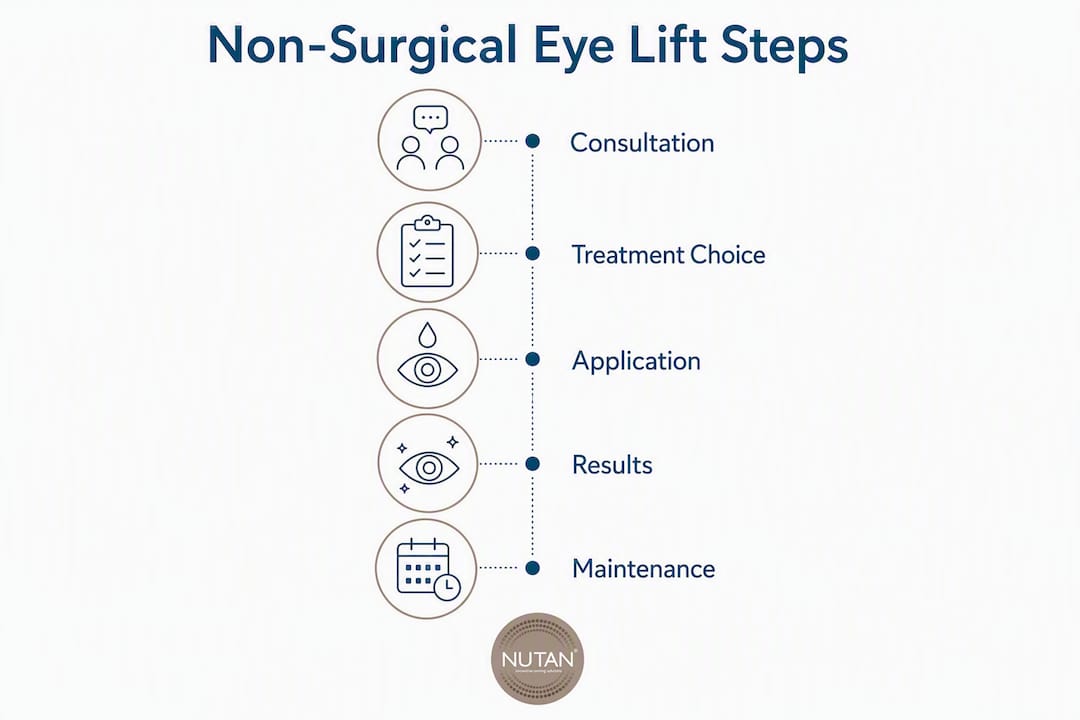
What results can you expect, and when?
Instant topicals produce a visible change within minutes. Energy devices and fillers build over weeks to months.
Treatment | Typical onset | Typical duration |
Instant topical creams/serums | Immediate (minutes) | Hours to one day |
Neuromodulators (botulinum toxin) | 3–7 days | 3–4 months |
Hyaluronic acid fillers | Immediate | 6–18 months |
Monopolar RF / HIFU | 2–6 months | 12–18 months |
Fractional CO₂ laser | Weeks | 1–2 years |
Oxymetazoline drops | Minutes | Temporary (hours) |
Many non-surgical approaches require repeat treatments or consistent daily topical use to sustain results. Energy-based devices stimulate collagen over time, so a single session rarely tells the full story.
Who is a good candidate, and when is surgery needed?
Ideal candidates have mild-to-moderate skin laxity, early brow descent, or under-eye hollowness. Non-surgical options work best when there is still reasonable skin elasticity and the concern is quality rather than quantity of tissue.
Good candidate signs:
Brow descent that improves visibly on the manual lift test
Fine lines, early crepiness, or mild puffiness
Tear-trough hollowing creating a tired appearance
Preference for gradual, natural-looking improvement
Red flags that suggest surgical referral:
Significant excess skin folding over the lash line or obstructing vision
Large herniated fat pads that create persistent bags
True levator ptosis (the muscle itself is weak, not just the brow position)
Non-surgical treatments cannot replicate the permanent results of blepharoplasty for major excess skin or herniated fat. An honest, anatomy-based consultation is the only reliable way to know which category you fall into.
Pro Tip: Ask any clinician to explain exactly which structure they are targeting and why. A practitioner who cannot answer that question clearly is not the right choice for periorbital work.
Safety, side effects, and aftercare in the UK
Most non-surgical options are low-risk when provided by accredited practitioners. Topicals carry fewer systemic risks but can irritate sensitive skin.
Common side effects by category:
Topicals: temporary tightness, mild redness, or irritation
Neuromodulators: bruising, temporary brow droop if misapplied
Fillers: swelling, Tyndall effect (bluish tint from superficial placement), overfilling
Energy devices: transient redness, temporary crusting
Oxymetazoline drops: transient blurred vision or dryness
UK prescription notice: oxymetazoline is prescription-only. Do not purchase from unregulated sources; consult a UK GP or registered clinician.
Aftercare essentials:
Apply a cool compress after energy-based treatments
Avoid rubbing the eye area for 24 hours after injectables
Patch test any new topical on the inner arm before applying near the eyes
Follow your clinic’s written aftercare instructions precisely
Seek urgent care if you experience vision changes, persistent severe pain, or skin blanching after filler — these can indicate vascular occlusion, a rare but serious complication.
How to choose a clinician or product in the UK
Start with your goal: instant appearance improvement points you towards topicals; structural change requires a clinic consultation.
Verify credentials — look for oculoplastic surgery training, advanced facial anatomy qualifications, or membership of the British Association of Aesthetic Plastic Surgeons (BAAPS) or the Joint Council for Cosmetic Practitioners (JCCP)
Ask about periorbital experience specifically — general aesthetics experience is not the same as specialist eyelid knowledge
Request a before-and-after portfolio — and ask how many of those cases match your concern
Confirm the emergency protocol — a reputable clinic will have a clear plan for complications including filler reversal with hyaluronidase
For topicals: check active ingredients, ask for patch-test guidance, and confirm the return policy
Red flags to avoid:
Guarantees of permanent results from any non-surgical treatment
Pressure to purchase large upfront packages before a consultation
No written aftercare or emergency contact information
Unclear or unverifiable credentials
Rough UK cost ranges (private, out of pocket):
Instant topical creams/serums: £20–£80 per product
Neuromodulator session (periorbital): £200–£400
Filler session (tear trough): £300–£600
RF or HIFU session: £150–£500 per session
Fractional CO₂ laser: £500–£1,500 per session
What does the clinical evidence say?
The evidence base for non-surgical eye rejuvenation is growing, though it varies by modality.
Modality | Key finding | Source |
HIFU | Measurable eyelid tightening; mean lid length reduction of 0.94 mm (p < 0.0001); mild-to-moderate improvement in clinician and patient scores | PMC prospective cohort study |
Monopolar RF / HIFU | Consistent improvement in skin laxity and periorbital wrinkles at 2 and 6 months | Springer clinical study |
Oxymetazoline drops | Temporary 1–2 mm upper-lid elevation within minutes of application | PMC clinical note |
Fractional CO₂ laser | Periorbital tightening with estimated duration of 1–2 years | Clinician summaries |
UK regulatory note: energy-based devices must be operated by appropriately trained practitioners. The Medicines and Healthcare products Regulatory Agency (MHRA) regulates prescription medicines including oxymetazoline drops; always obtain them through a registered UK prescriber.
Maintenance schedules and UK costs
Many non-surgical options require repeat sessions or daily topical use to sustain results.
Instant topicals: daily use to maintain the effect
Neuromodulators: repeat every 3–4 months
Hyaluronic acid fillers: top-up at 6–18 months depending on the product used
RF / HIFU: booster sessions at 12–18 months; some protocols recommend a course of 3–6 initial sessions spaced 4–6 weeks apart
Fractional CO₂ laser: typically one to two sessions, with maintenance at 1–2 years
All cosmetic treatments in the UK are private and paid out of pocket. Standard health insurance does not cover aesthetic procedures unless there is a documented functional impairment (such as vision obstruction from excess skin).
Key takeaways
Non-surgical eye lifts work best for mild-to-moderate concerns; instant topicals deliver immediate visible change, while energy devices and injectables build structural improvement over weeks to months.
Point | Details |
Definition | A non-surgical eye lift is an umbrella term for non-invasive treatments that refresh the eye area without surgery. |
Best candidates | Mild-to-moderate laxity, early brow descent, or tear-trough hollowing respond well; significant excess skin or herniated fat pads usually require surgery. |
Timelines vary | Topicals work in minutes; neuromodulators take days; RF/HIFU improvements emerge at 2–6 months. |
Maintenance is ongoing | Most options need repeat sessions or daily topical use; no non-surgical treatment is permanent. |
NuTan® instant-lift range | NuRejuv Instant Lift Eye Cream and NuEyes Rejuvenating Eye Serum offer rapid visible improvement for mild concerns at home. |
NuTan®'s perspective on non-surgical eye care
The most common mistake people make with non-surgical eye lifts is expecting one product or one clinic session to do everything. The evidence is clear: different concerns need different tools, and the best outcomes come from matching the right approach to the right anatomy. For mild puffiness, a quality instant-lift topical is genuinely effective and carries almost no risk. For structural brow descent or deeper laxity, a clinic consultation is the honest next step, not an optional extra.
NuTan® developed its instant-lift skincare range precisely for the gap between “I want to look fresher today” and “I am ready to book a clinic appointment.” That gap is real, and it is where most people actually live. Used consistently and with realistic expectations, a well-formulated eye serum or cream is a safe, accessible starting point for non-surgical eye rejuvenation.
NuTan® instant-lift eye products: try them today
Visible results in under three minutes, no needles, no downtime. NuTan®'s instant-lift range is formulated for exactly the mild-to-moderate concerns this guide covers.

NuRejuv Instant Lift Eye Cream — reduces the appearance of eye bags and puffiness within minutes; apply a small amount to clean, dry skin around the eye area and allow to set
NuEyes Rejuvenating Eye Serum — targets fine lines and under-eye bags; ideal for daily use as part of a maintenance routine
NuRejuv Collagen Instant Lift Face Cream — extends the lifting effect across the upper face; pairs well with the eye serum for a broader refresh
Safety reminder: always patch test on the inner arm before first use, avoid direct contact with the eyes, and discontinue use if irritation occurs. Full application guidance is available on the NuTan® website. NuTan® ships worldwide, so wherever you are, your order is covered.
Browse the full range and place your order at nutan.net.
Useful sources
Efficacy of HIFU for upper and lower eyelid sagging (PMC) — prospective cohort study with quantitative eyelid measurements
Clinical note on oxymetazoline for temporary eyelid elevation (PMC) — prescription drop mechanism and 1–2 mm lift data
RF and HIFU eyelid tightening clinical study (Springer) — two- and six-month improvement data
Non-surgical alternatives to eyelid surgery (Ford Plastic Surgery) — practitioner perspective on limits and surgical referral
MHRA — medicines regulation in the UK — regulatory body for prescription medicines including oxymetazoline
General Medical Council — find a registered doctor — verify UK clinician registration before any injectable or device treatment
FAQ
What is a non-surgical eye lift?
A non-surgical eye lift is an umbrella term for non-invasive treatments that improve the eye area without surgery, including instant topical creams, injectables, energy-based devices, and prescription drops.
How quickly do non-surgical eye lift results appear?
Instant topical creams and oxymetazoline drops work within minutes; neuromodulators take 3–7 days; RF and HIFU improvements typically emerge at 2–6 months.
Are non-surgical eye lifts safe in the UK?
Most options are low-risk when used correctly. Prescription drops require a UK clinician; injectable and energy-based treatments must be performed by accredited practitioners. Always patch test new topicals before use.
Can a cream replace a clinic treatment for eye bags?
A quality instant-lift cream such as NuRejuv Instant Lift Eye Cream reduces the appearance of mild puffiness within minutes, but it does not address structural causes like herniated fat pads, which require a clinical assessment.
When should you consider surgical blepharoplasty instead?
Surgery is the appropriate choice when excess skin obstructs vision, fat pads are significantly herniated, or non-surgical options have not produced satisfactory results for moderate-to-severe laxity.
Recommended