

What is oxidation based tanning: the complete guide
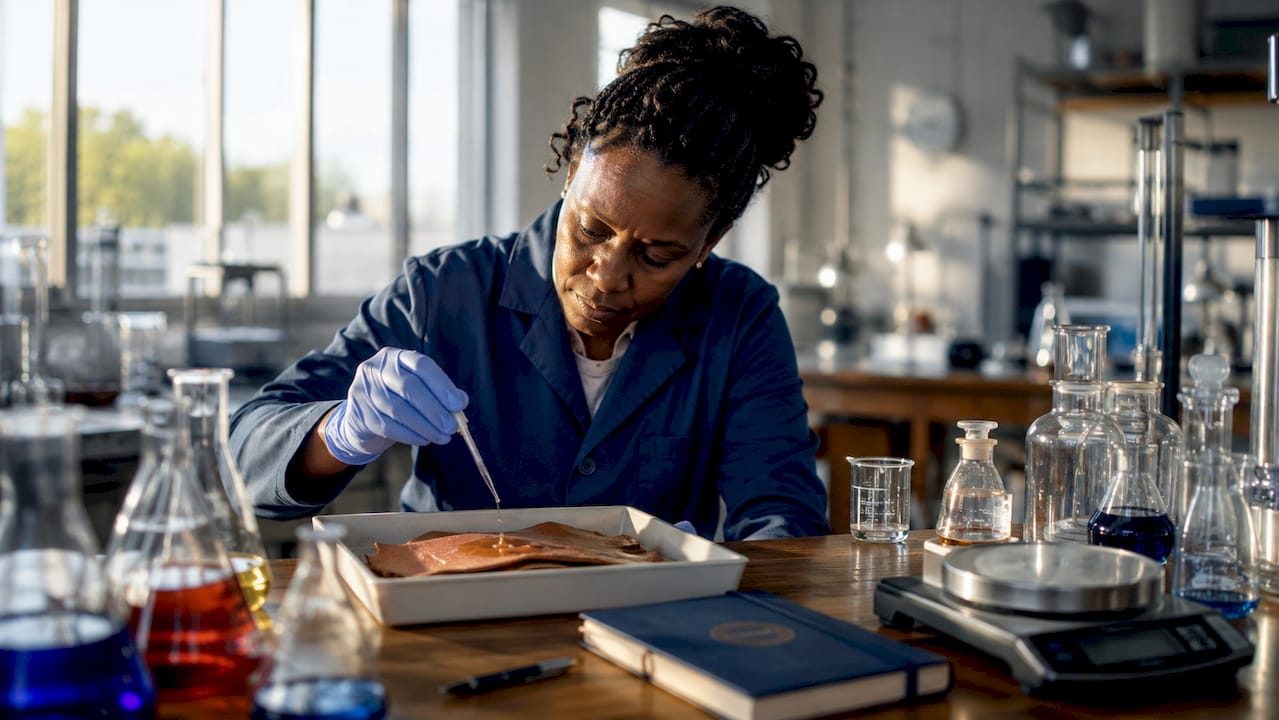
Oxidation-based tanning is defined as a chemical process that converts natural biopolymers, such as polysaccharides and lignin, into reactive tanning agents through controlled oxidation reactions. The term is most widely used in leather science, where it describes a growing family of green tanning chemistry approaches that reduce or replace heavy metals like chromium. Researchers and manufacturers are increasingly drawn to this method because it delivers comparable performance to conventional tanning while cutting environmental harm. Understanding the oxidation tanning process matters whether you are a leather craftsperson, a sustainability-minded consumer, or simply curious about how chemistry shapes the materials around you.
What is oxidation based tanning and how does it work chemically?
Oxidation-based tanning works by introducing reactive functional groups, most commonly aldehyde groups, into natural polymer chains. Reagents such as sodium periodate or hydrogen peroxide break specific bonds within polysaccharides like tapioca starch, lignin, and pectin. The resulting aldehyde-rich molecules then bind to collagen fibres in animal hide, cross-linking the protein structure and stabilising it against heat, moisture, and decay. This binding mechanism mirrors what chromium salts achieve in conventional tanning, but without the heavy metal burden.
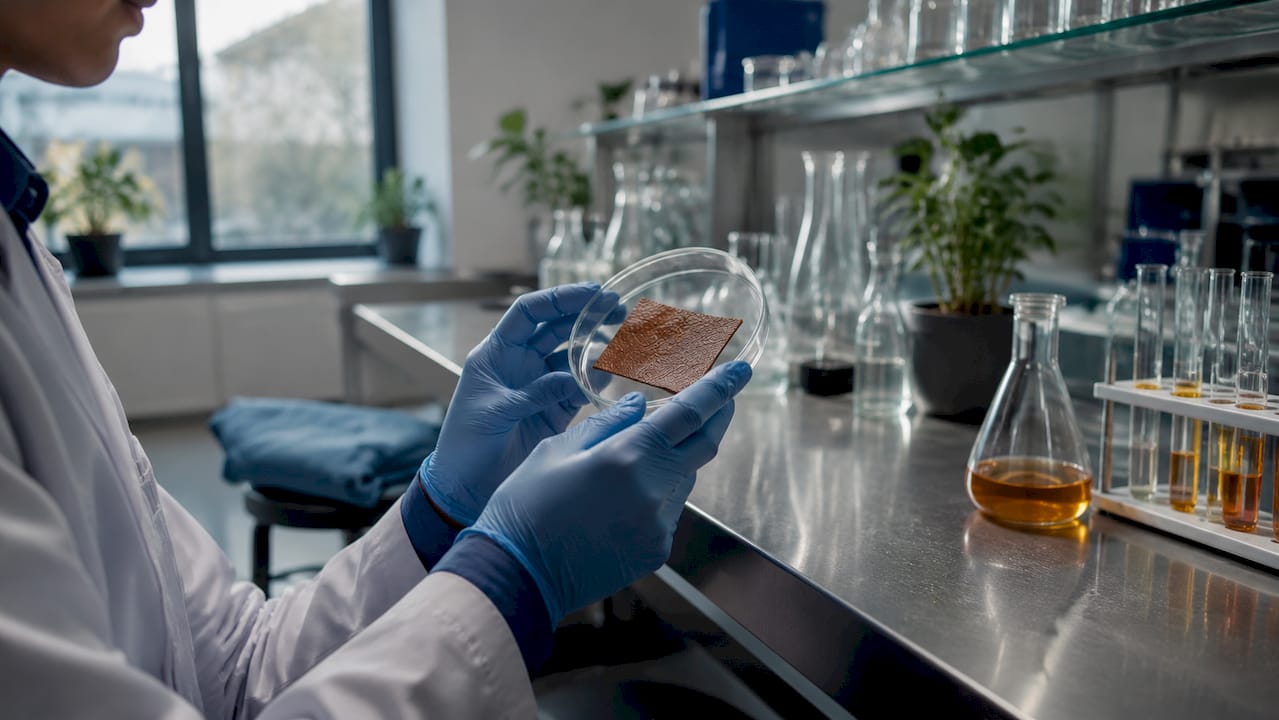
The chemistry is precise and laboratory-controlled. Sodium periodate oxidation selectively targets the C2–C3 bond of glucose units in starch, producing dialdehyde starch with a high density of reactive sites. Hydrogen peroxide offers a less selective but more accessible oxidation route, particularly useful for modifying lignin. Both reagents are well-documented in peer-reviewed research and are already used at commercial scale in several eco-friendly tanneries across Europe and Asia.
The key steps in the oxidation tanning process are:
Substrate selection. Choose a natural polysaccharide or biopolymer, such as tapioca starch, gum tragacanth, or lignin extracted from wood pulp.
Oxidation reaction. Apply sodium periodate or hydrogen peroxide under controlled temperature and pH to introduce aldehyde or carboxyl groups.
Purification. Remove excess reagent and by-products to prevent unwanted side reactions during tanning.
Application to hide. Immerse the prepared hide in the oxidised agent solution, allowing aldehyde groups to form Schiff base bonds with collagen amino groups.
Fixation and finishing. Adjust pH to lock the bonds, then dry and condition the leather as normal.
Pro Tip: Avoid using iron tools or untreated tap water during the oxidation stage. Trace iron ions catalyse unintended oxidation of tannins, causing patchy discolouration and inconsistent results across the hide.
How does oxidation tanning compare to chrome and vegetable tanning?
The three dominant tanning methods each use a different chemical mechanism, and each produces leather with distinct properties. Understanding the differences helps you choose the right method for a given application and appreciate why oxidative approaches are gaining ground.
Chrome tanning uses trivalent chromium salts to form dense cross-links within the collagen matrix. Chrome-tanned leather maintains a consistent appearance over time and resists environmental change well. The process is fast, typically completing in under 24 hours, and produces soft, uniform leather favoured by the footwear and upholstery industries. The environmental challenge is significant: chromium waste in effluent is tightly regulated in the EU and many other jurisdictions, and chromium(VI) compounds are classified as carcinogenic.
Vegetable tanning relies on polyphenolic tannins derived from tree bark, oak galls, and similar plant sources. These tannins bind to collagen via hydrogen bonds and covalent bonds, producing firm, dense leather. Vegetable-tanned leather contains 25–35% tannin by weight and continues to darken and soften through ongoing oxidation over decades. That evolving patina is a prized characteristic in saddle-making and heritage goods, but the process takes weeks rather than hours.
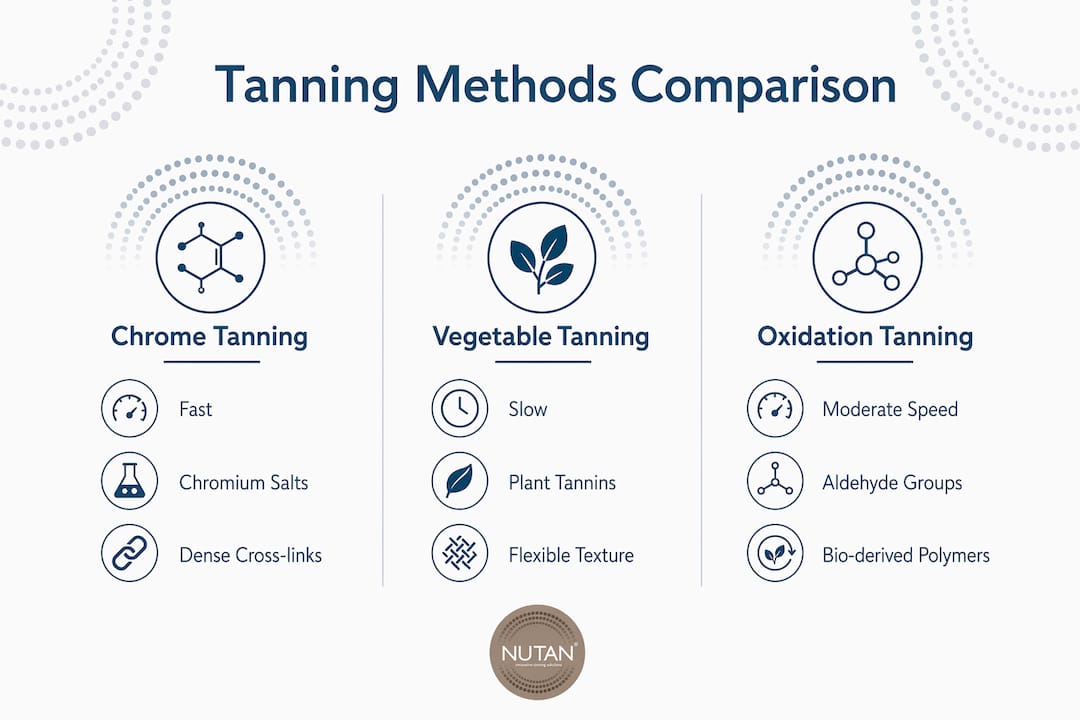
Oxidation-based tanning sits between these two approaches in both speed and character. It uses modified natural polymers rather than metal salts, and the resulting leather can be engineered to be softer or firmer depending on the substrate chosen.
Feature | Chrome tanning | Vegetable tanning | Oxidation-based tanning |
Primary tanning agent | Chromium(III) salts | Plant polyphenols | Oxidised polysaccharides or lignin |
Process speed | Under 24 hours | Several weeks | Hours to days |
Environmental impact | High (chromium effluent) | Moderate (large water use) | Low (bio-based, reduced metal waste) |
Leather appearance | Consistent, uniform | Develops patina over time | Adjustable, natural-looking |
Shrinkage temperature | ~100 °C | ~80–85 °C | Up to 114 °C with oxidised tragacanth |
Sustainability rating | Low | Moderate | High |
What are the benefits and challenges of oxidation-based tanning?
The environmental benefits of oxidative tanning methods are the clearest argument for their adoption. By replacing chromium with bio-derived agents, tanneries reduce toxic metal discharge into waterways. Oxidised tragacanth achieves 96.7% chromium absorption when used as a pre-tanning agent, meaning far less chromium enters the waste stream. That single metric represents a meaningful reduction in pollution for any tannery that adopts it.
Performance benefits are equally compelling. The same oxidised tragacanth raises leather shrinkage temperature to 114 °C, which exceeds the thermal stability of many vegetable-tanned leathers. Oxidised lignin, prepared through hydrogen peroxide and ozone treatment, improves leather thickness and strength beyond what synthetic retanning agents typically achieve. These are not marginal gains; they represent a genuine upgrade in product quality alongside the environmental benefit.
Key benefits of oxidation-based tanning at a glance:
Reduced chromium pollution. Pre-tanning with oxidised polysaccharides captures chromium more efficiently, cutting effluent toxicity.
Higher thermal stability. Shrinkage temperatures above 110 °C are achievable, matching or exceeding chrome-tanned leather in some formulations.
Improved mechanical strength. Oxidised lignin retanning agents increase leather thickness and tensile properties.
Bio-based raw materials. Substrates like tapioca starch, gum tragacanth, and wood lignin are renewable and widely available.
Compatibility with existing processes. Oxidised agents work as pre-tanning or retanning additions without requiring a complete process overhaul.
The challenges are real and should not be understated. Controlling the degree of oxidation is technically demanding. Over-oxidation degrades the polymer backbone, reducing the number of useful reactive sites. Under-oxidation leaves too few aldehyde groups to bind collagen effectively. Uniformity across large hides requires careful process monitoring, particularly temperature and reagent concentration. Scaling laboratory results to commercial drum tanning also introduces variables that bench-scale studies do not capture.
Pro Tip: When scaling up an oxidation tanning process, test reagent concentration at three points across the hide surface before committing to a full batch. Thickness variation in the hide affects reagent penetration and can produce uneven tanning even when drum conditions appear consistent.
What are the practical applications and future trends?
Oxidation-based tanning is already in commercial use, primarily as a pre-tanning or retanning step rather than a standalone process. Tanneries in Italy, China, and India have incorporated oxidised polysaccharide agents into their chrome-tanning workflows to improve chromium exhaustion and reduce effluent load. The approach fits neatly into existing infrastructure, which lowers the barrier to adoption considerably.
Biomass-derived retanning agents represent the most active area of current research. Oxidised lignin, sourced from paper-making by-products, is particularly promising because it is available in vast quantities at low cost. Researchers have demonstrated that hydrogen peroxide-ozone oxidation of lignin produces agents that coordinate with chromium ions during retanning, improving both the mechanical properties of the leather and the efficiency of chromium uptake. This dual benefit makes oxidised lignin one of the most commercially attractive green chemistry options available today.
Consumer demand is accelerating the shift. Luxury brands and mid-market manufacturers alike face pressure from buyers who want verified sustainability credentials. Leather certified as produced with reduced chromium or bio-based tanning agents commands a premium in several European markets. Regulatory pressure reinforces this: the EU’s REACH regulation restricts chromium(VI) in leather goods, and tighter limits on chromium(III) in effluent are under active discussion. Oxidation-based methods position tanneries ahead of that regulatory curve rather than scrambling to catch up. For those interested in non-invasive tanning methods more broadly, the same philosophy of working with natural chemistry rather than against it runs through both leather science and personal care innovation.
The next frontier is fully chromium-free leather produced entirely through oxidative and aldehyde-based chemistry. Several research groups are working on combined systems that pair oxidised starches with plant-based crosslinkers to achieve shrinkage temperatures above 100 °C without any metal input. Commercial viability at scale remains a few years away, but the trajectory is clear.
Key takeaways
Oxidation-based tanning is the most promising sustainable alternative to chrome tanning because it uses bio-derived reactive agents to achieve comparable or superior leather performance with significantly lower environmental impact.
Point | Details |
Core mechanism | Sodium periodate or hydrogen peroxide introduces aldehyde groups into polysaccharides, enabling collagen binding. |
Performance benchmark | Oxidised tragacanth raises shrinkage temperature to 114 °C and achieves 96.7% chromium absorption. |
Environmental advantage | Bio-based agents reduce chromium effluent and align with EU REACH regulatory requirements. |
Practical challenge | Controlling oxidation degree and uniformity across large hides requires careful process monitoring. |
Commercial direction | Oxidised lignin from paper-making by-products is the leading candidate for scalable, chromium-free retanning. |
Why oxidation tanning matters more than most people realise
Working closely with tanning chemistry over the years, one thing stands out clearly: the industry has been slow to move away from chromium not because better options do not exist, but because familiarity breeds inertia. Oxidation-based methods have been technically viable for longer than most tanneries acknowledge. The research on oxidised tragacanth and dialdehyde starches is not speculative; it is published, peer-reviewed, and reproducible.
What genuinely excites me about this direction is the feedback loop between sustainability and performance. The assumption has always been that going green means accepting a trade-off in quality. Oxidised lignin retanning agents challenge that assumption directly. They improve leather strength and thickness while reducing metal waste. That is not a compromise; it is an upgrade.
For conscious consumers, the practical takeaway is straightforward. Ask about tanning chemistry when buying leather goods. Brands that use oxidation-based or reduced-chrome processes are not just making an environmental gesture; they are often producing better leather. The same principle applies to personal care: working with your body’s natural chemistry, rather than overwhelming it with harsh agents, consistently produces better and safer results. Tailored approaches to skin health, as explored in luxury skincare research, reinforce this point across multiple disciplines.
The future of tanning, in leather and beyond, belongs to methods that respect natural chemistry. Oxidation-based approaches are not a niche experiment. They are the direction the industry is heading, and the sooner practitioners and consumers understand that, the better positioned they will be.
— NuTan®
NuTan® and the natural tanning approach
The same philosophy that drives oxidation-based leather tanning, working with natural chemistry rather than forcing harsh agents onto the body, sits at the heart of NuTan®.
NuTan® transdermal tanning patches use a naturally sourced Beta-melanocyte-stimulating hormone complex, the NuTan MSH-ComplexB, to activate the Melanocortin 1 Receptor (MC1R) on your skin’s melanocytes. This kickstarts your body’s own pigment production, delivering a natural-looking tan that does not wash off and does not rely on skin staining. You need vastly less UV exposure compared with conventional tanning methods. The result is a genuine, lasting colour produced by your own biology. NuTan® ships worldwide, so wherever you are, a safer approach to tanning is within reach. Explore the full range, starting with the NuTan® tanning patches, and see what working with your skin’s natural chemistry can achieve.
FAQ
What is oxidation based tanning in simple terms?
Oxidation-based tanning is a process that uses controlled chemical oxidation to convert natural substances, such as starch or lignin, into reactive agents that bind to and preserve animal hide. It is a bio-based alternative to chromium tanning.
How does oxidation tanning work at a molecular level?
Reagents like sodium periodate introduce aldehyde groups into polysaccharide chains. Those aldehyde groups then form stable bonds with collagen amino groups in the hide, cross-linking the protein structure and stabilising the leather.
What are the main benefits of oxidation tanning over chrome tanning?
Oxidation tanning reduces toxic chromium effluent, uses renewable raw materials, and can achieve shrinkage temperatures up to 114 °C. It also improves chromium exhaustion when used as a pre-tanning agent, cutting overall metal waste.
What causes uneven results in the oxidation tanning process?
Trace iron ions from water or metal tools catalyse unintended oxidation reactions, causing discolouration and patchy results. Controlling reagent concentration and removing trace metals from process water are the most effective preventive steps.
Is oxidation-based tanning used commercially today?
Yes. Tanneries in Europe and Asia already use oxidised polysaccharide agents as pre-tanning or retanning additions within existing chrome-tanning workflows, primarily to improve chromium exhaustion and reduce effluent toxicity.
Recommended
Comments