

Combine tanning skincare routine: your complete glow guide

A well-planned tanning skincare routine is the single biggest factor separating a patchy, short-lived tan from a deep, even, sun-kissed glow that lasts. When you combine tanning with a considered skincare approach, you protect your skin barrier, support your skin’s natural pigment production, and get noticeably better results. This guide covers every stage: preparation, tanning day care, post-tan maintenance, and the common mistakes that quietly ruin even the best efforts. Whether you are new to tanning or refining an existing routine, the steps here are grounded in skin science and practical experience.
How to combine your tanning skincare routine for best results
The foundation of any successful tanning skincare routine is skin preparation. Skin that is exfoliated, hydrated, and free from barrier-disrupting actives absorbs tanning support evenly and holds colour far longer. Skipping preparation is the most common reason tans develop patchily or fade within days.
Preparation should start 24–48 hours before your tanning session. That window gives your skin time to settle after exfoliation and absorb any moisturiser you apply. Rushing this stage is a reliable way to end up with uneven fading across elbows, knees, and ankles.
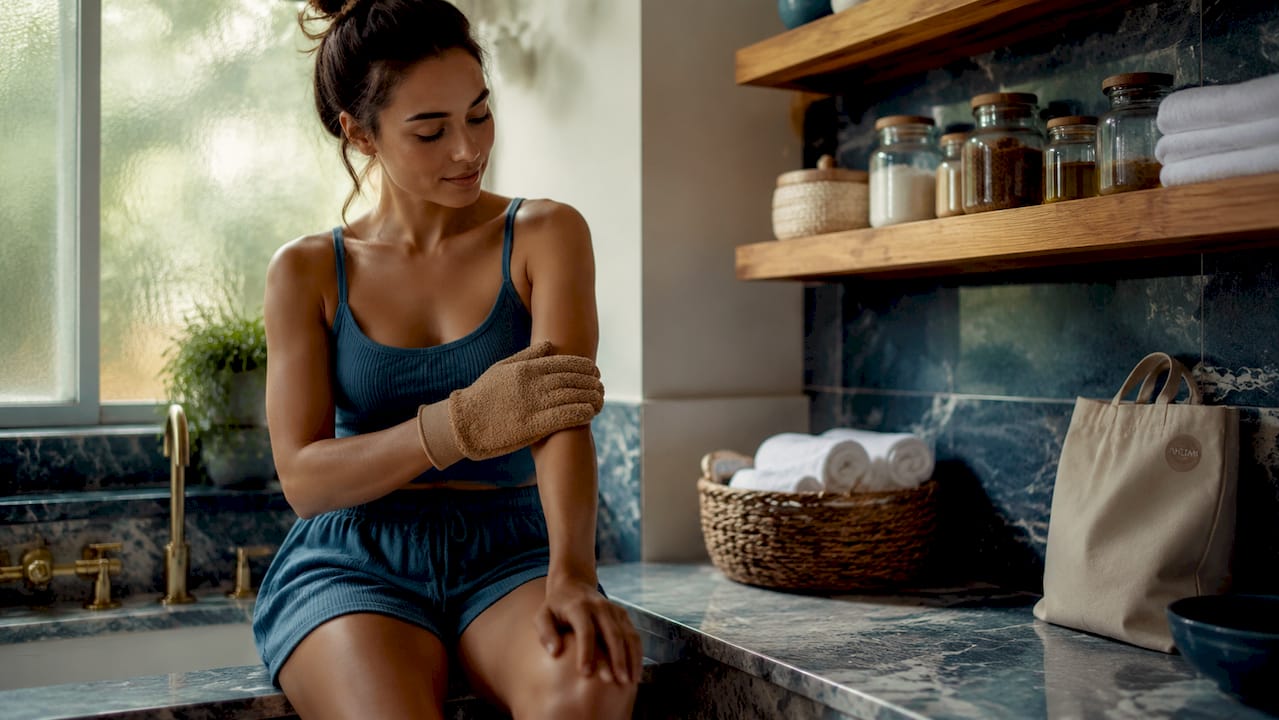
Microbiome-safe tanning routines that avoid harsh scrubs and stacked actives consistently produce better skin health and more even tans. The skin’s microbiome, the community of beneficial bacteria living on its surface, plays a direct role in how calmly skin responds to tanning. Disrupting it with aggressive cleansers or over-exfoliation triggers redness and uneven pigment uptake.
NuTan® approaches tanning from a skin-first perspective. The NuTan® transdermal patches work by activating the Melanocortin 1 Receptor (MC1R) on melanocytes, which are the skin’s pigment-producing cells. This triggers natural melanin production with vastly less UV exposure than conventional tanning methods, making skin condition before and during use genuinely important.
What skincare steps should you take before tanning?
Pre-tanning preparation sets the canvas. Done correctly, it means your skin is smooth, calm, and ready to develop colour evenly. Done poorly, it creates the exact conditions for patchiness and irritation.
Exfoliation: timing and technique
Gentle exfoliation 24–48 hours before tanning removes the layer of dead skin cells that cause colour to develop unevenly. Use a mild physical exfoliant such as a fine sugar scrub, or a gentle chemical exfoliant containing lactic acid at a low concentration. Avoid harsh body scrubs with large, jagged particles. These damage the skin surface and leave it reactive rather than smooth.
Exfoliate in the shower using circular motions, paying extra attention to elbows, knees, ankles, and the backs of the hands. These areas have thicker, drier skin and absorb colour more intensely if not properly prepared. Rinse thoroughly and pat skin dry rather than rubbing.
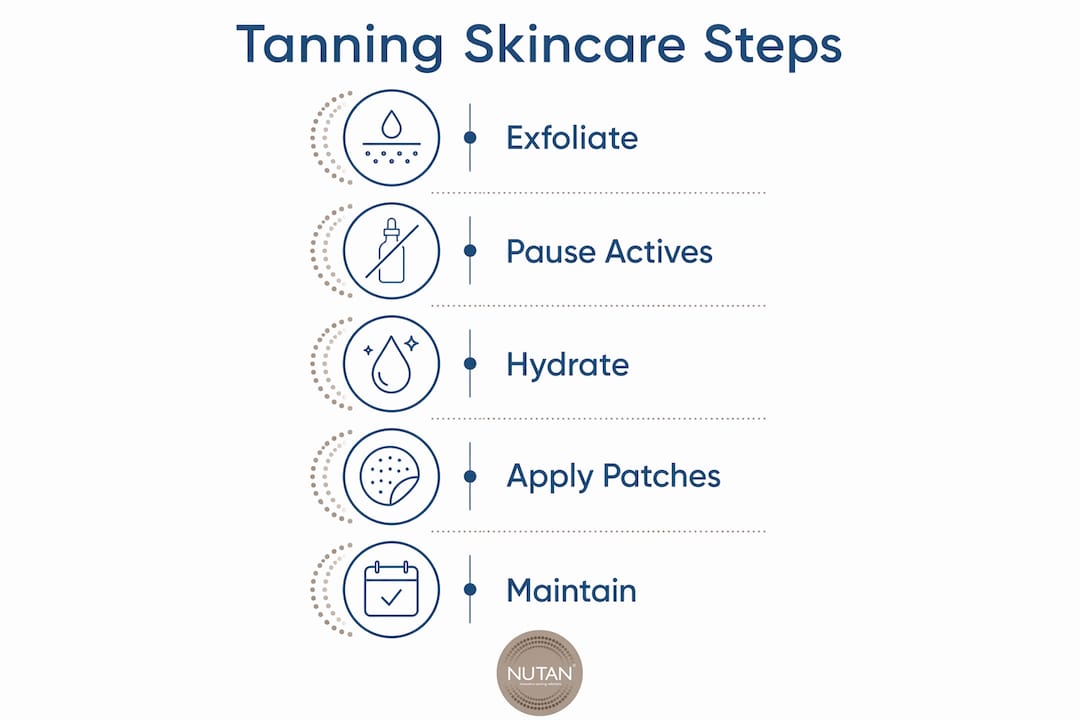
Pausing strong actives
Avoid retinol and exfoliating acids for 24–48 hours before and after tanning. Retinoids and AHAs accelerate cell turnover, which directly undermines the skin layer that tanning relies upon. Applying tanning support over recently retinol-treated skin causes irritation and patchy fades.
This is a non-negotiable pause, not a suggestion. Retinol users often notice their tan fades faster than expected. The cause is almost always the accelerated skin shedding that retinoids produce. Pause the actives, and tan longevity improves noticeably.
Moisturising strategically
Apply a lightweight, fragrance-free moisturiser to particularly dry areas such as elbows, knees, and ankles on the evening before tanning. This prevents these areas from absorbing too much colour. Avoid applying heavy creams or oils directly before tanning, as these create a barrier that interferes with absorption.
Pro Tip: Apply a thin layer of a light, oil-free moisturiser to dry patches only, not all over. Full-body application of a rich cream the night before tanning can leave a residue that blocks even colour development.
Exfoliate gently 24–48 hours before tanning, not immediately before
Pause retinol, glycolic acid, and salicylic acid for at least 24 hours before tanning
Moisturise dry patches the evening before, using a lightweight formula
Avoid harsh scrubs that disrupt the skin microbiome
Do not over-cleanse in the days leading up to tanning
How should you adjust your skincare on tanning days?
Tanning day skincare is about creating the right surface conditions. The goal is clean, calm, and lightly hydrated skin that allows even colour development without interference from product residue.
Cleanse gently in the morning. Use a mild, non-stripping cleanser that removes overnight product residue without disturbing the skin barrier. Avoid foaming cleansers with sulphates on tanning days, as these strip natural oils and leave skin reactive.
Apply oil-free moisturiser to dry areas only. Oil-free, fast-absorbing moisturisers improve hydration without blocking tanning agents. Apply only to genuinely dry patches such as elbows and knees, and allow it to absorb fully before proceeding.
Wait for complete absorption. Any moisturiser applied before tanning must be fully absorbed into the skin. A residue-free surface is the single most important condition for even colour development. Allow at least 20 minutes after moisturising before tanning.
Keep the face separate. Facial skin is more sensitive and has a different texture to body skin. Use a dedicated tanning serum or drops formulated for the face rather than applying body tanning products. This prevents clogged pores and uneven tone around the hairline and jaw.
Avoid heavy perfumes, deodorants, and body oils. These products sit on the skin surface and create uneven barriers. Apply them after tanning, not before.
Pro Tip: If you are using NuTan® patches, apply them to clean, dry skin away from areas with heavy product residue. The patch works transdermally, so a clean skin surface supports optimal absorption of the active complex.
The at-home tanning routine approach works best when skincare steps are kept minimal on tanning days. Fewer products mean fewer variables and a more predictable result.
Post-tanning skincare to maintain and prolong your tan
Post-tan care is where most people lose ground. A well-developed tan can fade within days if the skin is not properly supported afterwards. Hydration and gentle product choices are the two pillars of tan longevity.
Drinking 2–3 litres of water daily supports more even colour and longer-lasting results. Dehydrated skin sheds faster, and faster shedding means faster fading. Internal hydration is as important as topical moisturising.
Hot showers post-tan accelerate skin cell turnover and reduce tan lifetime significantly. Switch to lukewarm water and keep showers short. Pat skin dry rather than rubbing with a towel, which physically removes the outermost skin cells.
Choosing the right moisturiser for your skin type
Different skin types require tailored moisturising to maintain an even, healthy-looking tan. Using the wrong formula for your skin type leads to ashiness on deeper skin tones or streaking on oily skin.
Skin type | Recommended moisturiser | Why it works |
Dry or deeper skin tones | Shea butter or cocoa butter cream | Rich emollients prevent ashiness and lock in colour |
Normal skin | Standard body lotion with ceramides | Supports barrier repair without heaviness |
Oily or combination skin | Light, oil-free gel moisturiser | Hydrates without clogging pores or causing streaks |
Sensitive skin | Fragrance-free, hypoallergenic lotion | Reduces risk of irritation on reactive skin |
Post-tan, avoid all exfoliating actives for at least 48 hours. This includes AHAs, BHAs, retinol, and physical scrubs. Applying tanning support on compromised skin causes irritation and uneven fading, and the same principle applies in reverse. Disrupting the skin barrier post-tan accelerates colour loss.
Cleanse with a gentle, soap-free body wash. Avoid anything labelled “deep cleansing” or “clarifying,” as these are formulated to remove oils and will strip colour along with them. For guidance on keeping your tan even, the causes of uneven tan are worth understanding in detail.
Drink 2–3 litres of water daily to support skin hydration from within
Moisturise twice daily using a formula suited to your skin type
Avoid exfoliants and retinoids for at least 48 hours post-tan
Use lukewarm water for showers and keep them short
Cleanse with a gentle, soap-free wash to avoid stripping colour
What are the most common mistakes when combining tanning with skincare?
Most tanning problems trace back to a small number of repeated errors. Recognising them is the fastest way to improve results.
Overusing exfoliants around tanning days. Exfoliating too frequently or too close to a tanning session removes the skin layer that holds colour. Stick to one gentle exfoliation session 24–48 hours before tanning, and none for 48 hours after.
Applying heavy moisturisers immediately before tanning. Rich creams and oils sit on the skin surface and block even absorption. Use lightweight formulas on dry patches only, and allow full absorption before tanning.
Skipping hydration entirely. Dry skin develops colour unevenly and sheds faster. Both internal hydration and topical moisturising are non-negotiable for tan longevity.
Taking hot showers post-tan. Hot water induces faster skin cell turnover. This is one of the most common and easily avoided causes of premature fading.
Stacking strong actives without a pause. Layering retinol, glycolic acid, and vitamin C around tanning sessions disrupts the skin barrier. Skin barrier health is the key factor for sustained tanning results. Compromising it leads to irritation, patchiness, and rapid fade.
“Excessive exfoliation and stacking skincare actives around tanning breaks down the skin’s top layer, causing rapid fade and unevenness. A microbiome-safe approach, built on gentle cleansing and strategic moisturising, consistently produces calmer skin and more even, longer-lasting colour.”
Understanding how to get rid of tan lines and maintain an even skin tone also reinforces why consistent hydration and gentle skincare matter throughout the tanning process.
Key takeaways
A successful tanning skincare routine depends on preparation, skin barrier protection, and consistent hydration before, during, and after tanning.
Point | Details |
Prepare 24–48 hours before | Exfoliate gently and pause strong actives to create a smooth, even base. |
Use lightweight products on tanning days | Oil-free, fully absorbed moisturisers support even colour without blocking absorption. |
Hydrate inside and out post-tan | Drink 2–3 litres of water daily and moisturise twice daily with a skin-type-appropriate formula. |
Avoid heat and harsh cleansers after tanning | Lukewarm showers and gentle washes prevent premature colour loss. |
Protect the skin microbiome | Avoid stacking actives around tanning sessions to maintain barrier health and even results. |
My honest view on tanning and skincare working together
After working closely with people who tan regularly, the pattern is clear: those who treat skincare as part of their tanning routine, rather than separate from it, consistently get better results. The ones who struggle are almost always doing too much. They exfoliate aggressively, layer actives, and then wonder why their tan fades in three days.
The skin barrier is not an obstacle to tanning. It is the foundation of it. When the barrier is healthy, colour develops evenly and holds. When it is compromised by over-exfoliation or stacked actives, the skin becomes reactive, patchy, and quick to shed. The fix is almost always to do less, not more.
Hydration is the other piece that gets underestimated. People focus on topical products and forget that dehydrated skin sheds faster regardless of what you apply to the surface. Drinking enough water daily is genuinely one of the most effective things you can do for tan longevity. It sounds simple because it is.
The approach NuTan® advocates is a calm, consistent routine built around skin health. Gentle preparation, minimal interference on tanning days, and thorough post-tan hydration. That framework works for every skin type, and it works reliably. Approach tanning thoughtfully, and your skin will reward you for it.
— NuTan®
NuTan® patches: a skin-friendly approach to tanning

NuTan® transdermal tanning patches offer a genuinely different approach to achieving a natural-looking tan. The patches contain the NuTan MSH-ComplexB, a formulation derived from a natural source that activates the MC1R receptor on melanocytes, triggering your skin’s own pigment production. The result is a real, natural tan that does not rub or wash off, achieved with vastly less UV exposure than conventional tanning methods.
Because NuTan® patches work with your skin’s biology rather than staining the surface, the skincare routine you build around them directly supports your results. Clean, hydrated, barrier-healthy skin responds better and develops colour more evenly. NuTan® ships worldwide, making it straightforward to add to any tanning skincare routine regardless of where you are.
Explore the full range of NuTan® tanning patches and find the option that fits your goals.
FAQ
How far in advance should I exfoliate before tanning?
Exfoliate 24–48 hours before tanning. This timing allows the skin to settle and prevents the freshly exfoliated surface from reacting to tanning products.
Can I use retinol while maintaining a tanning routine?
Pause retinol and exfoliating acids for at least 24–48 hours before and after each tanning session. Retinoids accelerate cell turnover, which causes patchy fading and can irritate skin during tanning.
What moisturiser is best for post-tan care?
The best choice depends on your skin type. Shea or cocoa butter suits dry and deeper skin tones, while a light oil-free gel works better for oily or combination skin. Apply twice daily and avoid anything with exfoliating ingredients.
Does drinking water really affect how long a tan lasts?
Drinking 2–3 litres of water daily supports more even colour and longer-lasting results. Dehydrated skin sheds faster, which directly shortens tan longevity regardless of topical care.
How do NuTan® patches fit into a skincare routine?
Apply NuTan® patches to clean, dry skin as part of your regular routine. Because the patches activate your skin’s natural melanin production rather than staining the surface, maintaining a healthy skin barrier through gentle skincare supports better and more even results.
Recommended
Comments