

How to whiten teeth fast: safe options and at-home kits
- 2 days ago
- 10 min read
The fastest safe way to whiten teeth is a dentist-performed in-surgery peroxide treatment, typically using laser or LED activation, which delivers visible brightening in a single 1–2 hour appointment. For at-home speed, dentist-prescribed custom trays and regulated over-the-counter strips or powders are the next best options. Whitening cannot change the shade of crowns, veneers, or fillings, so natural teeth only will respond to bleaching. NuTan® offers a range of regulated at-home products for a quick, safe lift when a clinic visit is not your first move.
The three speed tiers at a glance:
In-surgery (laser/LED/Zoom): visible brightening in a single 1–2 hour session
Dentist-prescribed take-home trays: noticeable change within days; full results over 2–6 weeks
Regulated OTC strips, kits, and powders: modest surface improvement within days of consistent use
Key takeaways
The fastest safe way to whiten teeth is dentist-performed in-surgery whitening, which delivers visible brightening in a single 1–2 hour session; regulated at-home products offer a genuine but more gradual lift within days.
Point | Details |
In-surgery is fastest | A GDC-registered dentist can deliver visible brightening in one 1–2 hour session. |
Trays offer controlled speed | Dentist-prescribed trays show results within days; a full course runs 2–6 weeks. |
OTC products work for surface stains | Regulated strips and PAP powders give a modest lift within days of consistent use. |
DIY methods carry real risks | Lemon juice, charcoal, and undiluted peroxide can erode enamel and increase sensitivity. |
NuTan® for at-home speed | The Pap+ powder, NuSmile strips, and V-34 corrector cover fast daily, event, and instant-result needs. |
Table of Contents
What is the fastest clinical way to whiten teeth?
In-surgery whitening is fast because the peroxide concentrations used by a GDC-registered dentist are significantly higher than anything available over the counter, and the clinical environment allows for protective measures that make those concentrations safe. Gum barriers and isolation shields protect soft tissue while the gel works on enamel, and light activation (laser or LED) accelerates the bleaching reaction. Peroxide concentration and controlled exposure time are the primary drivers of whitening speed, which is exactly why in-clinic systems outpace typical OTC products.
A single session runs around 1–2 hours and most patients leave with a noticeably brighter smile. That said, in-surgery whitening works best on extrinsic stains (tea, coffee, wine, tobacco). Intrinsic discolouration from medication or trauma responds less predictably, and your dentist should advise you honestly before you book.
Trade-offs to weigh before booking:
Speed: fastest of all options, often one visit
Cost: higher than OTC; UK private fees vary (see the timeline and cost section below)
Suitability: excellent for extrinsic stains; limited effect on intrinsic or restoration discolouration
Protection: professional gum guards reduce sensitivity risk compared with unsupervised methods
Pro Tip: Always confirm your dentist is on the GDC register before booking any whitening treatment. In the UK, only GDC-registered professionals may legally use or supply high-concentration bleaching agents.
How do dentist-prescribed take-home trays work?
Custom trays are made from impressions of your teeth, so the gel sits evenly against every surface without pooling or spilling onto gums. The peroxide concentrations in dentist-prescribed gels sit above what regulated OTC products contain, yet below the in-surgery levels, giving a controlled middle ground. Because the fit is precise, less gel is needed and exposure is more predictable.
Visible results often begin within the first few days of use. A full course typically runs 2–6 weeks depending on the gel strength and your wear schedule, though many people see a meaningful lift well before the end of that period.
Typical usage sequence:
Attend a dental assessment to confirm gum health and rule out cavities.
Have impressions taken; collect your custom trays and prescribed gel within a few days.
Wear trays for the time your dentist specifies, usually 30 minutes to a few hours daily, or overnight with lower-concentration gels.
Avoid staining foods and drinks (coffee, red wine, tomato-based sauces) during the course.
Return for a review if sensitivity develops; your dentist can adjust concentration or wear time.
Who benefits most from trays:
People with mild-to-moderate sensitivity who want controlled, supervised whitening
Those with uneven staining that needs consistent, even coverage
Anyone wanting faster at-home results than standard OTC products without a full in-surgery session
Which over-the-counter products give the fastest at-home results?
Regulated OTC whitening products cannot legally contain more than 0.1% hydrogen peroxide in the UK for consumer use, which is why their results are more gradual than dentist-led options. Within that category, though, some products work noticeably faster than others. Products that combine a moderate peroxide or PAP (phthalimidoperoxycaproic acid) concentration with a well-fitting delivery method, such as strips, trays, or LED-assisted gels, tend to give the best balance of speed and safety for at-home use.
[
Peroxide-based whitening is effective for extrinsic stains, and peer-reviewed evidence confirms it carries a risk of transient sensitivity if misused. PAP-based alternatives work without peroxide and are gentler on enamel, making them a practical choice for people with sensitivity concerns.
NuTan® at-home options for a fast lift:
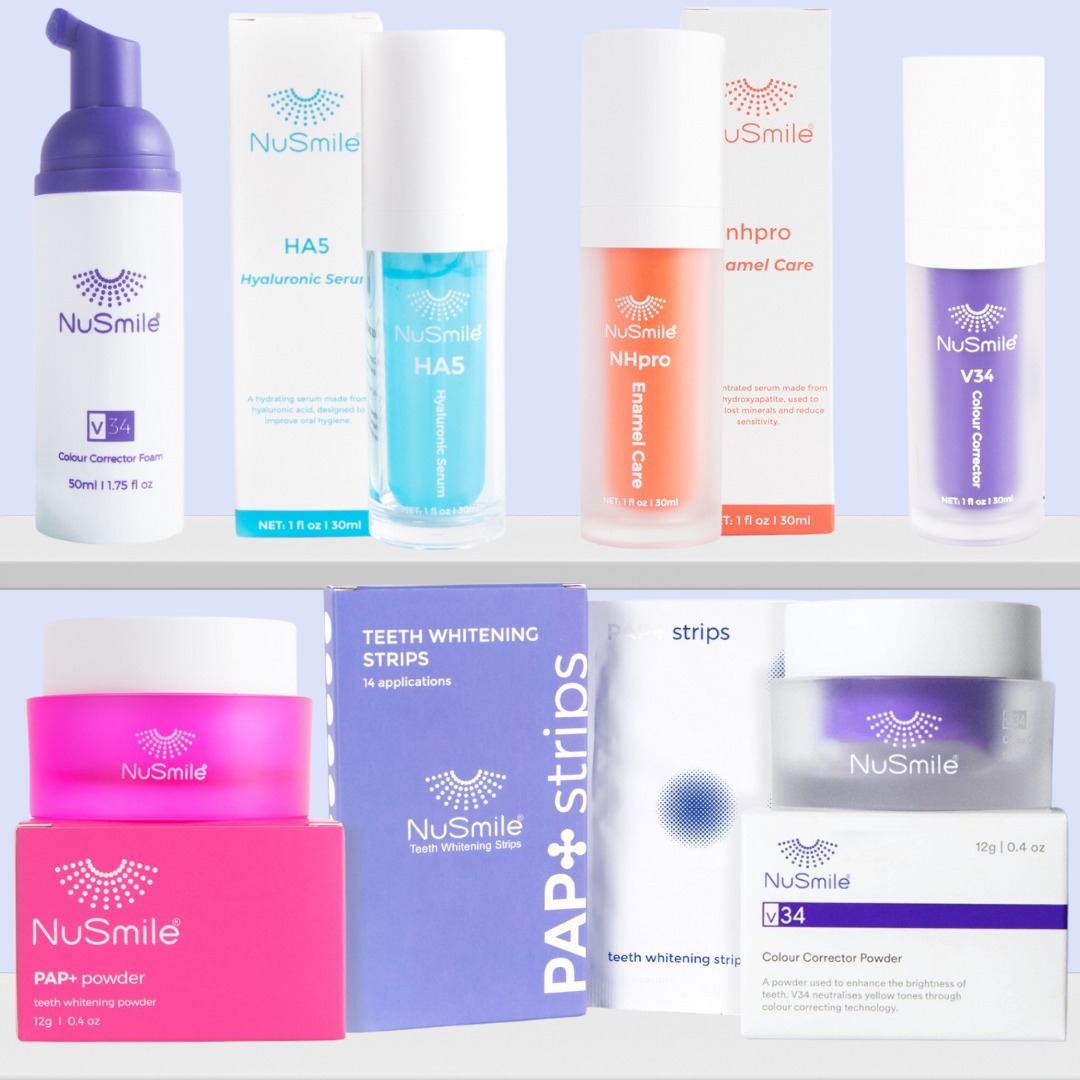
Pap+ Teeth Whitening Powder: a PAP-based powder that polishes away surface stains without peroxide; good for a quick daily brightening routine and gentle enough for regular use
NuSmile PAP Whitening Strips: pre-loaded strips that sit against teeth for a set time; convenient for a fast lift before an event or as part of a regular maintenance routine
NuSmile Home Whitening Kit: a more complete at-home system combining gel and tray for a faster, more even result than strips alone
One important caution: avoid unregulated “professional-strength” kits sold by unknown online sellers. The Dental Health Foundation warns that only GDC-registered professionals should use or supply high-concentration bleaching agents, and unregulated kits are frequently unsafe or ineffective.
Can a colour corrector give you instant results?
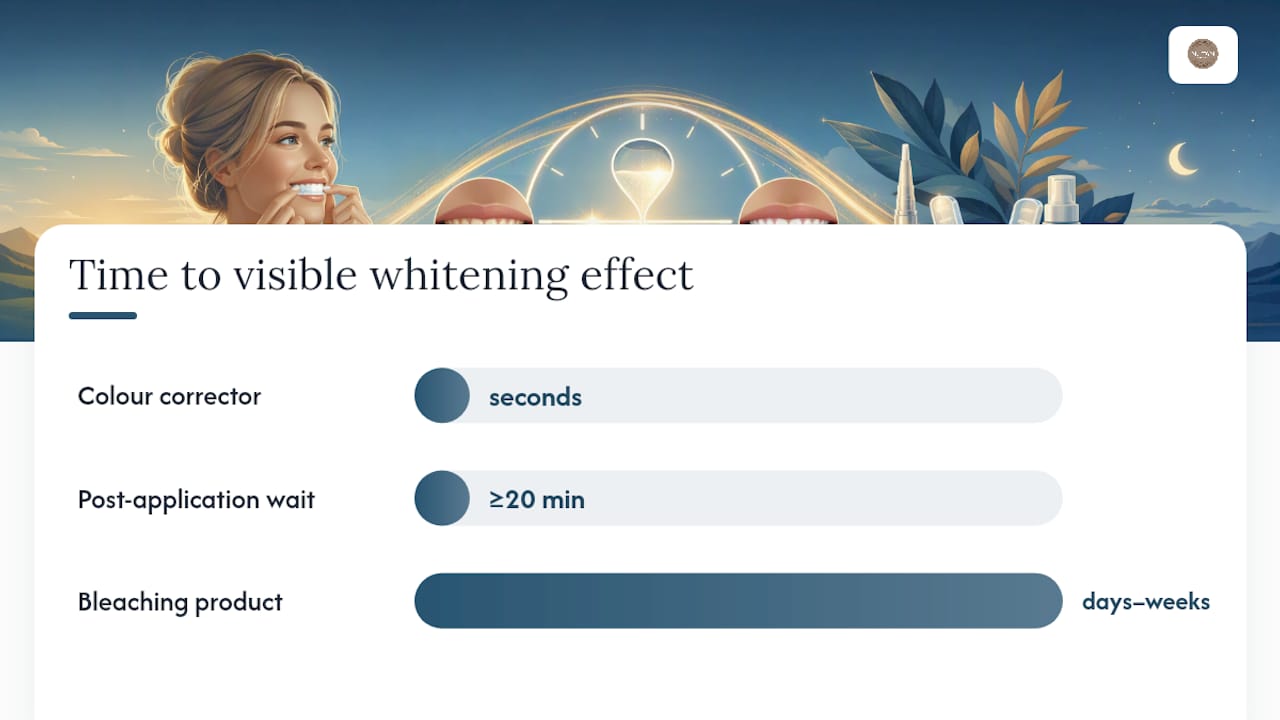
Colour correctors work differently from bleaching products. Rather than chemically altering the tooth’s shade, they deposit a tinted pigment that neutralises yellow tones on the surface, much like a colour-correcting primer on skin. The result is an immediate visual brightening that lasts until you eat, drink, or brush.
The NuSmile V-34 Colour Corrector is NuTan®'s instant-result option. It uses a purple-toned formula to counteract yellowing on the surface of natural teeth, giving a noticeably brighter appearance within seconds of application. It will not change the underlying shade of your teeth or affect dental restorations, but for a photo, a presentation, or a last-minute event, it delivers a result that no bleaching product can match for speed.
When to choose a corrector vs. a bleaching product:
Corrector: one-off event, same-day result needed, no time for a whitening course
Bleaching product: lasting shade change, willing to commit to days or weeks of treatment
Pro Tip: Apply the V-34 corrector after brushing on clean, dry teeth. Avoid eating or drinking for at least 20 minutes after application, and do not use it immediately before or after a peroxide whitening session, as the pigment can interact with the bleaching gel.
Which DIY whitening methods should you avoid?
The appeal of lemon juice, neat baking soda scrubs, activated charcoal, and undiluted hydrogen peroxide is understandable — they are cheap, immediate, and widely shared online. The reality is less appealing. NHS guidance is clear that natural remedies such as lemon juice and charcoal are often abrasive or acidic and can cause enamel damage and sensitivity with repeated use.
Lemon juice: highly acidic; erodes enamel on contact and increases sensitivity
Neat baking soda: mildly abrasive in small amounts but frequent use thins enamel over time
Activated charcoal: abrasive and not supported by clinical evidence for safe whitening
Undiluted hydrogen peroxide: irritates gums and soft tissue; concentration is uncontrolled
Do not stack multiple whitening methods in a single day. Combining strips, a charcoal scrub, and a peroxide rinse in one session does not accelerate results. Clinical evidence shows it increases enamel wear and sensitivity without any proportionate whitening benefit. One regulated product, used as directed, is always the safer and more effective approach.
If you want a fast, safe alternative to DIY methods, short-duration peroxide or PAP products from regulated sources give a genuine surface lift without the enamel risk.
How do you choose the fastest safe whitening route for you?
The right option depends on four factors: the type of staining you have, whether you have existing dental work, your sensitivity level, and how quickly you need results.
Assessment checklist:
Staining type: extrinsic (surface, from food and drink) responds well to all methods; intrinsic (deep, from medication or trauma) needs professional assessment
Existing restorations: crowns, veneers, and fillings will not whiten; mismatched shades after bleaching may need cosmetic work
Sensitivity: if your teeth are already sensitive, start with PAP-based products or ask your dentist about lower-concentration trays
Budget and timeline: in-surgery is fastest but costs more; OTC strips are affordable but slower
Questions to ask a GDC-registered dentist before booking:
Are my teeth and gums healthy enough for whitening right now?
What peroxide concentration will you use, and what aftercare do you recommend for sensitivity?
Will my existing restorations affect the final result?
How many sessions are realistic for the shade change I want?
Decision rules in brief:
Need visible results in one day? Book in-surgery whitening with a GDC-registered dentist.
Want fast at-home results with professional oversight? Ask your dentist about prescribed trays.
Want a quick, affordable lift at home? Choose a regulated OTC strip or PAP powder from a trusted source.
Red flags to avoid:
Kits marketed as “professional strength” with no GDC or regulatory reference
Sellers who offer whitening without any dental health check
Products with no ingredient list or concentration disclosure
What are the realistic timelines and UK costs for fast whitening?
Speed and cost vary considerably depending on the severity of staining, the clinician’s skill, and the product strength. The figures below reflect typical UK private market ranges.
Method | Session / treatment time | Typical UK cost range | First visible results |
In-surgery (laser/LED) | 1–2 hours per session | a range of private fees per session | Same day |
Dentist-prescribed trays | 2–6 weeks of home use | a moderate cost range for trays and gel | Within days |
Regulated OTC strips/kits | Days to 2 weeks | a low cost range for OTC products | Within days |
Factors that affect your result:
Severity and type of staining (extrinsic responds faster than intrinsic)
Baseline tooth shade and enamel thickness
Consistency of use for at-home products
Clinician skill and gel quality for in-surgery treatments
Whitening effects are not permanent. Most in-surgery results last 1–3 years with good maintenance; at-home results typically need a top-up every few months. Diet and smoking are the biggest factors that shorten the effect: coffee, tea, red wine, and tobacco re-stain teeth faster than almost anything else.
Who should not whiten their teeth, and what checks come first?
Not everyone is a suitable candidate for fast whitening, and a dental examination before treatment is not optional — it is the step that makes everything else safe. The NHS advises that whitening agents can worsen undiagnosed cavities and gum disease, leading to pain or failed results.
Who should delay or avoid whitening:
Under 18 years of age (enamel is still developing)
Pregnant or breastfeeding
Active gum disease or untreated cavities
Severe intrinsic discolouration unlikely to respond to bleaching
Known allergy to peroxide or related compounds
Pre-treatment checks a dentist will perform:
Full dental examination to identify cavities, cracks, or failing restorations
Gum health assessment to rule out active periodontal disease
Review of existing dental work that will not respond to whitening
Discussion of realistic shade expectations based on your baseline
Pro Tip: Book a professional clean before your whitening appointment. Removing surface deposits and calculus first means the whitening gel makes direct contact with enamel from the start, giving faster and more even results.
Speed is worth pursuing, but not at the cost of your enamel
There is a temptation, when you want results quickly, to do more: stack products, extend wear times, or reach for the strongest thing you can find online. The evidence does not support that approach. Supervised fast clinical treatments, where a dentist controls concentration, exposure time, and gum protection, are where speed and safety genuinely align. Regulated OTC options offer a modest, real lift for those who want at-home progress without a clinic visit.
What often gets overlooked in the rush for a brighter smile is the 48 hours after whitening. Avoiding deeply coloured foods and drinks during that window, using a gentle fluoride toothpaste, and planning periodic touch-ups are what keep results lasting. A single in-surgery session is impressive; maintaining it thoughtfully is what makes it worthwhile.
NuTan® sits in the at-home part of this picture deliberately, offering products designed for speed with clear safety guidance. The Pap+ powder, NuSmile strips, and V-34 corrector each serve a different point on the speed-versus-commitment spectrum, and none of them require you to compromise on safety to get a result.
NuTan® at-home whitening products for a fast, safe result
When you want to whiten teeth fast without waiting for a clinic appointment, NuTan®'s at-home range gives you three clear entry points. The Pap+ Teeth Whitening Powder is the gentlest daily option, polishing away surface stains with each use and building brightness over days without peroxide. For a faster single-session lift, the NuSmile PAP Whitening Strips sit against teeth for a set contact time and deliver a noticeable improvement in one treatment. Need results in minutes? The NuSmile V-34 Colour Corrector neutralises yellow tones on contact for an instant visual brightening before any event. All three products come with clear usage guidance and are designed to work safely within regulated limits. Browse the full NuSmile range and find the option that fits your timeline at Nutan.
Sources
This article is general information, not a substitute for advice from a qualified doctor. Consult a qualified healthcare professional about your own circumstances before acting on anything here.
FAQ
How do I whiten my teeth as quickly as possible?
The quickest safe route is in-surgery whitening with a GDC-registered dentist, which typically delivers visible results in a single 1–2 hour session. For at-home speed, regulated PAP strips or a dentist-prescribed tray kit can show a noticeable lift within days.
How do I get rid of yellow teeth as quickly as possible?
Yellow teeth caused by surface staining from food and drink respond fastest to peroxide or PAP-based whitening products. A professional in-surgery treatment gives the most immediate result; daily use of a PAP powder or whitening strips is the fastest safe at-home alternative.
Is it possible to get whiter teeth in 24 hours?
A dentist-performed in-surgery session can produce visible brightening within a single appointment. At home, a colour corrector such as the NuSmile V-34 gives an instant visual lift within minutes, though this is a temporary surface effect rather than a permanent shade change.
Can yellow teeth turn white again?
Yes, in most cases. Extrinsic yellowing from diet, smoking, or ageing responds well to peroxide or PAP-based whitening. Intrinsic discolouration from medication or trauma is harder to treat and may need professional assessment to determine whether whitening or a cosmetic restoration is the more realistic option.
Recommended
Comments