

Wait 10 to 30 Minutes: Mouthwash Before or After Brushing, Label Rules
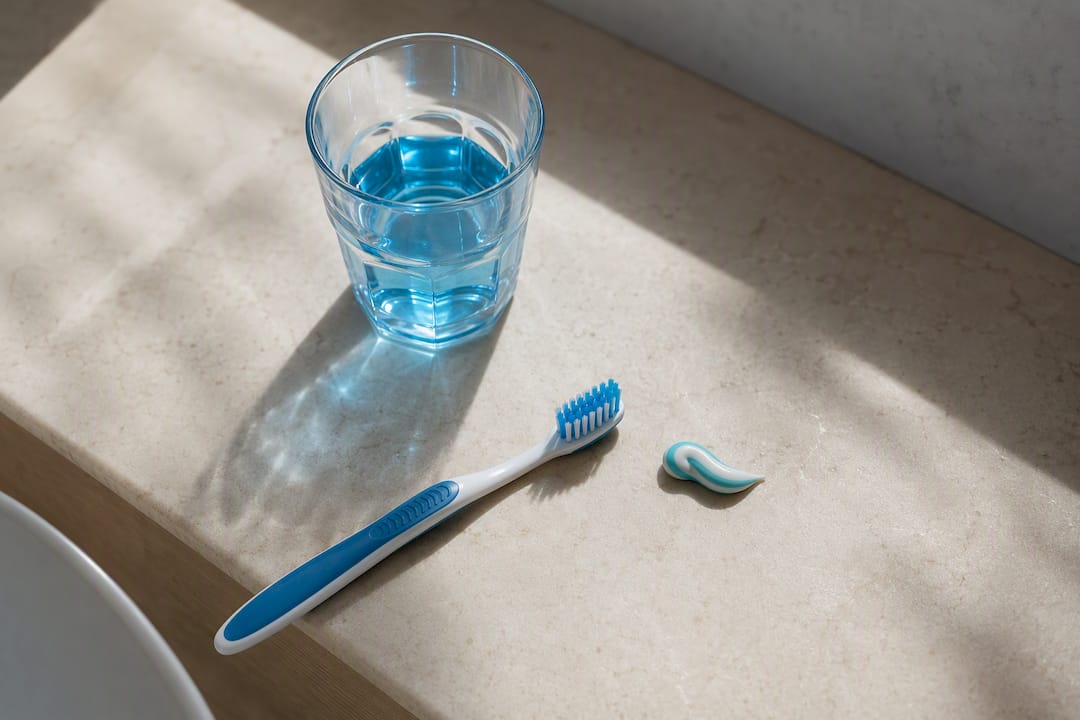
Use mouthwash at a different time to brushing, not straight after it. The NHS advises against rinsing immediately after brushing because it washes away the concentrated fluoride your toothpaste leaves behind. Wait a while, often between 10 and 30 minutes, or use mouthwash at a separate point in the day, though the ADA notes that the right order can shift depending on what’s actually in the bottle.
TL;DR:
Using fluoride mouthwash at least 30 minutes after brushing preserves fluoride’s effectiveness for enamel reinforcement.
Rinsing with water or mouthwash immediately after brushing can wash away the concentrated fluoride, weakening its protective benefits.
Different types of mouthwash require tailored timing: fluoride rinses should be separate, while antiseptic and whitening rinses have specific recommended sequences.
Prescription rinses like chlorhexidine must be used exactly as directed by a dentist, usually after brushing on a clean mouth.
For optimal oral health routines, always check product labels for timing instructions and consult a dentist for personalized advice.
Table of Contents
What official guidance and evidence say about timing
The NHS position is specific: don’t rinse your mouth with water or mouthwash immediately after brushing. Toothpaste leaves a thin, concentrated layer of fluoride on your teeth, and that layer needs time to work on your enamel. Rinse it away too soon and you’ve undone part of what the brushing just achieved.
Most dental professionals suggest a practical window of 10 to 30 minutes after brushing before you use mouthwash, water, food, or drink. That gap gives fluoride ions time to interact with your enamel surface and support remineralisation, the process by which weakened enamel rebuilds its mineral structure.
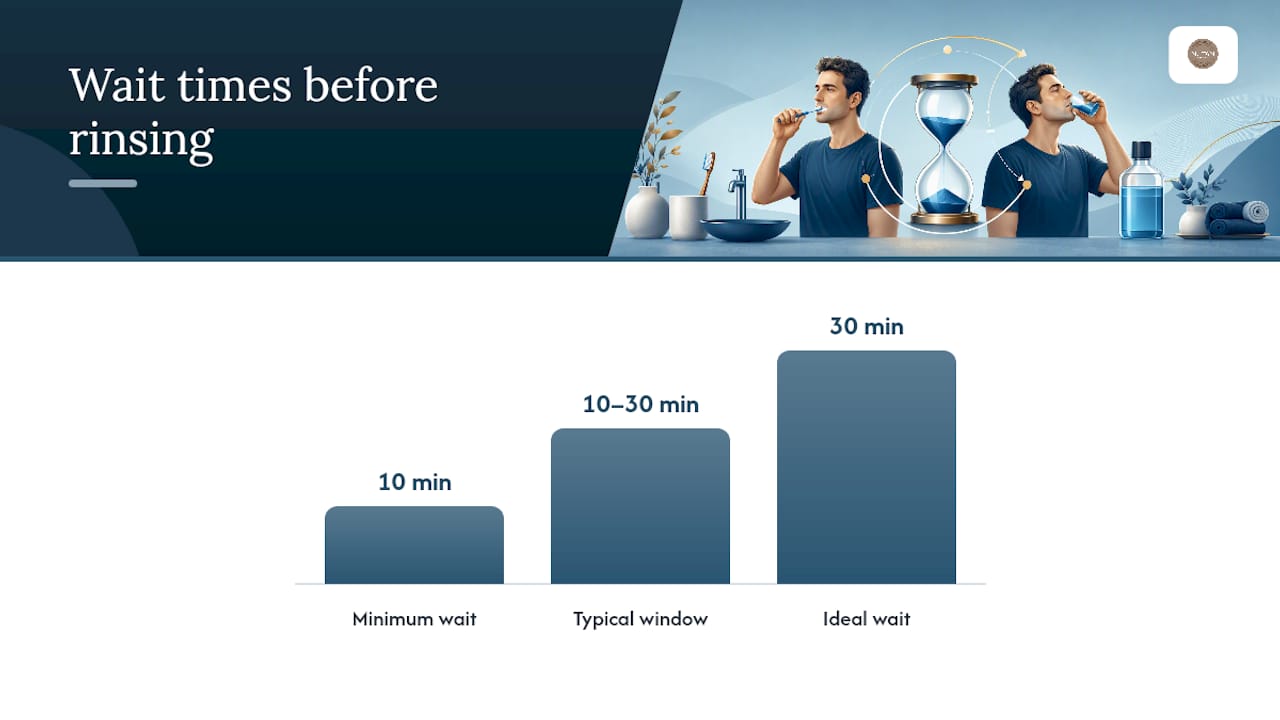
Not every source lands on identical timing. Mayo Clinic’s guidance has historically reflected the older “rinse after brushing” habit many of us grew up with, while the ADA takes a more conditional line, pointing out that timing genuinely depends on what the rinse contains. These aren’t contradictions so much as different emphases. Reconcile them by defaulting to fluoride preservation as your baseline, then adjusting for the specific product in your hand.
A few things to keep in mind:
Spit out excess toothpaste, but don’t rinse with water straight away.
Leave a genuine gap, ideally 30 minutes, before food, drink, or mouthwash.
Always check the product label before assuming a rinse fits this rule.
The core reason for the wait: fluoride needs uninterrupted contact time with enamel to do its job properly, and washing it away early is one of the most common, entirely avoidable mistakes in a daily oral care routine.
How mouthwash type changes the recommended order
Not all mouthwashes behave the same way, and the “wait after brushing” rule doesn’t apply uniformly across every bottle on the shelf.
Fluoride mouthwash: best used at a separate time from brushing, ideally 30 minutes or more afterwards, so it doesn’t dilute or interfere with the fluoride your toothpaste already deposited.
Antibacterial or antiseptic rinses: more flexible. Some people use these before brushing to loosen bacterial plaque, others after to finish the routine. Either order is generally fine unless the label says otherwise.
Whitening rinses: often work best before brushing, since their active agents need direct contact with surface stains before mechanical brushing disturbs that layer.
Prescription rinses, such as chlorhexidine, are typically intended for use on a freshly cleaned surface, meaning after brushing, and they usually carry defined swill times and frequency limits set by the manufacturer.
Some dentifrice ingredients, including calcium and aluminium compounds, can bind with fluoride and reduce a rinse’s effectiveness, which is exactly why manufacturers sometimes specify an order on the packaging.
Pro Tip: If a product doesn’t state a swill time or sequence anywhere on the label, treat 30 seconds as a sensible default and always leave brushing and rinsing at separate points in your routine rather than stacking them back to back.
Three simple routines you can start using today
Pick the routine that matches what you’re trying to achieve, then stick with it.
Maximise fluoride protection: floss, brush with fluoride toothpaste, spit without rinsing, then wait 10 to 30 minutes before using mouthwash. Avoid food or drink in that window too. This is the strongest option for anyone focused on enamel strength or sensitivity.
Morning freshen or whitening prep: mouthwash first, then floss, then brush. Useful if you want a rinse to loosen surface debris or prime whitening agents before the toothbrush gets to work.
Therapeutic or prescription rinse: follow your dentist’s exact instructions, which will usually mean brushing first, then rinsing on a clean mouth. Sequence here is set by the clinician, not by general habit.
Routine | Best for | Key rule |
Maximise fluoride | Cavity prevention, sensitive teeth | Wait 10 to 30 minutes after brushing |
Freshen or whitening prep | Morning routine, whitening rinses | Mouthwash before brushing |
Therapeutic or prescription | Gum disease, dentist-prescribed rinses | Follow clinician’s exact order |
Whichever routine you choose, the same rule holds at night: don’t eat, drink, or rinse for at least 30 minutes after your last fluoride contact of the day.
Special cases and common concerns
Children under six should generally avoid routine mouthwash altogether because of swallowing risk, and any use should follow age guidance on the label or direct dentist advice.
If you have sensitive teeth, choose an alcohol-free, low-irritant formula, and test timing to see what feels most comfortable rather than forcing a fixed schedule.
Whitening users should coordinate mouthwash timing carefully with whitening products, since using the wrong rinse at the wrong moment can undercut the treatment.
If you have a heart condition, take regular medication, or experience dry mouth, check with a dentist or GP before adding a new rinse to your routine, since some formulations aren’t suitable for every mouth.
Evidence, label checks and how to interpret product instructions
The NHS states plainly that rinsing your mouth with water or mouthwash straight after brushing washes away the concentrated fluoride left on your teeth, which is why it recommends waiting or using mouthwash at another point in the day.
When you pick up a bottle, a few label phrases genuinely change how you should use it:
“Contains fluoride” means don’t pair it with brushing back to back.
“Prescription only” or “chlorhexidine” means follow the exact frequency and duration your dentist gave you.
Age restrictions on the label are there because of swallowing risk in young children, not marketing caution.
A stated swill time, often 30 to 60 seconds, is set for a specific therapeutic reason, not a suggestion.
If two instructions conflict, a dentist’s direction or a prescription label always overrides general guidance.
Our view on building a routine that actually sticks
Public health guidance from the NHS is the right starting point, and we’d never argue otherwise. But the honest truth is that the “correct” order also depends on the product in your bathroom cabinet and what your mouth actually needs. A whitening rinse and a prescription chlorhexidine wash simply don’t behave the same way, so treat the label as your final word. When a rinse is prescription strength or your case is complex, a dentist’s advice always comes first.
— NuTan
Fitting NuSmile® products into your routine
Once you’ve settled on a routine, the right products make it easier to stick to. If fluoride preservation is your priority, an enamel-focused toothpaste paired with a separately timed rinse supports that “maximise fluoride” routine well, which is exactly what the NuSmile® Enamel Care Kit is built around. If sensitivity is the concern, look for an alcohol-free rinse rather than a stronger antiseptic formula.
NuSmile® takes the guesswork out of pairing products correctly by grouping enamel care, whitening, and daily hygiene items that are designed to work alongside each other rather than against each other. Always check the label on any individual product and speak to your dentist if you’re managing gum disease or using a prescription rinse. For a straightforward way to cover your whole routine in one order, the NuSmile® Ultimate Oral Care Bundle is available now on the on the NuTan® site, with worldwide delivery options.
Sources
For more detail beyond this guide, see the NHS teeth cleaning advice, the ADA’s mouthrinse overview, Mayo Clinic’s brushing FAQ, and MouthHealthy’s mouthwash page.
This article is general information, not a substitute for advice from a qualified doctor. Consult a qualified healthcare professional about your own circumstances before acting on anything here.
FAQ
What is the correct order for oral hygiene?
Floss first to loosen debris between teeth, then brush with fluoride toothpaste, then leave mouthwash for a separate time, ideally 10 to 30 minutes later.
Why do dentists say not to use mouthwash straight after brushing?
Rinsing immediately washes away the concentrated fluoride toothpaste leaves on your teeth, reducing the time it has to strengthen enamel.
Is it good to use mouthwash before bed?
Yes, but time it well away from brushing. Brush last thing at night, spit without rinsing, then use mouthwash earlier in the evening if you want one in your routine.
Should I use mouthwash before or after brushing if it’s a whitening rinse?
Whitening rinses generally work best before brushing, since the active ingredients need direct contact with surface stains before the toothbrush disturbs them.
Is mouthwash necessary at all?
It isn’t a substitute for brushing and flossing, but it can reach areas a brush misses and add breath-freshening or therapeutic benefits depending on the formula, as MouthHealthy explains.
Recommended
Comments