

Coffee Drinkers: 30–60 Minute Rule to Remove Teeth Stains Safely
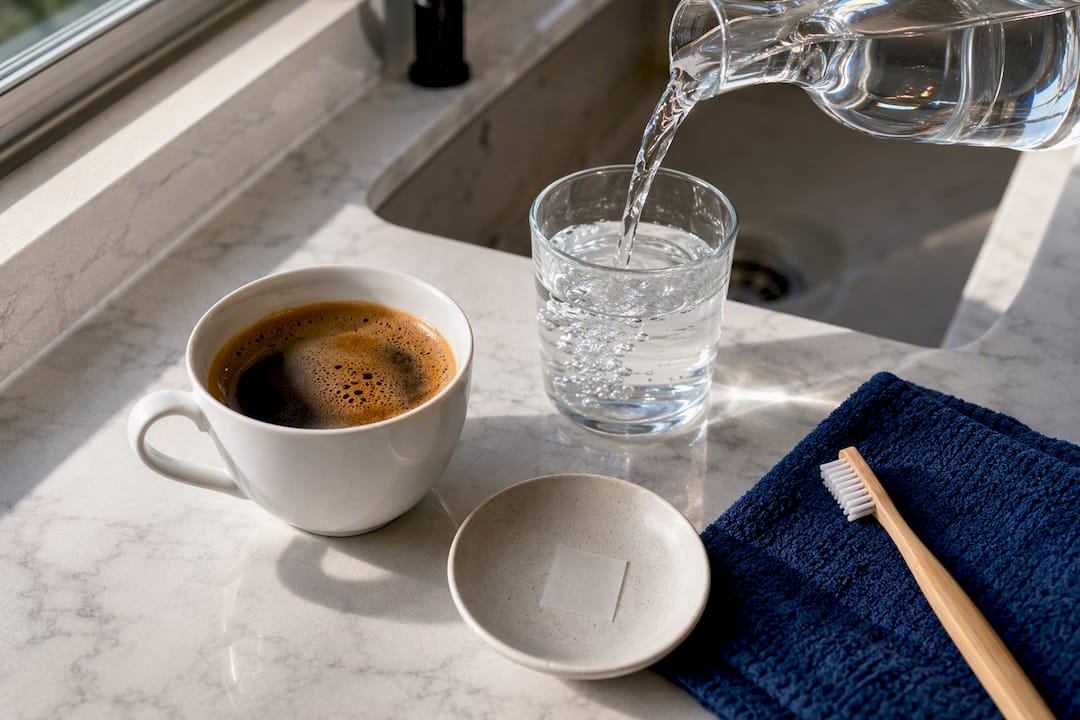
Yes, coffee stains can be removed. Most sit on the enamel surface rather than inside the tooth, so they respond well to cleaning or whitening. For the fastest visible lift, a hygienist clean handles surface staining in one visit, while peroxide whitening tackles deeper extrinsic marks. One rule matters more than any product: never brush straight after coffee. Wait 30 to 60 minutes first.
TL;DR:
Rinsing with water or chewing sugar-free gum immediately after coffee can significantly reduce tannin attachment and prevent surface stains.
Delayed brushing of 30 to 60 minutes after coffee protects enamel softened by acidity and improves the effectiveness of stain removal.
Peroxide whitening products effectively bleach extrinsic stains within one to two weeks, but they are less effective on intrinsic discoloration or dental restorations.
In-clinic cleaning removes stubborn surface stains instantly, while professional whitening treatments offer faster results for deeper or resistant stains.
Habit changes like drinking coffee with a straw, adding milk, and regular flossing can prevent stain buildup and prolong whitening results.
Table of Contents
Quick at-home steps to remove coffee stains from teeth today
Coffee stains teeth because of two things working together: tannins (plant compounds that cling to enamel) and chromogens (the pigments that give coffee its colour). Acidity in coffee also softens the enamel’s outer layer briefly, making it easier for pigment to grab hold. Understanding that gives you a head start on stopping it.
The single most useful habit is rinsing your mouth with water, or chewing sugar-free gum, straight after your last sip. This interrupts the tannins before they bind properly to the tooth surface, buying you time until you can brush properly.
Timing your brushing matters just as much as the brushing itself:
Brush before your first coffee of the day rather than immediately after, or wait 30 to 60 minutes if you drink first, since rinsing and delayed brushing protect enamel that’s temporarily softened by acidity.
Switch to an electric toothbrush, which tends to clear plaque more thoroughly than manual brushing, and plaque is exactly where staining pigments like to sit.
Floss daily. Trapped plaque between teeth darkens over time and is one of the most overlooked contributors to a dull smile.
Try an occasional baking soda polish, no more than once or twice a week, using a small amount on a damp brush rather than as a daily paste.
Baking soda is mildly abrasive, which is exactly why it lifts surface pigment, and exactly why overusing it wears enamel down. Treat it as an occasional boost, not a routine.
Pro Tip: Keep a small bottle of water at your desk specifically for a post-coffee rinse. It takes ten seconds and does more for long-term brightness than any whitening gadget you’ll buy.
If you’ve kept up rinsing, brushing timing, and flossing for a few weeks and the stains haven’t budged, you’re likely looking at something deeper than surface pigment, and that’s when a whitening product or a dentist visit earns its place.
How do whitening products actually remove coffee stains?
Peroxide is the ingredient doing the real work in most whitening strips and kits. Hydrogen peroxide and carbamide peroxide both break down staining molecules through oxidation, effectively bleaching the pigment rather than just scrubbing it off. Strips typically show visible change within a week or two of daily use, though timelines vary by strength and how long the stains have been building.
Not every whitening product relies on peroxide. Some whitening toothpastes use sodium hexametaphosphate (SHMP), a chelating agent that stops certain minerals from bonding to the tooth’s outer layer in the first place, reducing how easily new stains stick. A controlled enamel study found SHMP formulations produced the largest colour restoration among the toothpastes tested, restoring brightness by a substantial majority after simulated brushing. The same study flagged a trade-off worth knowing: abrasion increased with repeated brushing cycles, which is the same mechanism that makes any gritty toothpaste risky for enamel over time.
For sensitive teeth, peroxide-free options exist, though expect a slower, gentler lift rather than a dramatic transformation in days.
A short checklist before you buy anything:
Check the active ingredient (peroxide for bleaching, SHMP or bicarbonate for polishing).
Follow sensitivity guidance on the pack, and stop if discomfort persists beyond a day or two.
Know that whitening products change natural tooth colour only. Crowns, veneers, and composite restorations won’t respond to bleaching, so front teeth with visible dental work may end up an uneven shade.
Set expectations correctly: surface (extrinsic) lift is realistic within weeks; deeper intrinsic discolouration inside the tooth is a different problem entirely, and whitening alone won’t fully resolve it.
What can a dentist or hygienist do that home care can’t?
A hygienist appointment physically removes built-up plaque and surface staining with tools rather than chemistry, and most patients see stains disappear in a single visit. That clean typically holds for three to six months before pigment starts rebuilding, depending on your coffee habits and brushing routine.
For stains that won’t shift with cleaning alone, in-clinic whitening uses a stronger peroxide concentration, often activated with light, and delivers noticeably faster results than shop-bought strips, usually across one to a few sessions.
Custom take-home trays sit between the two options: a dentist fits them to your mouth, you use a prescribed gel at home, and top-up sessions every few months maintain the shade. They cost more upfront than strips but distribute peroxide more evenly across the tooth surface.
Choose a hygienist clean for stubborn surface build-up with no sensitivity concerns.
Choose in-clinic whitening for long-standing stains that home products haven’t touched.
Choose custom trays if you want dentist-supervised strength with the convenience of using them at home.
See a dentist first if you have restorations, ongoing sensitivity, or stains that look grey rather than yellow or brown, since that pattern often points to an intrinsic cause.
The NHS is clear that stronger bleaching treatments should be supervised by a registered dental professional rather than attempted with high-strength kits bought online.
Prevention habits that stop coffee stains coming back
Removing today’s stains only matters if you’re not rebuilding them tomorrow. A few habit changes do most of the heavy lifting:
Drink your coffee in one sitting rather than sipping across a few hours. Constant low-level contact does more damage than one concentrated cup.
Use a straw for iced coffee, which keeps liquid away from the front teeth almost entirely.
Add cow’s milk. The casein protein binds to tannins and reduces how much pigment reaches the enamel. Plant milks don’t offer the same benefit, since they lack casein.
Rinse with water or chew sugar-free gum straight after finishing, and stick to six-monthly dental check-ups so any build-up gets caught early.
Watch other high-tannin drinks (tea, red wine) if coffee isn’t your only culprit, and keep flossing daily regardless of what you drink.
None of these require giving up coffee. They just change when and how it touches your teeth.
Is it safe to use baking soda or charcoal on teeth?
Brushing straight after coffee is the habit most likely to undo everything else on this list, because coffee’s acidity briefly softens enamel and brushing during that window wears it away faster than normal. Waiting 30 to 60 minutes lets saliva neutralise the acid first.
Abrasive DIY methods deserve the same caution. Baking soda used sparingly can help, but daily use, or scrubbing hard with activated charcoal, tends to thin enamel over months rather than remove stains cleverly. Increased sensitivity to hot or cold, or teeth looking more yellow (not whiter) as enamel wears thin and dentine shows through, are both signs to stop immediately.
Pro Tip: If stains persist after weeks of consistent rinsing, correct brushing timing, and flossing, or if you notice new sensitivity, book a dentist assessment rather than escalating to a stronger DIY method.
Why we look at coffee staining differently
Most advice online treats coffee stains as a cosmetic inconvenience to be scrubbed away. Some oral care companies view staining as a maintenance problem, not a one-off fix. Products only earn their place in a routine if they fit around real habits, like a morning coffee that isn’t going anywhere. Some products are designed to fit around daily life rather than demanding you change your habits.
— NuTan
Which NuTan products help with coffee stains?
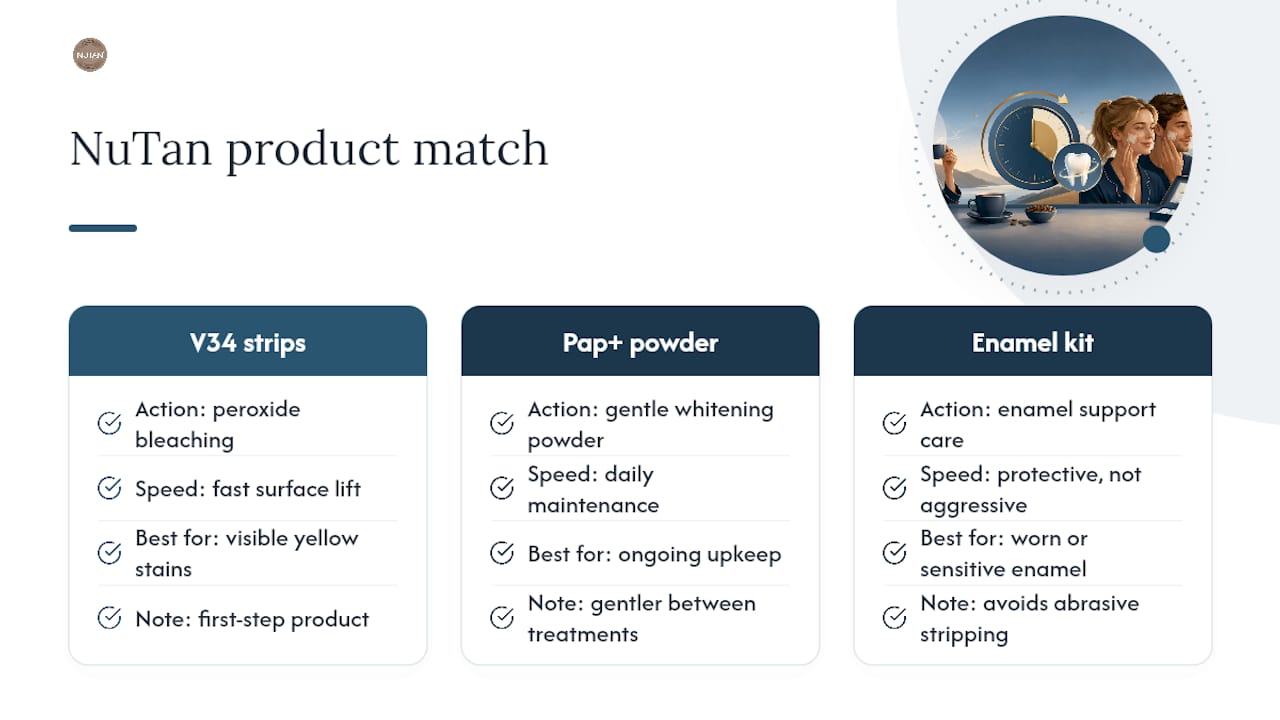
Once the daily habits are in place, the right product does the rest. Some companies stock products that map onto the approaches this article has covered. For a fast surface lift, the NuSmile V34 whitening strips use peroxide to bleach extrinsic staining, making them a solid first step for anyone whose coffee habit has left a visible yellow cast. For those wanting a gentler daily option, the Pap+ teeth whitening powder works well as an ongoing maintenance step between more intensive treatments.
If enamel wear is a concern, particularly for anyone who’s leaned on baking soda or abrasive pastes for a while, the NuSmile enamel care kit is built to support the tooth surface rather than strip pigment aggressively.
None of these replace a dentist. Professional assessment is recommended if there are restorations, sensitivity, or stains that don’t improve with home products before starting stronger treatments. For everyone else, browse the home whitening kit and start with whichever product matches your stain, not your ambition.
Sources
This article is general information, not a substitute for advice from a qualified doctor. Consult a qualified healthcare professional about your own circumstances before acting on anything here.
FAQ
Can you scrape coffee stains off your teeth?
Gently scraping with a soft brush or professional tools can lift surface staining, but hard scraping or scratching risks damaging enamel. A hygienist clean is the safer version of this approach.
Are coffee teeth stains reversible?
Most are, since coffee typically causes extrinsic (surface) staining that responds to cleaning, whitening toothpaste, or peroxide treatments. Deeper intrinsic discolouration inside the tooth is harder to reverse and usually needs professional whitening.
How do I get brown stains off my teeth?
Start with consistent rinsing after coffee, correct brushing timing, and daily flossing, then add a peroxide-based whitening strip or powder if stains persist. For stubborn brown staining, a hygienist clean or in-clinic whitening gives the fastest result.
How long do coffee stains last on teeth?
Without any intervention, staining builds gradually and can become noticeable within weeks of daily coffee drinking. A hygienist clean typically keeps teeth stain-free for three to six months, depending on habits, while daily prevention habits slow the return significantly.
Recommended
Comments