

UK: Why the NHS Says Don't Whiten Teeth During Pregnancy
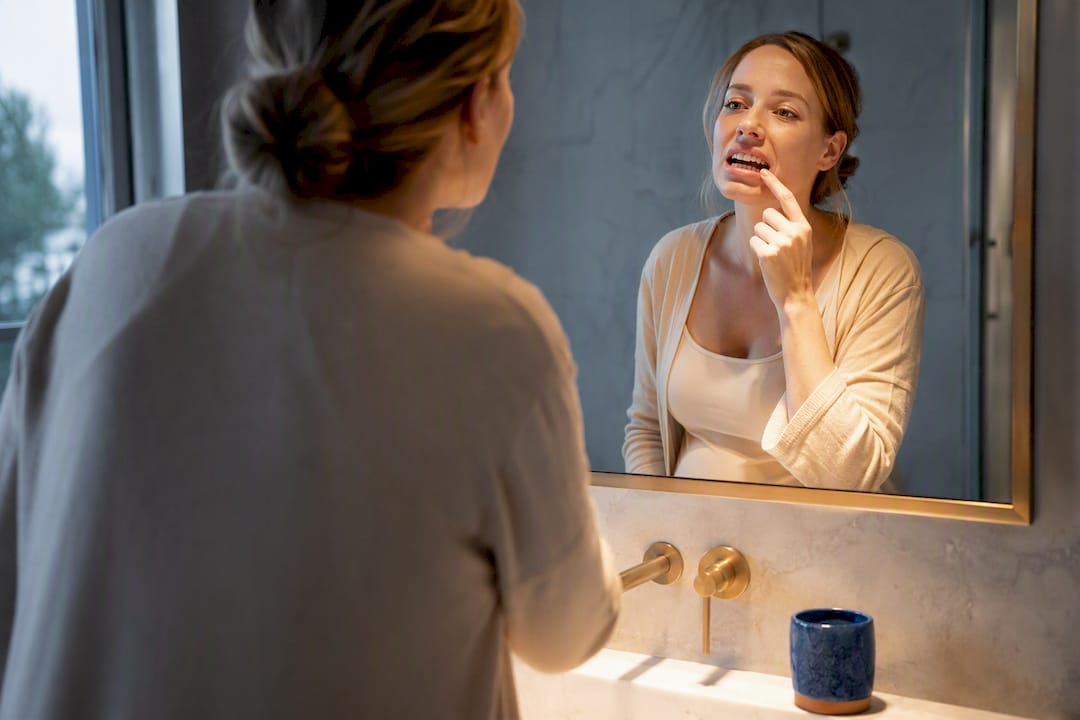
The safest choice is to postpone elective teeth whitening until after pregnancy and, where possible, after breastfeeding. The NHS advises against whitening during pregnancy and breastfeeding, largely because research on the topic is thin and gums become more sensitive at this stage. It’s standard clinical advice, not a scare tactic, and it applies whether you’re eyeing a dental clinic appointment or a shop-bought kit.
TL;DR:
Teeth whitening during pregnancy involves significant uncertainty, with limited safety data on peroxide-based products and increased gum sensitivity.
In-clinic bleaching and professional take-home gels are especially risky due to higher peroxide concentrations and should be postponed.
Safer alternatives include professional cleaning, using low-abrasion whitening toothpastes, and improving daily oral hygiene to reduce surface stains.
Post-pregnancy, waiting until gingivitis clears and gums are stable is advised before considering any cosmetic whitening treatments.
Only registered dental professionals in the UK can legally perform whitening, and proper pre-treatment checkups are essential before using at-home whitening kits.
Table of Contents
Is teeth whitening safe while pregnant? What the guidance says
The NHS position is unambiguous: whitening treatments are not recommended during pregnancy or breastfeeding, and elective cosmetic work should wait. That doesn’t mean your teeth get neglected for nine months. Necessary dental care continues throughout pregnancy, and you’re entitled to free NHS dental treatment while pregnant and for 12 months after birth, covering check-ups, fillings, and other medically needed work. Cosmetic whitening isn’t included in that free entitlement, whatever stage of pregnancy you’re at.
A few things matter in practice:
Always tell your dentist or hygienist you’re pregnant at the start of any appointment.
Routine cleaning, X-rays when clinically justified, and urgent treatment remain available and are considered safe.
Book your free dental check early in pregnancy rather than waiting until a problem arises.
Why dental professionals advise caution during pregnancy
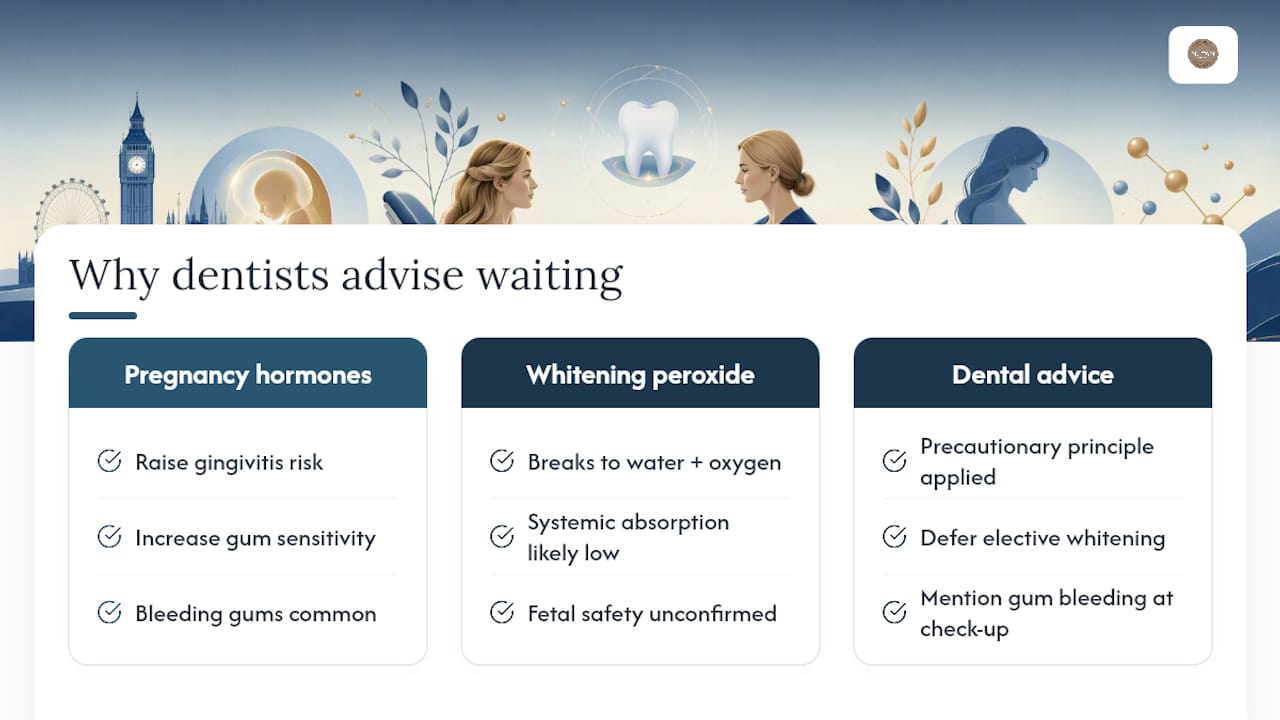
Nobody can point to a study proving whitening gel harms a developing baby, and nobody can prove it doesn’t. That gap is the whole story. Clinical reviews on dental care in pregnancy describe the evidence base as limited and inconclusive, which is exactly why professional caution defaults to “wait” rather than “probably fine.”
Pro Tip: If your gums bleed more than usual right now, that’s a pregnancy hormone effect, not poor brushing. Mention it at your next check-up rather than assuming it’s your fault.
Hormonal changes in pregnancy raise the risk of gingivitis and general gum sensitivity, and whitening agents applied to already-inflamed gums tend to make irritation worse, not better. Hydrogen peroxide, the active ingredient in most whitening products, breaks down into water and oxygen once it contacts the tooth. UK toxicology guidance suggests systemic absorption through this route is likely to be low, but “likely low” isn’t the same as “confirmed safe” for a foetus. That distinction is precisely why dentists apply the precautionary principle to elective cosmetic exposures in pregnancy, deferring anything that isn’t necessary until the picture is clearer.
How do whitening methods compare for risk during pregnancy?
Not every whitening option carries the same level of concern, though the professional advice tends to be similarly cautious across most of them.
In-clinic bleaching: uses the highest peroxide concentrations and carries the greatest risk of gum sensitivity, so it’s the option most consistently postponed.
Take-home professional gels: lower peroxide strength than in-chair treatment, but still peroxide-based, and dentists usually recommend waiting regardless.
Over-the-counter strips and kits: contain less peroxide than professional products, but safety data specific to pregnancy is sparse, so avoidance is the general guidance.
Whitening toothpastes and colour-correcting gels: lift surface stains mechanically rather than bleaching, making them generally the gentler choice, though some formulas are more abrasive than others.
LED or blue-light devices: the light itself is unlikely to pose a risk, but the accompanying gels and activators often contain ingredients that haven’t been studied in pregnancy, so caution still applies.
Safer ways to brighten your smile while pregnant
You don’t have to live with dull-looking teeth for nine months just because bleaching is off the table. Several genuinely low-risk options exist, and most double up as good general oral care during pregnancy anyway.
Book a hygienist appointment. Professional cleaning and polishing lifts surface staining from tea, coffee, and turmeric-heavy meals without any bleaching agent involved, and it’s considered safe throughout pregnancy.
Switch to a low-abrasion whitening toothpaste with fluoride. Ask your dentist or hygienist which brands suit sensitive pregnancy gums, since not all “whitening” formulas are gentle.
Upgrade your daily routine. An electric toothbrush combined with proper flossing removes more plaque than manual brushing alone, and rinsing with water after tea, coffee, or curry helps stop stains setting in.
Adjust a few habits. Drink staining beverages through a straw, chew sugar-free gum to boost saliva flow, and skip charcoal powders or other abrasive home remedies. They scratch enamel more than they whiten it.
Pro Tip: If morning sickness is part of your routine, rinse your mouth with a weak baking soda solution before brushing rather than straight after being sick. It neutralises stomach acid first, so you’re not brushing acid directly into your enamel.
When is it safe to whiten your teeth after pregnancy?
Once the baby arrives, the advice doesn’t automatically flip to “go ahead.” Most dentists suggest waiting until pregnancy is over, and some recommend holding off further until breastfeeding has finished, since the same lack-of-data problem applies to breast milk. It’s worth raising directly with your own dentist rather than assuming a fixed date.
Before booking anything, check that:
Your gums have settled and any pregnancy-related gingivitis has cleared.
There’s no active dental treatment outstanding.
You’ve had a recent check-up confirming your mouth is in good shape for cosmetic work.
Your first postnatal dental visit is the natural moment to raise the subject and get a professional opinion on timing.
Who is legally allowed to whiten your teeth in the UK?
Tooth whitening isn’t a beauty treatment you can get anywhere. Under General Dental Council guidance, only registered dental professionals may legally carry out tooth whitening in the UK. Salons, beauticians, and non-dental “whitening bars” offering the service are operating outside the law.
Non-dental providers often use unsuitable products at unsafe concentrations.
Poor gum isolation during application significantly raises the risk of chemical burns and tissue damage.
Before booking anywhere, check the practitioner’s GDC registration and ask directly what concentration of peroxide they use.
How to prepare for whitening once pregnancy is behind you
Get your gums checked and cleaned first. A hygienist appointment resolves any lingering inflammation and gives whitening gel a healthy surface to work on.
Discuss shade and strength with your dentist. A professional shade assessment and a conversation about peroxide concentration and desensitising gel options prevents nasty surprises.
Plan your aftercare. A short “white diet” avoiding staining foods for 48 hours, consistent brushing, and a sensible schedule for touch-ups keeps results looking good for longer.
Our view on whitening advice during pregnancy
The official guidance here isn’t complicated, and NuTan® has no interest in muddying it: whitening during pregnancy should wait. The NHS position and the GDC’s rules on who may legally perform whitening exist because the honest answer to “is this safe?” is currently “we don’t have enough data to say yes with confidence.” That’s not a marketing line, it’s the actual state of the research, and any dentist worth seeing will tell you the same thing.
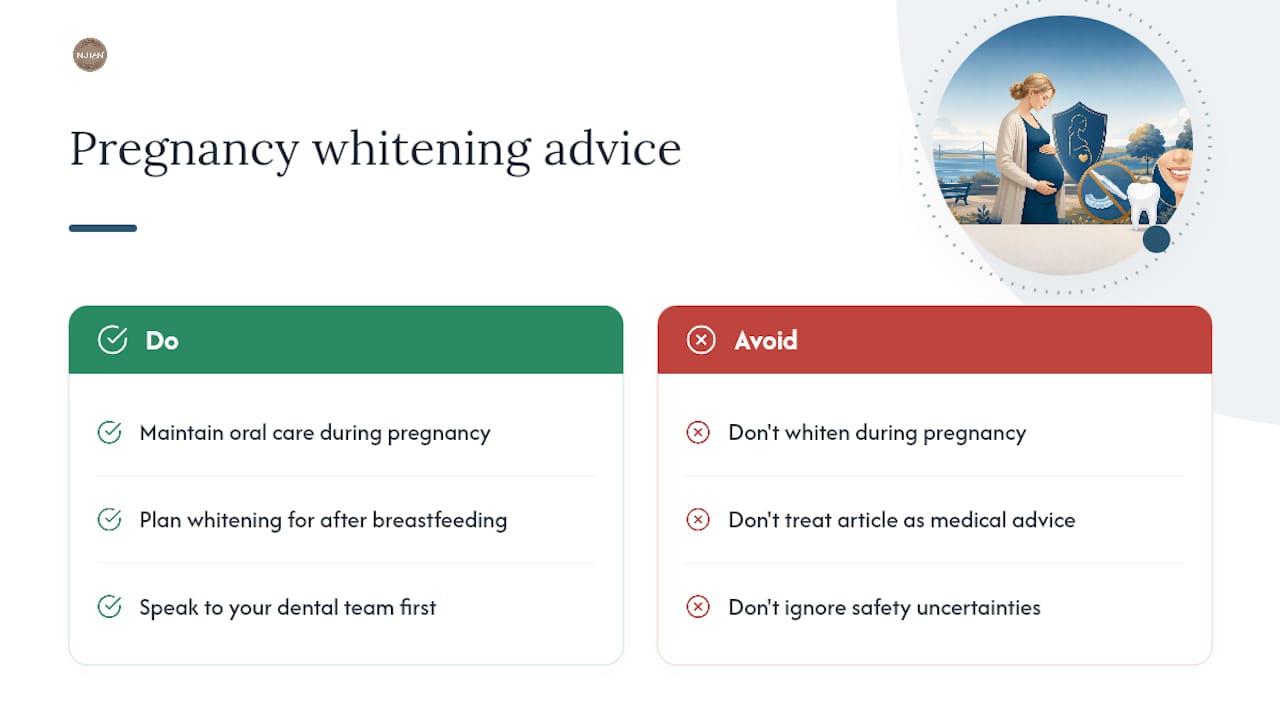
Where we’d push back slightly on the wider conversation is the framing that whitening is somehow a frivolous vanity project not worth discussing properly during pregnancy. Wanting your smile to look healthy is a reasonable thing to care about at any life stage, and dismissing the question outright helps nobody. The better approach is what this article has laid out: safe maintenance now, a proper plan for later.
Once breastfeeding is behind you and your dentist has given the go-ahead, you can consider various whitening products designed for use at that stage. None of that changes the advice for right now. Speak to your dental team before choosing anything, and treat this article as background reading, not a substitute for that conversation.
— NuTan
Ready for after pregnancy? NuTan’s whitening options
Once your dentist has given the green light, there are simple home-use options available to freshen your smile without booking a clinic appointment for every top-up. The NuSmile home whitening kit is built for straightforward use once you’re past the wait-and-see stage, while Pap+ whitening powder suits ongoing maintenance between bigger sessions. Both sit alongside our wider NuSmile oral care range if you’re also rebuilding a broader routine after pregnancy.
We’re not going to pretend any product removes the need for a dentist’s opinion first, particularly on timing around breastfeeding and gum health. What we can offer is an easy, at-home option for when that green light comes: no salon booking, no guessing on concentration, just a kit designed for home use once you’re cleared to go ahead. If gentler, non-bleach brightening is more your pace right now, our guide on shining teeth safely and this partner guide to brightening skin naturally cover complementary appearance tips worth trying in the meantime. When you’re ready, browse the home whitening kit and place your order for delivery, available worldwide.
Sources
FAQ
Is it safe to whiten your teeth while pregnant?
No. The NHS advises against elective teeth whitening during pregnancy and breastfeeding, largely due to limited safety data and increased gum sensitivity in pregnancy.
Is hydrogen peroxide safe for teeth during pregnancy?
Hydrogen peroxide breaks down into water and oxygen on the tooth surface, and systemic absorption is thought to be low, but there isn’t enough dedicated research to confirm it’s safe in pregnancy, so dentists recommend avoiding it as a precaution.
What dental procedures cannot be done while pregnant?
Elective cosmetic procedures, including tooth whitening, are generally postponed during pregnancy, while necessary care such as fillings, extractions, and routine check-ups remains available and is free through the NHS throughout pregnancy and for 12 months afterwards.
What whitening toothpaste can I use while pregnant?
A low-abrasion, fluoride whitening toothpaste is generally considered a gentler option for lifting surface stains during pregnancy, though it’s worth asking your dentist or hygienist to recommend a specific product suited to sensitive gums.
Can non-dental providers legally whiten teeth in the UK?
No. Under GDC guidance, only registered dental professionals may legally carry out tooth whitening, so salon or beautician offers should be avoided regardless of pregnancy status.
Recommended
Comments