

What are tanning accelerators and how do they work?
- 21 hours ago
- 8 min read
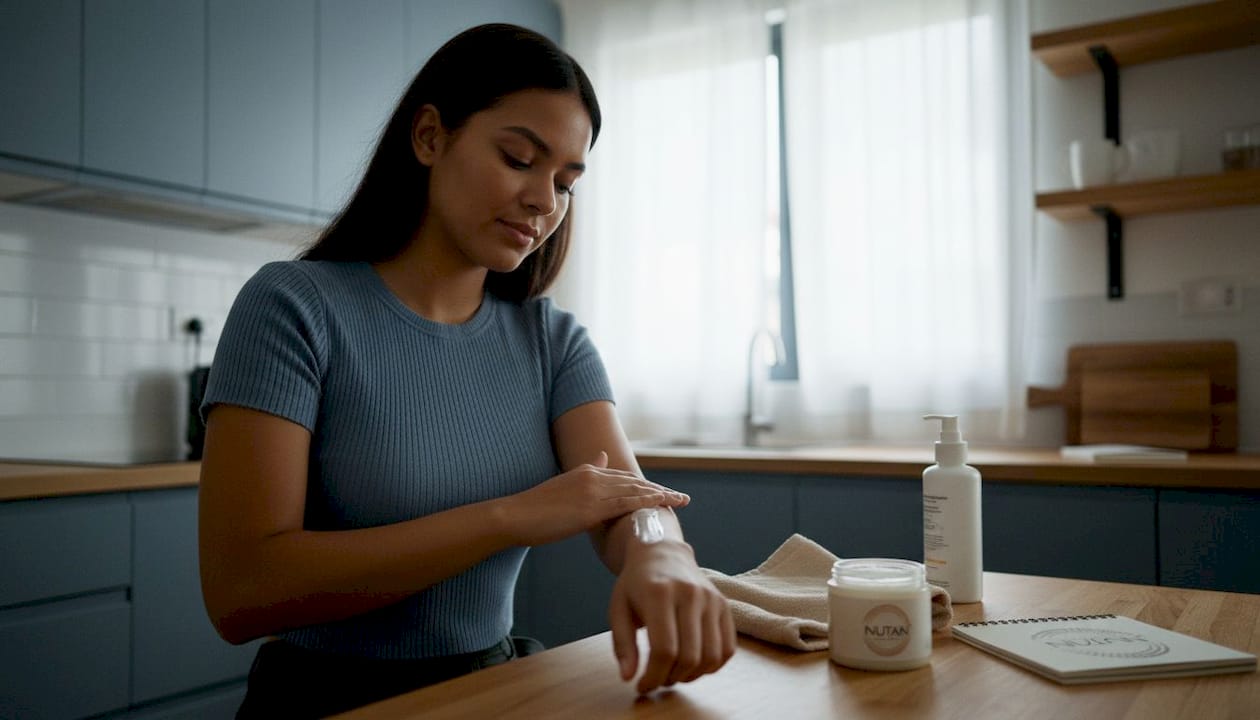
Tanning accelerators are skincare products that optimise your skin’s natural melanin production during UV exposure, helping you achieve a deeper, more even tan in less time. They do not add artificial colour to the skin. Instead, they support the biological process your skin already uses to produce pigment. Some formulations are clinically proven to extend tan duration by up to 4 weeks, which means fewer sessions and less cumulative UV exposure overall. NuTan® takes this science further with its transdermal patch technology, but understanding conventional accelerators first gives you the full picture.
How do tanning accelerators work biologically?
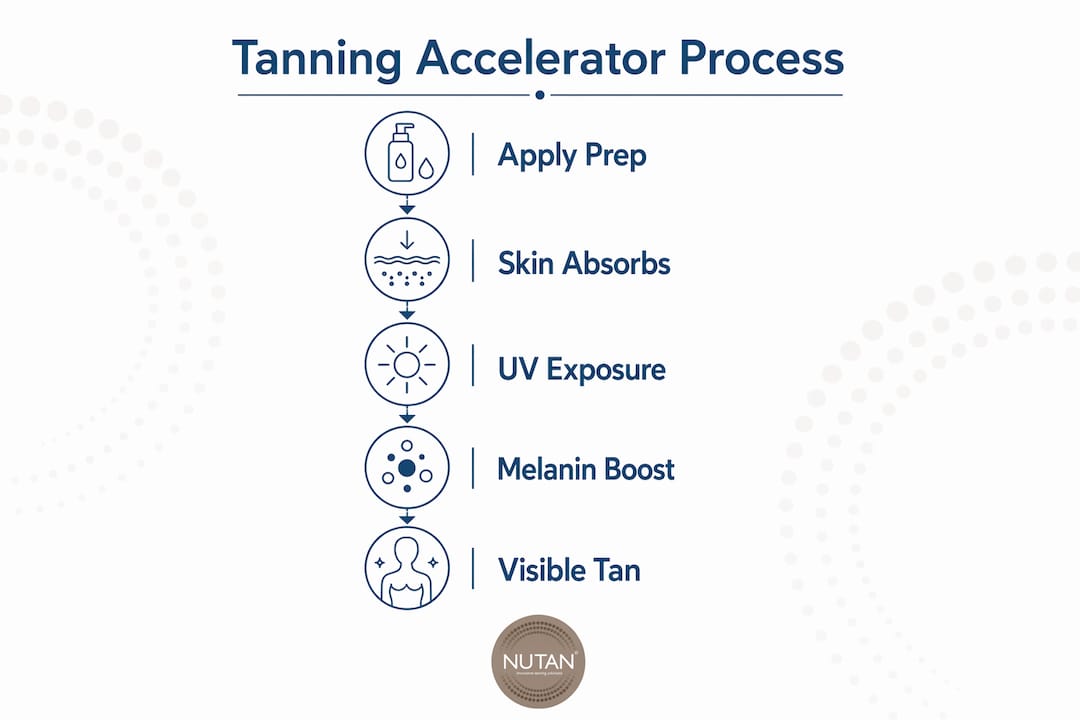
Melanin production begins when UV rays reach the melanocytes, the pigment-producing cells in the deepest layer of your epidermis. UV exposure triggers a biochemical signal that tells melanocytes to produce more melanin. That melanin then migrates upward through the skin layers, creating the visible colour you recognise as a tan.
Tanning accelerators support this process by improving the availability of key building blocks before UV exposure begins. The most studied of these is tyrosine, an amino acid that acts as a direct precursor in the melanin synthesis pathway. Tyrosine-based accelerators enhance melanocyte activity, which means your skin is better prepared to respond when UV rays arrive.
One detail that surprises many people: the visible result of this process takes time. Melanin production takes 48–72 hours to produce visible colour, even with accelerators working at full capacity. Accelerators speed up the process relative to your baseline, but they do not create an instant tan.
The delivery of active ingredients to melanocytes also matters enormously. Melanocytes sit beneath the stratum corneum, the tough outer barrier of the skin. Formulations need penetration enhancers to carry compounds like tyrosine through this barrier effectively.
Key biological steps accelerators support:
Priming melanocytes with amino acid precursors before UV exposure
Improving ingredient delivery through the skin barrier via carrier oils
Extending the duration of active melanin synthesis after UV sessions
Supporting skin hydration to maintain an even, consistent tan
Pro Tip: Apply your accelerator at least 20–30 minutes before UV exposure. This gives active ingredients time to penetrate the stratum corneum and reach melanocytes before tanning begins.
What ingredients do tanning accelerators contain?

The ingredient list in a tanning accelerator tells you a great deal about how well it will perform. Most quality formulations combine melanin precursors, carrier agents, and skin-nourishing compounds into a single product.
Tyrosine is the headline ingredient in most accelerators. It is the amino acid from which melanin is synthesised, so increasing its availability in the skin gives melanocytes more raw material to work with. Carrier oils such as carrot and coconut oil serve a dual purpose: they help deliver tyrosine past the skin barrier, and they moisturise the skin to support an even, lasting tan.
Beyond the core actives, most formulations include supporting ingredients:
Aloe vera: Soothes the skin and reduces post-UV irritation
Vitamin E: An antioxidant that supports skin cell health during UV exposure
Plant extracts: Compounds such as walnut extract or carrot seed oil that may support pigmentation
Hydrating agents: Glycerin and similar humectants that keep skin supple and receptive
One critical point: tanning accelerators contain no SPF. They are designed to enhance melanin production, not to block UV radiation. Using an accelerator without a separate broad-spectrum sunscreen leaves your skin unprotected against UV damage. This is not a minor caveat. It is the single most important safety rule for anyone using these products.
Pro Tip: Pair your accelerator with a broad-spectrum SPF of at least SPF 30. Apply the sunscreen on top of the accelerator, not underneath it, to maintain the protective layer throughout your session.
Tanning accelerators vs bronzers: what is the difference?
These two product types are frequently confused, but they work in entirely different ways. Understanding the distinction helps you choose the right product for your goal.
Accelerators affect melanin production; bronzers add temporary cosmetic colour. A bronzer contains tinted pigments or dyes that sit on the surface of the skin and create the appearance of a tan immediately after application. An accelerator contains no colour at all. It works beneath the surface to support your skin’s own pigment production over time.
Feature | Tanning accelerator | Bronzer |
How it works | Boosts natural melanin production | Deposits cosmetic colour on skin surface |
Result timing | 48–72 hours for visible colour | Immediate colour on application |
Colour type | Natural, produced by your own skin | Artificial tint from pigments or dyes |
Longevity | Longer-lasting, fades as skin renews | Washes off or transfers to clothing |
Streaking risk | Low, when applied evenly | Higher, particularly on dry or textured skin |
SPF content | None | None (unless specifically formulated) |
The practical implication is straightforward. If you need colour for an event tonight, a bronzer delivers it. If you want a genuine, lasting tan that looks natural in all lighting, an accelerator is the better choice. Many people use both: an accelerator to build real melanin-based colour over time, and a bronzer for immediate coverage when needed.
How to use tanning accelerators safely and effectively
Correct application makes the difference between a patchy result and an even, lasting tan. The process is simple, but timing and consistency matter.
Start early. Apply your accelerator daily as a moisturiser for 2–3 weeks before your first sun or sunbed session. Daily use for 2–3 weeks primes melanocytes and builds a foundation for faster, deeper colour once UV exposure begins.
Apply before each session. On tanning days, apply the accelerator 20–30 minutes before UV exposure. This timing allows active ingredients to penetrate and reach melanocytes before the tanning stimulus arrives.
Always add sunscreen. Apply a broad-spectrum SPF on top of the accelerator. Accelerators carry no UV protection, so sunscreen is non-negotiable for preventing burns and long-term skin damage.
Hydrate consistently. Well-hydrated skin tans more evenly and holds colour longer. Drink plenty of water and use a moisturiser after each session. The role of hydration in maintaining a tan is often underestimated.
Build exposure gradually. Start with shorter UV sessions and increase duration slowly. Overexposure does not accelerate results. It causes burns, which peel and take your tan with them.
Integrate into your skincare routine. Treat your accelerator as a daily moisturiser between tanning periods, not just a pre-session product. Consistent use maintains skin condition and supports more even pigmentation.
Pro Tip: Exfoliate gently before starting your accelerator routine. Removing dead skin cells allows active ingredients to penetrate more effectively and helps your tan develop evenly. Learn more about body chemistry and tanning to understand why skin condition affects results.
What are the benefits and limitations of tanning accelerators?
Tanning accelerators deliver real, measurable benefits when used correctly. They also have clear limits that every user should understand before starting.
Benefits:
Faster colour development. By priming melanocytes with tyrosine and supporting ingredient delivery, accelerators reduce the number of UV sessions needed to reach your desired depth of colour.
Deeper, more even tans. Consistent use produces more uniform pigmentation across the skin, reducing the patchiness that often results from uneven UV exposure.
Extended tan duration. Some formulations are clinically proven to extend tan longevity. This means your colour fades more slowly between sessions, reducing the total UV exposure needed to maintain it.
Skin conditioning. Most accelerators contain moisturising and antioxidant ingredients that improve overall skin health alongside their tanning function.
Limitations:
Genetic ceiling. Your genetics set the upper limit of your melanin production. Tanning accelerators optimise within these limits but cannot change your fundamental skin type or tanning capacity. A fair-skinned person will not achieve the same depth of colour as someone with naturally darker skin, regardless of the product used.
No UV protection. Accelerators are not sunscreens. Using one without SPF increases your risk of UV damage.
Require UV exposure. Unlike NuTan® patches, which work by activating the Melanocortin 1 Receptor (MC1R) directly, conventional accelerators need UV rays to trigger melanin production. They cannot produce a tan in the absence of sun or sunbed exposure.
Results take days, not hours. Managing expectations is part of using these products well. Patience and consistency produce the best outcomes.
For those who want to explore non-invasive tanning methods that go beyond conventional accelerators, the options have expanded considerably in recent years.
Key takeaways
Tanning accelerators work by priming your skin’s melanin production before UV exposure, delivering faster and longer-lasting natural colour, but they require consistent use, correct timing, and a separate broad-spectrum sunscreen to be both effective and safe.
Point | Details |
Biological mechanism | Accelerators supply tyrosine to melanocytes, boosting melanin synthesis when UV rays arrive. |
Timing is critical | Apply 20–30 minutes before UV exposure and daily for 2–3 weeks beforehand for best results. |
No SPF included | Always apply a broad-spectrum sunscreen on top; accelerators offer zero UV protection. |
Genetic limits apply | Accelerators optimise your natural tanning capacity but cannot exceed your genetic ceiling. |
Accelerators vs bronzers | Accelerators build real melanin-based colour over days; bronzers add temporary surface tint instantly. |
What I have learned from watching people use tanning accelerators
The most common mistake is impatience. People apply an accelerator once or twice, step out into the sun, and expect a dramatic result by evening. When it does not arrive, they conclude the product does not work. The biology simply does not operate on that timeline. Melanin takes 48–72 hours to become visible, and the priming phase requires consistent daily application for weeks, not days.
The second most common mistake is skipping sunscreen. This one genuinely concerns me. Accelerators are designed to make your skin more responsive to UV. Using one without SPF does not just increase your tan. It increases your UV exposure risk at the same time. The two products serve completely different functions and neither replaces the other.
What I find genuinely impressive about well-formulated accelerators is the skin conditioning effect. The carrier oils, aloe vera, and vitamin E in quality products leave skin noticeably softer and more hydrated over time. That is not a marketing claim. It is a practical side effect of daily moisturising with a well-made product.
My honest view is that conventional accelerators are a solid choice for people who tan regularly and want to get more from each session. For those who want to reduce UV exposure more significantly, the science has moved on. NuTan® patches work at the receptor level, activating MC1R directly and requiring over 70% less UV exposure than standard tanning methods to achieve a comparable result. That is a meaningful difference for anyone who takes skin health seriously.
— NuTan®
NuTan® patches: a smarter way to support your natural tan

NuTan® transdermal tanning patches take a fundamentally different approach to tanning acceleration. Rather than relying on topical tyrosine and UV exposure alone, NuTan® patches deliver the proprietary NuTan MSH-ComplexB through the skin. This formulation activates the Melanocortin 1 Receptor (MC1R) on melanocytes directly, triggering natural pigment production with over 70% less UV exposure than conventional tanning methods require.
The result is a genuine, natural-looking tan that does not rub off or wash away. No needles, no injections, and no artificial colour. The patches are pain-free, discreet, and suitable for use at home, with worldwide delivery available.
For those who want a deeper colour with fewer UV sessions, the NuTan® tanning patches offer a clinically considered alternative. If you are ready for stronger results, the Triple Strength patches are formulated for those who want faster, more intense pigmentation with the same reduced UV approach.
FAQ
What are tanning accelerators used for?
Tanning accelerators are products that prime your skin’s melanin production before and during UV exposure, helping you tan faster, more deeply, and for longer than you would without them.
How long do tanning accelerators take to work?
Visible results typically appear within 48–72 hours of UV exposure, as melanin production and migration through the skin layers takes time. Daily use for 2–3 weeks before tanning sessions produces the best foundation.
Are tanning accelerators safe to use?
Tanning accelerators are safe when used correctly, provided you apply a broad-spectrum SPF on top. They contain no UV protection, so sunscreen is always required alongside them to prevent burns and skin damage.
Do tanning accelerators work without sun exposure?
Conventional tanning accelerators require UV exposure to trigger melanin production and will not produce a tan on their own. NuTan® patches differ in that they activate the MC1R receptor directly, requiring significantly less UV exposure to achieve a natural-looking result.
What is the difference between a tanning accelerator and a bronzer?
A tanning accelerator supports your skin’s natural melanin production for a real, lasting tan. A bronzer deposits cosmetic colour on the skin surface for an immediate but temporary effect that washes off.
Recommended