

Why skin type shapes your Melanotan results
- 13 minutes ago
- 9 min read
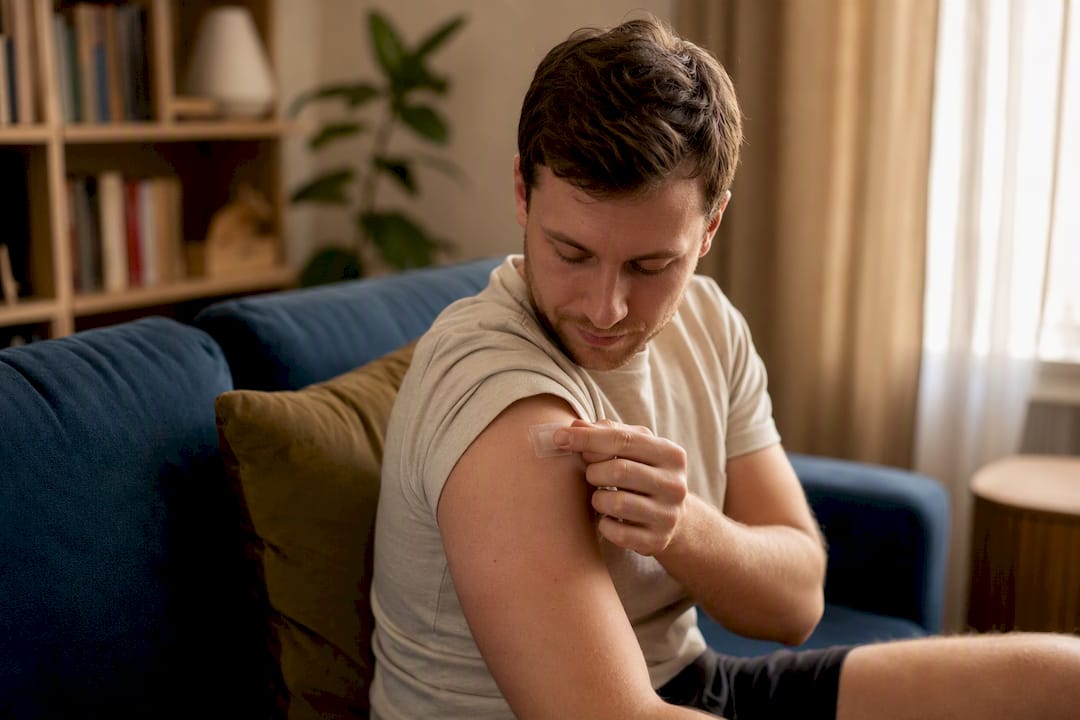
Your Fitzpatrick phototype is the single biggest predictor of how fast, how deep, and how evenly Melanotan will darken your skin. Three biological factors decide the outcome: how much melanin your skin already produces, whether that melanin leans toward eumelanin or pheomelanin, and how responsive your MC1R receptors are to stimulation.
Fair, red-toned skin (Types I–II) often needs longer loading periods and shows a bigger contrast, but with a higher risk of blotchy or uneven colour.
Olive to light-brown skin (Types III–IV) tends to tan faster and more evenly.
Deep skin tones (Types V–VI) respond quickly at a biological level, though visible contrast is naturally more subtle.
Fitzpatrick phototype does not just influence your tan. It sets the ceiling on how much colour change is biologically possible, and how evenly it will appear.
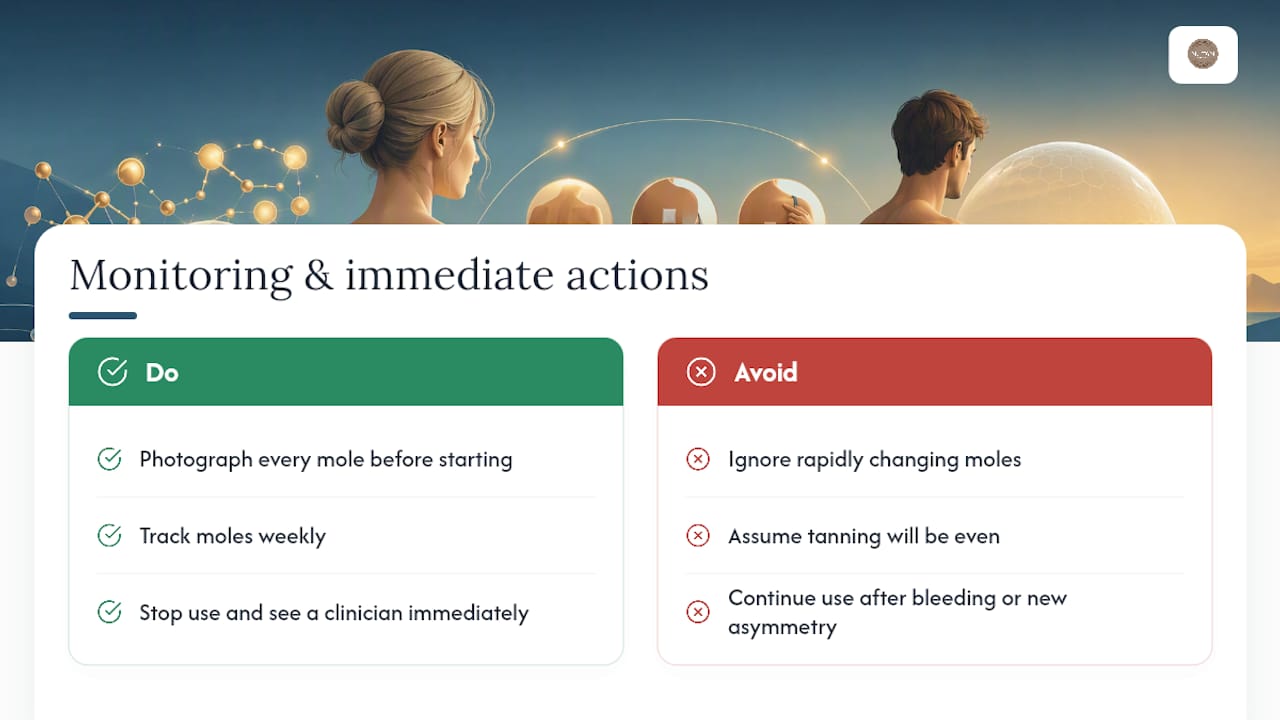
Whatever your phototype, mole monitoring matters from day one. Stop use and speak to a clinician if you notice rapid growth, irregular borders, or new asymmetry in any mole.
Key Takeaways
Fitzpatrick phototype determines the speed, depth and evenness of any Melanotan-driven tan by setting the biological ceiling on melanin quantity and quality.
Point | Details |
Phototype sets the ceiling | Baseline melanin, eumelanin/pheomelanin balance, and MC1R responsiveness together limit how far Melanotan can change your colour. |
Fair skin needs patience | Types I–II typically need longer loading and face a higher risk of patchy, uneven results. |
UV still plays a role | Trial data shows Melanotan primes melanocytes, but UV exposure is often what makes the tan visible. |
Monitor moles weekly | Photograph and measure moles regularly; stop and see a clinician for rapid growth or irregular borders. |
Consider a lower-UV route | NuTan® transdermal patches use the same MC1R pathway with over 70% less UV exposure needed than standard tanning methods. |
This article is general information, not a substitute for advice from a qualified doctor. Consult a qualified healthcare professional about your own circumstances before acting on anything here.
Table of Contents
How Melanotan triggers pigmentation at a biological level
Melanotan behaves like a synthetic version of alpha-melanocyte-stimulating hormone (α-MSH). It binds to and activates MC1R, a receptor sitting on the surface of your melanocytes, and pushes pigment production toward eumelanin rather than pheomelanin.
The signalling cascade runs in a predictable sequence:
Melanotan binds to MC1R on the melanocyte surface.
This binding raises intracellular cAMP levels.
Higher cAMP activates tyrosinase, the enzyme that drives melanin synthesis.
The result is increased eumelanin production and greater epidermal melanin density.
Melanotan measurably raises melanin, even before you see a tan. A randomised, double-blind trial found a highly significant rise in skin melanin on active treatment versus placebo, with the strongest effect in Fitzpatrick Types I–II (P < 0.0001). The same research recorded increases in minimal erythema dose (MED), meaning skin became more resistant to sunburn even where the cosmetic tan was modest.
Here’s the part many users miss: Melanotan primes the melanocyte, but UV exposure is often what actually converts that biochemical change into a visible tan. Clinical work combining the peptide with small doses of UV produced marked tanning enhancement, while the peptide alone, without UV, produced only minimal darkening at many body sites.
What are Fitzpatrick skin types and why do they matter for tanning?
Your Fitzpatrick phototype predicts both how much melanin your skin makes at baseline and what kind of melanin it favours. Together, these two variables set a biological limit on what Melanotan can achieve, regardless of dose.
The scale runs from Type I to Type VI, and it’s still the clinical standard for judging UV sensitivity and tanning capacity:
Type I: Always burns, never tans. Very low baseline melanin.
Type II: Burns easily, tans minimally. Low baseline melanin.
Type III: Burns moderately, tans gradually. Moderate melanin.
Type IV: Burns minimally, tans well. Moderate to high melanin.
Type V: Rarely burns, tans easily and deeply. High baseline melanin.
Type VI: Almost never burns, tans very deeply. Very high baseline melanin.
This classification, drawn from the clinical Fitzpatrick reference, underpins dosing and safety advice across dermatology.
Beyond quantity, melanin quality matters just as much. Eumelanin is the brown-black pigment that offers real photoprotection. Pheomelanin, the red-yellow pigment more common in fair and red-haired individuals, offers far less UV defence and produces a different, often patchier colour shift. Genetic reviews of melanogenesis confirm that MC1R variants common in fair or red-haired people reduce receptor responsiveness, which changes both the pace and the ceiling of any Melanotan response.
Pro Tip: Your natural hair colour, eye colour, and history of burning versus tanning give a rough clue to your phototype, but a clinician or spectrophotometer reading gives a far more reliable answer before you start.
How do Melanotan results differ across skin types?
Fairer phototypes (I–II) usually need longer loading periods and show the biggest visual contrast, but they also carry the highest risk of uneven, patchy colour. Mid-range phototypes (III–IV) tend to tan faster and more uniformly. Darker phototypes (V–VI) show the quickest biological response, though the cosmetic contrast is naturally less dramatic since baseline melanin is already high.
[
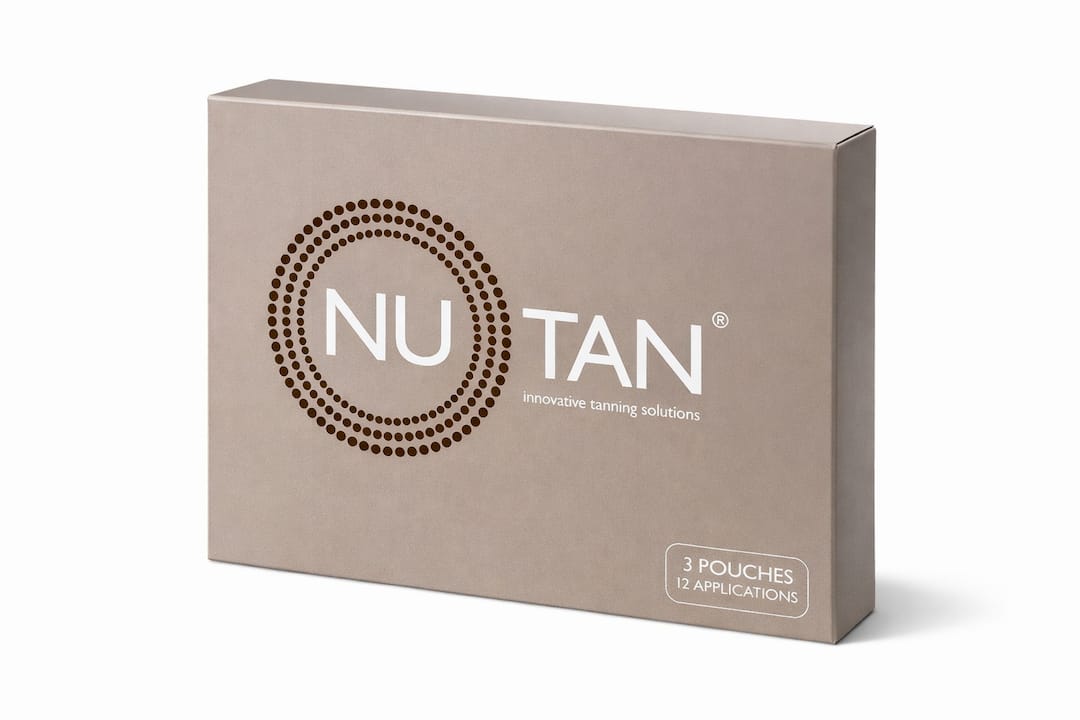
Type I–II: Visible change can take several weeks. Patchiness often appears first on thinner skin (backs of hands, chest) before spreading. Watch closely for blotching around freckles and moles.
Type III–IV: Community and user timelines suggest visible change within 5–10 days is common, with tanning that reads as smoother and more even.
Type V–VI: Biological markers (melanin density, MED) can shift quickly, but because baseline pigment is already substantial, the mirror may show only a subtle deepening rather than a dramatic change.
A rough timeline that applies loosely across phototypes:
Days 1–7: Loading phase, minimal visible change, biological priming under way.
Weeks 2–4: Colour becomes noticeable, particularly with brief UV exposure on dosing days.
Weeks 4–8: Peak visible tan for most users; fair skin types may still be catching up here.
Ongoing: Maintenance dosing to sustain colour, adjusted by how quickly your own tan fades.
Pro Tip: Photograph your skin in the same light and position every week. Fair-skinned users especially benefit from staggering dose days rather than front-loading, which reduces the odds of a patchy result and gives you time to assess how your body chemistry affects tanning before increasing exposure.
What pigmentation risks change with skin type?
Melanotan raises the likelihood of mole and freckle darkening and uneven hyperpigmentation for everyone, but darker phototypes are more prone to persistent post-inflammatory hyperpigmentation (PIH) after any skin injury or irritation, a pattern noted in clinical safety reviews of the peptide.
Common, generally expected effects include freckle and mole darkening, gradual all-over tanning, occasional flushing, and mild nausea after dosing. Less common but serious signs include new or rapidly changing moles, persistent blotchy hyperpigmentation that doesn’t fade, or unusually dark patches with irregular edges. If you’re already prone to uneven or patchy tanning, Melanotan can amplify that tendency rather than smooth it out.
Photograph every mole before you start. Track them weekly. Stop use immediately and see a clinician if you notice rapid enlargement, an irregular border, new asymmetry, or bleeding.
Skip to the monitoring section below for a full step-by-step routine, and see the FAQ for quick answers on moles and eye colour.
Does product quality affect Melanotan results as much as skin type?
Skin type sets your biological ceiling, but a surprising amount of result variability comes down to product quality and how the peptide is administered, not genetics at all.
Before you start any protocol, check:
Batch information and any third-party testing documentation.
Correct storage instructions, since peptides degrade quickly if mishandled.
Route of administration, as subcutaneous delivery gives more reliable bioavailability than intranasal use, which tends to deliver lower and more variable exposure.
Whether the protocol distinguishes loading dose from maintenance dose, and whether it assumes concurrent UV exposure.
A quick authenticity checklist:
Buy only from a source with clear, verifiable labelling.
Confirm the product has been stored within its stated temperature range.
Avoid unknown or unverified sellers regardless of price.
Pro Tip: Photograph your skin and moles under identical lighting each week. This is the only reliable way to separate genuine pigment change from lighting shifts or product oxidation artefacts.
How should you monitor pigmentation changes safely?
Regular, standardised self-monitoring is what catches concerning pigment changes early, before they become a bigger problem.
Take full-body baseline photographs before your first dose.
Repeat photos weekly in the same lighting and position.
Measure and log mole diameters with a ruler at each check.
Note any systemic symptoms alongside your photo log.
Bring your documented timeline to a clinician if anything looks unusual.
Watch for these red flags:
Rapid mole enlargement between checks.
Irregular shape, blurred borders, or colour variegation within a single mole.
Persistent, painful inflammation around a lesion.
Any ulceration or bleeding.
Any lesion showing asymmetry, border irregularity, colour variation, a diameter change, or evolving appearance, the ABCDE signs, needs prompt review.
Ask for a dermatologist or GP who can perform dermoscopy, since suspicious lesions often need histological assessment to rule out anything serious.
Are there lower-risk alternatives to injectable Melanotan?
For readers wary of injections, transdermal patches that target the same MC1R pathway offer a different risk profile worth considering, including NuTan’s own formulation.
Pros: No needles, requires over 70% less UV exposure than standard tanning methods to reach a comparable look, and the resulting colour won’t rub or wash off since it works with your skin’s own pigment process rather than sitting on top of it.
Cons: Like any MC1R-based approach, results still depend partly on your phototype, and some UV exposure remains part of achieving visible colour.
NuTan® formulates its patches with an in-house b-MSH complex designed to activate MC1R in the same way as natural α-MSH. This article is informational, not a prescription. Speak to a clinician before switching products or starting any new peptide regimen, particularly if you have a history of skin cancer or suspicious moles.
Lower UV exposure doesn’t mean zero risk. It means a different, generally gentler route to colour.
A balanced view on chasing colour versus protecting your skin
Melanotan can deliver a striking result, but the trade-off between cosmetic ambition and long-term skin health deserves more attention than it usually gets. Conservative dosing, careful mole tracking, and a willingness to see a clinician when something looks off matter more than speed. Biological photoprotection can rise even when your visible tan barely changes, so don’t judge safety by the mirror alone.
A gentler way to work with your skin type
NuTan® transdermal patches are built for exactly the reader who has just learned how much biology, not just dosing, decides Melanotan results. Because the tan develops through your own pigment-producing cells rather than sitting on the surface, it won’t rub or wash off.

If you’ve read through the phototype breakdown above and recognise your own skin in the fair, freckle-prone category, or you simply want a needle-free route with less UV, the NuTan tanning patches are worth a look. Regular users often move to the two-box kit once they’ve established their loading pattern. This is not medical advice. If you have a history of skin cancer or any suspicious moles, talk to a clinician before starting.
Sources
FAQ
Does Melanotan work on fair or red-haired skin?
It can, but less predictably. Fair or red-haired individuals often carry MC1R variants and a pheomelanin-dominant profile that reduce receptor responsiveness, meaning slower colour change and a higher chance of patchiness.
Can Melanotan lighten your eye colour?
There’s no credible clinical evidence that Melanotan changes eye colour; it acts on MC1R in skin melanocytes, not the iris. Treat any claim otherwise with scepticism.
How long does it take to see results from Melanotan?
Timelines vary by phototype: mid-range skin (Types III–IV) often shows visible change within 5 to 10 days, while fairer skin (Types I–II) can take several weeks for a noticeable cosmetic shift.
Do moles caused by Melanotan fade after stopping?
Existing moles that darken during use don’t reliably return to their original shade once you stop, since the pigment change reflects genuine melanocyte activity rather than a surface stain. Any mole that grows, changes shape, or bleeds needs prompt clinician review regardless of Melanotan use.
Is a lower-UV patch a safer starting point than injections?
For readers cautious about needles or high UV exposure, NuTan® transdermal patches offer an alternative route using the same MC1R pathway, requiring markedly less UV to reach comparable colour. Speak to a clinician first if you have a history of skin cancer or unusual moles.
Recommended
Comments