

What is DHA in tanning: the peptide patch explained
- 11 minutes ago
- 8 min read
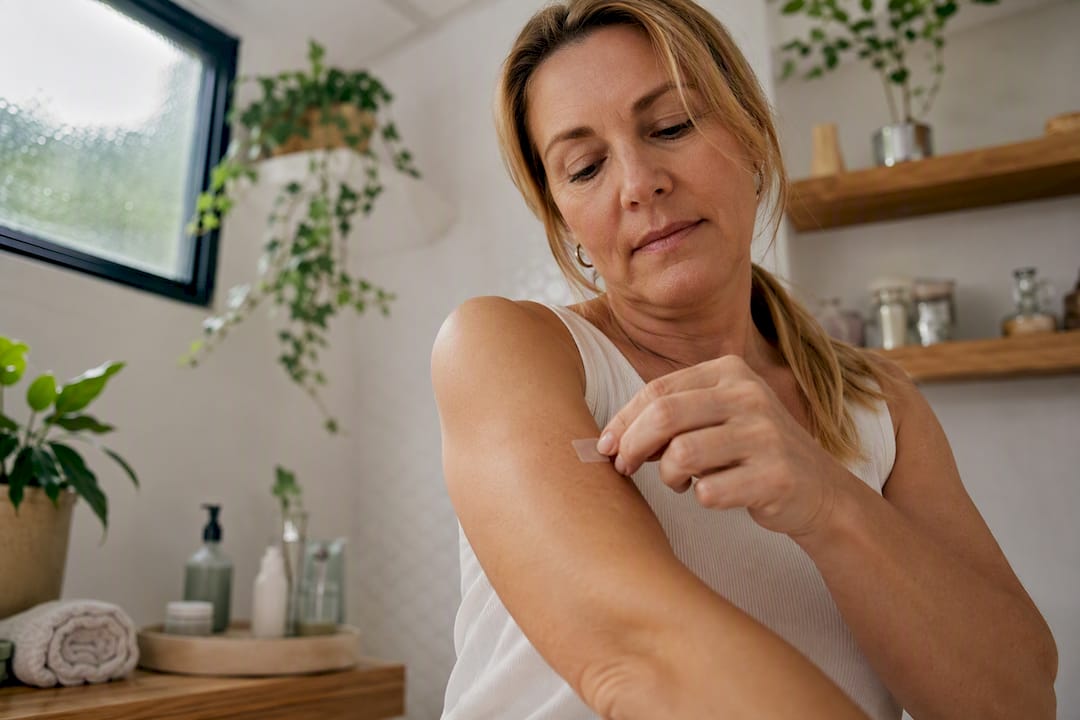
In the context of peptide tanning patches, “DHA” refers not to a topical stain but to beta‑melanocyte‑stimulating hormone, or b‑MSH, the active signal in NuTan® patches that activates the MC1R receptor on your skin’s pigment cells. This binding kickstarts your body’s own melanin production, the same pathway your skin uses when it tans in the sun, just triggered from within rather than by UV damage.
The practical result is a natural tan built from your own eumelanin, with far less UV exposure than conventional sunbathing or sunbed sessions typically require. It doesn’t sit on the surface, so it won’t rub off on your bedsheets or fade unevenly in the shower.
NuTan® makes this the core of its patch formula, Nutan MSH‑ComplexB. The sections below cover the biology behind it, what the peer‑reviewed evidence actually shows, and how to use the patches safely.
[
Key Takeaways
Peptide tanning patches work by delivering b‑MSH to activate MC1R, which drives your skin to produce real eumelanin with substantially less UV exposure than conventional tanning methods.
Point | Details |
What “DHA” means here | It refers to beta‑MSH peptide patches activating MC1R, not a topical stain or cosmetic bronzer. |
The mechanism | MC1R activation triggers cAMP, then MITF, then tyrosinase, producing genuine eumelanin in your skin cells. |
Realistic timeline | Colour builds gradually over days to weeks, and brief controlled UV alongside the patch typically speeds the response. |
Selectivity is the safety factor | MC1R‑selective peptides avoid the appetite and libido side effects seen with older, nonselective analogues. |
Where to start | NuTan® Triple Strength patches deliver the b‑MSH formula with worldwide delivery and significantly reduced required UV exposure compared to conventional tanning. |
This article is general information, not a substitute for advice from a qualified doctor. Consult a qualified healthcare professional about your own circumstances before acting on anything here.
Table of Contents
How MC1R activation turns a peptide signal into a tan
Your skin already knows how to tan. What it’s missing, most of the time, is a strong enough signal to switch the process on without sun damage forcing the issue. That’s the gap b‑MSH is designed to fill.
Beta‑MSH is a naturally occurring peptide derived from a larger precursor protein called POMC, and it typically runs to somewhere between 18 and 23 amino acids. It behaves as an agonist at MC1R and related melanocortin receptors, meaning it binds and activates them rather than blocking them. When it locks onto MC1R on the surface of a melanocyte, it sets off a chain reaction that researchers have mapped in detail:
MC1R activation raises levels of a messenger molecule called cAMP inside the cell.
Higher cAMP switches on a protein called MITF, often described as the master regulator of pigment genes.
MITF ramps up production of tyrosinase, the enzyme that actually builds melanin.
The result is more eumelanin, the brown‑black pigment responsible for a natural‑looking tan.
This cAMP‑to‑tyrosinase cascade is the same pathway your skin runs when UV light hits it. A patch delivering b‑MSH transdermally is simply feeding that pathway a cleaner starting signal.
Size and selectivity matter more than potency here. Small, selective peptides penetrate skin more efficiently and are less likely to bind unrelated receptors elsewhere in the body, which is why formulation design, not just raw hormone strength, determines how well a patch performs.
Pro Tip: If you want to understand the biology in more depth before you buy anything, read our explainer on the role of alpha‑MSH in tanning first. Alpha‑MSH and beta‑MSH act on the same receptor, so the mechanics translate directly.
What to expect: results and limits of peptide tanning
A peptide patch is not a switch that flips your skin gold overnight. Most people notice gradual pigmentation building over days to a few weeks, which mirrors how a natural tan develops rather than how a spray‑on product works.
Brief, controlled UV exposure alongside patch use tends to speed things up considerably. Clinical work on melanotropic peptides found that pairing the peptide with short UV‑B exposure produced markedly enhanced tanning compared with peptide alone, which in some protocols gave only limited darkening on its own. That’s why NuTan® patches are designed to work with far less UV than standard tanning, not zero UV.
Three things worth holding onto:
The colour you get is genuine eumelanin production, not a surface stain, so it won’t wash off or wear away in patches.
Because the pigment is biologically produced, it carries some of the same photoprotective character as a naturally built tan.
This is not sunscreen. Extra melanin lowers sunburn risk somewhat, but it doesn’t replace SPF or sensible sun behaviour.
Maintenance runs on a top‑up cycle rather than a one‑off treatment, since melanin naturally turns over as skin cells shed.
Safety and the evidence behind melanocortin peptides
The evidence base here isn’t marketing copy dressed up as science. Peer‑reviewed work on melanocortin peptides has been published in dermatology and pharmacology journals for years, and it points in a consistent direction.
Laboratory studies on small, hMC1R‑selective peptides found they increased pigmentation and supported DNA repair in cultured human melanocyte models, which is a meaningful finding: it suggests the tanning response isn’t just cosmetic, it comes bundled with some of the cell‑level repair activity that pigment is meant to provide in the first place.
Selectivity is the safety story here. Older, nonselective melanocortin analogues have picked up a reputation for side effects such as appetite and libido changes, because they bind receptors beyond MC1R, including ones in the brain. A peptide engineered for MC1R selectivity is far less likely to trigger those knock‑on effects, since it isn’t switching on receptors it was never meant to touch.
Sensible precautions still apply, regardless of how selective the formula is:
Patch test a small area first and check for any skin reaction before regular use.
Speak to a doctor before use if you’re pregnant, breastfeeding, or managing an existing medical condition. Miami Beach Bum’s guidance on tanning products and pregnancy is a useful general starting point, though always confirm with your own GP.
Follow the manufacturer’s dosing and application schedule rather than improvising your own.
Who gets the best results from peptide tanning
Your starting pigment biology shapes how visible the effect will be. Someone whose skin already tans readily in the sun, rather than burning first, tends to see peptide‑driven pigmentation build faster and more evenly, because their MC1R pathway is already responsive.
People with naturally fair skin that burns before it tans, often linked to reduced MC1R function, may see a slower or more modest response. That doesn’t rule the approach out, but it’s worth setting realistic expectations rather than assuming everyone tans at the same rate. Fitzpatrick skin type is a rough but genuinely useful guide here, and it’s worth reading our piece on why darker skin tans differently if you want the fuller picture across skin types. A simple self‑check works well: think back to how your skin has responded to sun in the past, and use that as your baseline before starting.
Using the patches: application, timing and aftercare
Getting a consistent result comes down to following a routine, not chasing a shortcut. NuTan® patches are designed to be simple by nature, but consistency is what turns that simplicity into a visible outcome.
Apply the patch to clean, dry skin exactly as the manufacturer instructs, on the schedule provided.
Leave it in place for the recommended duration before removing.
If you’re combining patch use with light exposure, keep sessions brief and controlled. The patch cuts down how much UV you need, it doesn’t remove the need for sensible limits.
Moisturise daily once colour starts developing, to help pigment settle evenly rather than patchily.
Avoid harsh exfoliation while you’re building colour, since it can slough off newly pigmented skin cells before they’ve had their full effect.
Pro Tip: Photograph your skin under the same lighting once a week. Gradual pigment change is easy to miss day to day but obvious once you compare a fortnight’s worth of images side by side.
If you’re weighing this against sun exposure more broadly, general sun‑safety guidance for outdoor time is worth a read, since a lower UV requirement is a benefit, not a licence to ignore basic sun sense.
NuTan®'s take on peptide tanning
We built NuTan® because we were frustrated by how much of the tanning conversation ignored the biology entirely. Beta‑MSH activating MC1R isn’t a marketing story, it’s a receptor pathway with a genuine paper trail in dermatology research, and our formula, Nutan MSH‑ComplexB, exists to put that pathway to work with far less UV than the alternatives demand. Our aim has always been to educate first and sell second, which is why we keep linking back to the actual science rather than just the results.
Get the Triple Strength patches and start with less UV
NuTan® Triple Strength patches are built for exactly the job this article has covered: kickstarting your skin’s own melanin production so you need over 70% less UV exposure to reach a comparable depth of colour to conventional tanning. Because the tan comes from real eumelanin rather than a surface stain, it doesn’t rub off, wash away patchily, or fade the way topical products do.
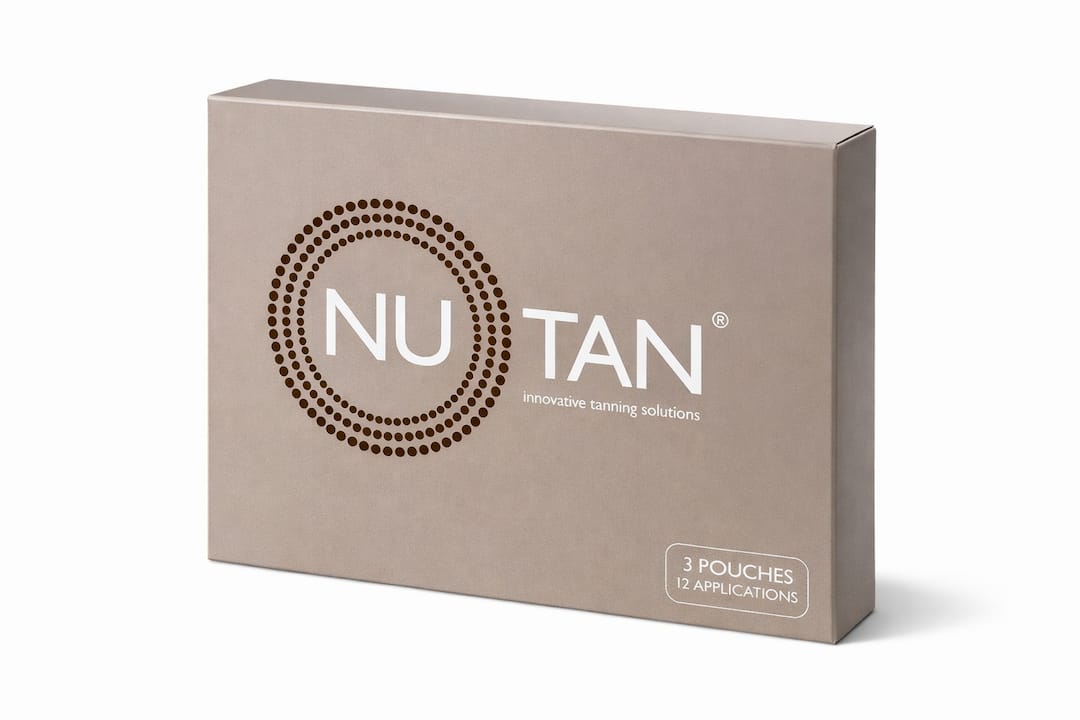
The NuTan Triple Strength patches are available in a 20‑patch box with worldwide delivery, so wherever you’re reading this from, you can get a box on its way. Before your first application, read the manufacturer instructions in full and follow the recommended dosing cadence rather than doubling up to speed things along. If you’d like to compare formats first, the box of 10 patches is a lower‑commitment way to try the approach before ordering the full Triple Strength kit.
Sources
FAQ
Is DHA in this context the same as self‑tan DHA?
No. Here, “DHA” refers to beta‑MSH peptide patches that activate MC1R to trigger your skin’s own melanin production, not the dihydroxyacetone used in self‑tanning lotions and sprays.
Does the tan from peptide patches wash off?
No, because the colour comes from real eumelanin produced inside your skin cells, it doesn’t rub off on clothing or fade unevenly the way a surface stain can.
Can I use NuTan® patches without any UV exposure?
Peptide alone can produce limited darkening, and combining it with brief, controlled UV tends to noticeably speed and deepen the tanning response, though NuTan® still requires far less UV than conventional tanning.
Are melanocortin peptide patches safe during pregnancy?
Speak to your doctor before use if you’re pregnant, breastfeeding, or managing a medical condition, since melanocortin activity hasn’t been specifically studied in pregnancy.
Will everyone tan the same amount with these patches?
No, response depends on your existing MC1R function and pigment type, so people who already tan readily in the sun tend to see faster, more visible results than those with reduced MC1R activity.
Recommended
Comments