

What is melanin stimulation naturally? The NuTan® patch explained
- 1 hour ago
- 8 min read
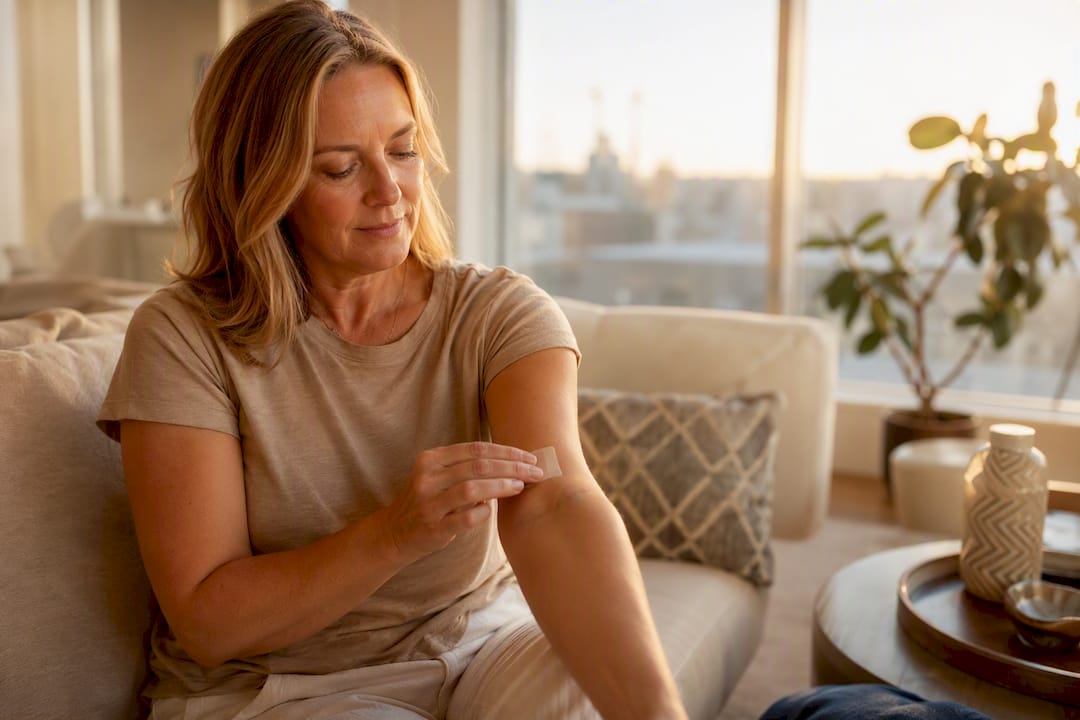
Melanin stimulation naturally, in the sense that matters for anyone shopping for a genuine tanning solution, means triggering your own skin’s pigment factories rather than staining the surface. NuTan® patches work this way: a transdermal patch delivers Nutan MSH-ComplexB, a naturally sourced beta-melanocyte-stimulating hormone (b-MSH), through the skin to activate melanocytes directly.
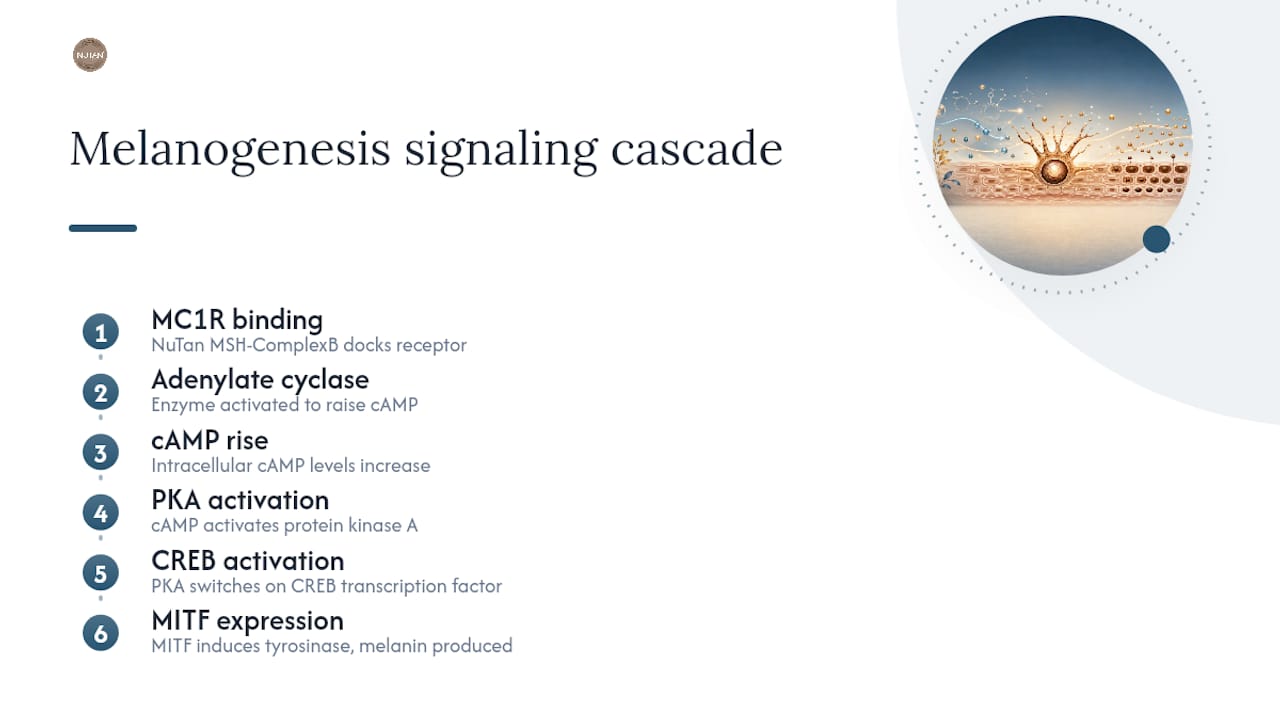
Once active, the peptide binds the Melanocortin 1 Receptor (MC1R) on your melanocytes and sets off a chain reaction: MC1R triggers cAMP, cAMP switches on MITF, and MITF ramps up tyrosinase, the enzyme that builds eumelanin (the pigment responsible for a deep, natural tan). The practical result:
A tan that builds from within your skin, not one sitting on top of it
Vastly less UV exposure needed compared with tanning by sun or sunbed alone
Colour that develops gradually and doesn’t rub or wash off, because it is real melanin, not stain
Key Takeaways
Melanin stimulation naturally happens when a peptide signal activates MC1R on melanocytes, triggering the cAMP to MITF to tyrosinase cascade that produces real eumelanin rather than surface stain.
Point | Details |
MC1R is the trigger | Beta-MSH binds MC1R to start the cAMP, MITF, tyrosinase cascade that builds real eumelanin. |
Patches beat oral or topical routes | Transdermal delivery avoids gastric breakdown and gives sustained, localised peptide contact with melanocytes. |
Results build gradually | Expect first visible change within about a week, deepening further over several weeks of consistent use. |
Genetics affects response | MC1R gene variants, common in fair or red-haired skin, can blunt how strongly anyone tans. |
NuTan® delivers the mechanism | NuTan® patches use Nutan MSH-ComplexB to activate melanocytes directly, needing far less UV than conventional tanning. |
Table of Contents
How NuTan® patches trigger melanin production naturally
Your skin’s tanning response runs on a signalling pathway that scientists have mapped in detail, and understanding it explains exactly why a peptide patch works where sun exposure alone often disappoints. MC1R sits on the surface of every melanocyte, waiting for a melanocortin signal to dock. When Nutan MSH-ComplexB binds that receptor, it switches on adenylate cyclase, which raises levels of cAMP inside the cell. Rising cAMP activates protein kinase A (PKA), which in turn switches on a transcription factor called CREB. CREB’s job is to flip on the gene for MITF, often described as the master regulator of pigment cells, because MITF governs the production of tyrosinase and other enzymes needed to manufacture melanosomes, the tiny packages that store and transport melanin. A detailed review of the melanogenesis cascade lays out this MC1R to cAMP to MITF to tyrosinase sequence as the core mechanism behind UV-induced tanning, and it’s the same biological route NuTan® targets directly rather than waiting for sunlight to trigger it.
The evidence behind the pathway: MC1R signalling doesn’t just darken skin, it also switches on DNA repair responses as part of the skin’s broader defence against UV damage, according to research on MC1R and the cAMP pathway. That dual role helps explain why melanocortin signalling is such a well studied route to pigmentation.
Beta-MSH belongs to the same family of melanocortin peptides as alpha-MSH and ACTH. Alpha-MSH tends to bind MC1R with the highest affinity, but experimental work on melanotropic hormones confirms that beta-MSH can still activate the receptor and drive melanogenesis, just through a somewhat different binding profile. That’s the science behind why NuTan® formulates around a b-MSH complex rather than relying on passive UV exposure to do all the work. For a deeper look at how this compares with alpha-MSH specifically, our explainer on alpha-MSH and tanning breaks down the receptor biology further.
Why does a transdermal patch deliver melanin stimulation better?
Peptides face a genuine obstacle getting into skin: the outermost layer, the stratum corneum, is built specifically to keep large molecules out. Most peptides are too heavy and too water-loving to slip through passively, which is exactly why swallowing a peptide supplement or rubbing a peptide cream onto skin rarely achieves meaningful absorption. Oral peptides get broken down by digestive enzymes before they ever reach circulation, and topical creams mostly sit on the skin’s surface without penetrating to the dermal layer where melanocytes live.
A transdermal patch solves this differently. Rather than relying on a single application to force penetration, a well-designed matrix patch holds the peptide in a formulated reservoir against the skin and releases it steadily over hours, giving Nutan MSH-ComplexB sustained contact time rather than one brief exposure. A review of transdermal peptide delivery systems confirms that matrix-type patches can bypass gastric degradation entirely and provide the kind of sustained, localised delivery that oral routes simply cannot match. Additional research into transdermal peptide technologies points to formulation choices, adhesive design, and penetration-enhancing strategies as the levers that make this kind of delivery workable at all.
Oral peptides: broken down before absorption
Topical creams: mostly stay on the skin’s surface
Transdermal patches: sustained, localised release directly to the skin layers housing melanocytes
Pro Tip: Apply your patch to an area of thin but intact skin, such as the inner wrist or upper arm, where circulation is good and the skin barrier is naturally less thick. Avoid broken, irritated, or heavily calloused skin, as absorption there is inconsistent.
How long does it take to see a natural tan develop?
Melanin stimulation isn’t instant, because the cellular cascade needs time to build momentum. Here’s the realistic sequence most users can expect:
Cellular activation begins within the first day or two, as the peptide reaches melanocytes and begins triggering the MC1R signalling cascade.
First visible change typically appears within the first week, as tyrosinase activity increases and melanosomes start producing detectable eumelanin.
Progressive deepening continues over several weeks of consistent use, as pigment builds in the layers already primed by earlier applications.
Maintenance becomes the goal once you’ve reached your desired depth of colour, with occasional patches keeping melanocytes active rather than letting the tan fade back to baseline.
“Minimal UV exposure” means short, incidental daylight, a walk outdoors, time in the garden, rather than a deliberate sunbathing session or sunbed course. The patches lower the additional UV needed to develop colour to a fraction of what conventional tanning demands, but they don’t remove your skin’s need for sunlight entirely, since UV still plays a role in completing the tanning response.
Is melanin stimulation with NuTan® safe for regular use?
Most people tolerate transdermal patches well, though localised skin reactions are the most common issue worth watching for. Mild redness or irritation at the application site can occur, particularly on sensitive skin, and it usually settles once the patch is removed.
Perform a 24 to 48 hour patch test on a small area before committing to full use
Stop immediately if you notice persistent redness, itching, swelling, or blistering
Rotate application sites to give any one patch of skin a rest between uses
Genetics also plays a real part in how strongly anyone responds. People carrying certain MC1R gene variants, common among those with naturally fair skin and red hair, have a receptor that binds melanocortin peptides less efficiently, which means a blunted tanning response regardless of the trigger. If your skin has historically resisted tanning even with heavy sun exposure, that’s worth bearing in mind, and a GP or dermatologist can offer guidance if you’re uncertain.
It’s worth restating plainly: reduced UV requirement is not the same as zero UV requirement, and sun protection still matters whenever you’re outdoors. Anyone pregnant, managing an active skin condition, or taking immunosuppressant medication should speak to a dermatologist or GP before starting a course of patches.
The science and credentials behind NuTan®
NuTan® built its patch formulation, Nutan MSH-ComplexB, specifically to engage the MC1R signalling pathway that dermatological science has studied for decades. The brand’s own educational resource on natural tanning pathways walks through the biology in more depth, alongside a comparison piece on NuTan® versus Melanotan injections for readers weighing up delivery methods.
Formulated around Nutan MSH-ComplexB, a naturally sourced b-MSH active ingredient
Product and educational content built around peer-reviewed melanogenesis science
References drawn from PMC-indexed reviews on MC1R signalling and transdermal peptide delivery
Why a patch beats waiting on sun or diet alone
Diet and sunlight both interact with melanin production, but neither gives you direct control over the signal that starts it. Sun exposure works by damaging skin cells enough to force a defensive tanning response, which is precisely the mechanism dermatologists spend their careers warning against overusing. Diet can support skin health generally, but no food ingredient reliably switches on MC1R signalling with anything like the specificity of a targeted peptide.
That’s the gap NuTan® was built to close. A patch that delivers b-MSH straight to melanocytes sidesteps the guesswork of “get some sun and hope for the best,” replacing it with a mechanism grounded in the same receptor biology that drives natural tanning in the first place. The conventional wisdom, that a good tan is simply a matter of time in the sun, undersells how much of the process is actually receptor signalling rather than raw UV dose.
Where this approach still asks something of the user is patience and consistency. Skipping the patch test, or expecting an overnight transformation, is where most disappointment comes from, not the biology itself. Prioritise the patch test first, realistic weekly expectations second, and sun protection throughout.
[
Ready to try melanin stimulation for yourself?
If you’ve read this far, you already understand why NuTan® works differently from a bottle of fake tan or a sunbed membership, it stimulates your own pigment cells rather than staining or burning your way to colour.
For most people starting out, the 10-patch starter box is the sensible entry point, giving you enough patches to run a proper patch test and see your first visible results without committing to a longer course. Once you know how your skin responds, the 2-box kit of 20 patches covers a fuller maintenance cycle, and the triple strength formula is there for anyone wanting a more pronounced effect once they’re confident with the basics.
Whichever option you choose, do the 24 to 48 hour patch test first, follow the usage directions on the pack, and speak to a dermatologist if you have any underlying skin condition or uncertainty about how your skin will respond. NuTan® ships worldwide, so wherever you’re reading this from, getting started is just an order away.
Sources
FAQ
What is melanin stimulation naturally?
In this context, it means using a transdermal patch like NuTan® to deliver beta-MSH directly to melanocytes, triggering the same MC1R signalling cascade that produces a natural tan, but with far less UV exposure than sun or sunbed tanning alone.
How does NuTan® stimulate melanin production?
Nutan MSH-ComplexB binds MC1R on melanocytes, activating a cAMP and MITF signalling chain that switches on tyrosinase and increases eumelanin production.
Why use a patch instead of a cream or tablet?
Peptides are usually broken down before oral absorption and struggle to penetrate skin from a topical cream, whereas a matrix patch provides sustained, localised delivery straight to the skin layers where melanocytes sit.
How quickly will I see results with NuTan® patches?
Most people notice initial changes within the first week, with colour building progressively over several weeks of consistent, correctly applied use.
Do NuTan® patches remove the need for sun protection?
No. Patches significantly reduce the UV exposure needed to develop colour, but sun protection remains necessary whenever you’re outdoors.
Recommended
Comments